

Maddy summaryThe Rural Physician Workforce Production Act of 2023 creates a new Medicare payment to incentivize medical residency training in rural areas. Hospitals can receive additional funding for residents who spend at least 8 weeks in rural training locations or for residents in programs where over half of training occurs in rural settings. The payment amount is based on updated national medical residency training costs, adjusted annually for inflation. This bill aims to increase the number of physicians trained for rural practice by providing financial incentives to hospitals, critical access hospitals, and sole community hospitals.
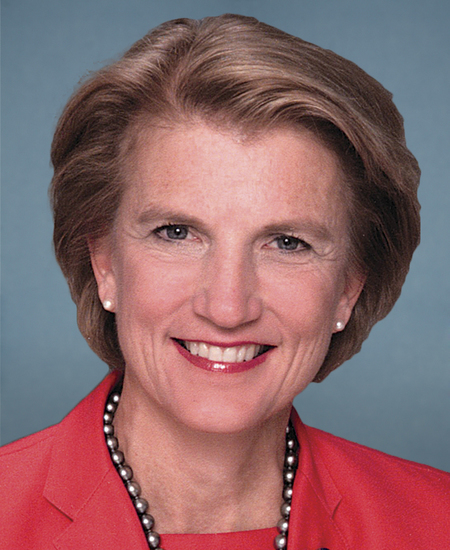
Sen. Shelley Moore Capito
Sponsored bills
Maddy summaryThe No Budget, No Pay Act requires Congress to pass a budget resolution and all regular spending bills by October 1 each fiscal year. If Congress misses this deadline, Members of Congress (including Senators and Representatives) will not receive pay for the period after October 1 until the budget is approved, and they will not receive retroactive pay for that time. The chairs of the budget and appropriations committees in each chamber will determine compliance and certify the pay suspension period. The law takes effect on September 29, 2025.
Maddy summaryThis bill would allow individuals with valid concealed carry permits from their home state to carry concealed handguns in other states that either permit concealed carry for residents or don't ban it. It requires permit holders to have a government-issued ID, meet federal firearm possession rules, and carry only handguns (excluding machineguns or destructive devices). Carrying would still follow local restrictions in the destination state, such as bans in schools or government buildings. The bill does not change how states issue permits but creates automatic recognition of valid permits across participating states.
Maddy summarySRES 24 is a symbolic Senate resolution supporting the annual observance of "National Girls & Women in Sports Day" on February 1, 2023. It aims to raise public awareness and celebrate the achievements of girls and women in sports, referencing ongoing efforts to address gender disparities in athletic participation and coaching. The resolution highlights statistics showing persistent inequities, such as female athletes comprising only 44% of college athletes and BIPOC women representing just 7% of head coaches. It specifically calls for continued support of Title IX and the Equal Pay for Team USA Act to advance gender equity in sports. As a resolution, it does not create new laws or policies but formally recognizes the importance of this observance.
Maddy summarySRES 21 is a symbolic Senate resolution designating January 1-February 1, 2023, as National Trafficking and Modern Slavery Prevention Month. It encourages awareness-raising activities during this period to support efforts against human trafficking and modern slavery, linking the observance to National Freedom Day on February 1. The resolution does not create new laws or allocate funds; it serves as a non-binding call for coordinated awareness campaigns by federal, state, tribal, and local entities. It directly affects public awareness efforts rather than specific populations, though it references trafficking statistics and victim support frameworks. The resolution aligns with existing federal anti-trafficking laws but focuses solely on commemorative recognition.
Maddy summaryThis bill prohibits the U.S. Department of Energy from selling petroleum products from the Strategic Petroleum Reserve to any entity owned or controlled by China, or to entities that might later export those products to China. It directly affects the Department of Energy’s management of the reserve and Chinese entities seeking to purchase U.S. oil. The key mechanism requires the Secretary of Energy to block sales to China-linked entities and to ensure any sale does not result in the petroleum being exported to China. This is a direct restriction on existing reserve operations, not a new policy. The bill applies to all current and future sales from the reserve.
Maddy summaryThe Public Health and Border Security Act of 2023 ends a pandemic-era suspension on certain international entries and imports. It requires the Surgeon General to notify Congress when the public health emergency declaration (including its continuation) ends, then mandates a 60-day waiting period before lifting the suspension. During this period, the Surgeon General must collaborate with agencies like Homeland Security to develop and submit a plan for managing potential increases in travel or goods, which must be provided to Congress within 30 days. If the plan isn’t submitted on time, the suspension’s termination is delayed until 30 days after the plan is delivered.
Maddy summaryThis bill requires all U.S. employers to use E-Verify, an electronic employment verification system, to check the work authorization of all new hires and existing employees. It mandates verification before hiring, with all employers required to comply within one year of enactment, and expands verification requirements to existing employees. The bill increases penalties for non-compliance, including higher civil fines (up to $25,000 per violation) and potential debarment from federal contracts for repeat violations. It also establishes a new Employer Compliance Inspection Center to standardize enforcement and improve accountability for employers who fail to verify employment eligibility.
Maddy summaryS 160, titled "Sarah's Law," amends immigration law to require mandatory detention for non-citizens charged with crimes causing death or serious bodily injury. It specifically applies to individuals who entered without inspection, held revoked visas, or fall under certain immigration categories. The bill also mandates that Immigration and Customs Enforcement (ICE) notify crime victims or their families about the alien's identity, immigration status, custody details, and removal efforts. This policy change directly affects non-citizens facing such charges and ensures victims receive ongoing case information.
Maddy summaryThe JOBS Act of 2023 expands Federal Pell Grant eligibility to short-term job training programs that provide 150-600 clock hours (8-15 weeks) of instruction aligned with in-demand local industries. It directly affects students enrolled in eligible career-focused programs at institutions of higher education, requiring programs to offer industry-recognized credentials and meet validation standards from employers or sector partnerships. Key provisions include mandatory industry validation of program quality, institutional credit articulation for noncredit programs, and lowering the minimum Pell Grant percentage from 10% to 5% for qualifying students. The bill ensures these programs count toward students’ total Pell Grant eligibility period while maintaining standard Pell Grant terms and conditions.