

Maddy summaryThis joint resolution (SJRES 12) seeks congressional disapproval of the District of Columbia Council’s approval of the Revised Criminal Code Act of 2022 (D.C. Act 24-789). It directly affects D.C. residents and local government, as the resolution targets the District’s newly enacted criminal code. The mechanism is a formal congressional disapproval under the District of Columbia Home Rule Act, requiring passage by both chambers to block the D.C. law from taking effect. The resolution does not alter the D.C. code itself but aims to halt its implementation through federal action.
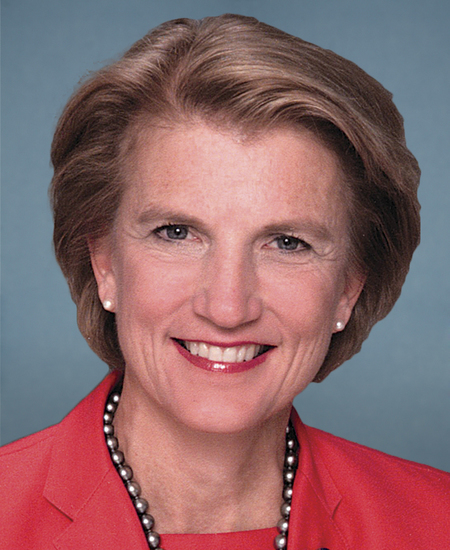
Sen. Shelley Moore Capito
Sponsored bills
Maddy summarySRES 45 is a non-binding Senate resolution introduced on February 9, 2023, by a group of senators expressing the Senate's view that the current migration levels at the U.S. southern border constitute a crisis. This resolution does not create new laws or policies, nor does it directly affect any individuals or groups - it serves solely as a symbolic statement of the Senate's position. It contains no concrete policy mechanisms or implementation plans, as resolutions of "sense" are typically used for expressing opinions rather than enacting change. The resolution was referred to the Senate Judiciary Committee but has no legal effect.
Maddy summaryS 375, the Simplifying Grants Act of 2023, requires federal agencies to simplify grant application processes for small local governments. It directly affects "covered local governments" (defined as counties, cities, or towns with populations below the threshold for an urbanized area as determined by the Census). The bill mandates agencies to review and simplify grant requirements within 180 days of enactment, and to publish step-by-step checklists for each grant program. Agencies must also report annually on simplified processes, technical assistance provided, and funding awarded to covered versus other local governments.
Maddy summaryThis bill prohibits the President from blocking or delaying new oil, gas, coal, or mineral leases on federal lands (including national forests, public lands, and the outer continental shelf) without explicit congressional approval. It specifically prevents the President from imposing moratoria on new energy leases or withdrawing federal lands from energy development without an act of Congress. The law applies directly to federal land management decisions, requiring Congress to authorize any action that would restrict energy leasing or development on these lands. This is a procedural change affecting how federal energy leasing and land use decisions are made.
Maddy summaryThis bill allows veterans with combat-related disabilities and less than 20 years of service to receive both military retired pay and VA disability compensation simultaneously. Previously, such veterans had their retired pay reduced to avoid "concurrent receipt" of both benefits. The bill removes the 20-year service requirement for this group, applying specifically to those retired under Chapter 61 of Title 10 with a combat-related disability as defined in existing law. It does not change eligibility for veterans with non-combat disabilities or those with 20+ years of service.
Maddy summaryThis bill excludes certain federal broadband grants from recipients' taxable income, directly affecting internet service providers, local governments, tribes, and other entities receiving qualifying grants under specific programs. Key provisions clarify that grant money from programs like the Infrastructure Investment and Jobs Act's Broadband Equity, Access, and Deployment Program (Section 60102) or State Digital Equity Grants (Section 60304) is not counted as income. It also prevents double tax benefits by disallowing deductions for expenses covered by these grants and reducing the adjusted basis of related property. The rule applies to grants received after March 11, 2021, and covers grants funded through federal broadband initiatives or state/local programs using specific federal funds.
Maddy summaryThis joint resolution seeks congressional disapproval of a Department of Labor rule published in the Federal Register on December 1, 2022 (87 Fed. Reg. 73822), which addressed "Prudence and Loyalty in Selecting Plan Investments and Exercising Shareholder Rights." If enacted, it would block the rule from taking effect, directly affecting retirement plan fiduciaries (such as those managing 401(k) plans) who must follow these standards. The resolution uses a specific disapproval process under Chapter 8 of Title 5, U.S. Code, to nullify the rule without altering its content. This is a procedural action targeting the rule's implementation, not a new policy.
Maddy summaryS 293, the Fair Access to Banking Act, prohibits large financial institutions (with $10 billion+ in assets) from denying banking services to lawful businesses based on political reasons, bias, or industry category. It requires these "covered banks" to justify service denials using documented, objective risk assessments - not subjective political judgments - and to provide written explanations for denials. The bill directly affects businesses operating legally in industries often targeted by banks (like cannabis or firearms), ensuring equal access to services like loans, credit cards, or payment processing. Violations allow affected businesses to sue for treble damages and attorney fees, with payment networks and credit unions also barred from blocking access based on "reputational risk."
Maddy summaryThis Senate resolution (SRES 25) recognizes January 2023 as "National Mentoring Month" to highlight the importance of mentoring relationships for young people. It acknowledges that one in three U.S. youth lacks a mentor outside their home and emphasizes mentoring's role in improving academic success, mental health, career development, and reducing delinquency. The resolution promotes expanding quality mentoring programs nationwide but does not create new laws or allocate funding. It serves as a symbolic gesture to encourage community, school, and workplace efforts supporting youth development through mentoring.
Maddy summaryS 236, the Early Educators Apprenticeship Act, provides federal grants to partnerships between childcare providers, colleges, and other entities to create on-the-job training programs for early childhood educators. The bill directly affects childcare workers, centers, colleges, and employers by funding 75% of program costs to help workers earn certificates or degrees while working. Key provisions include requiring partnerships to prioritize rural/underserved communities, track outcomes like retention rates and credential attainment, and share data on apprentices’ long-term employment. The program aims to strengthen the early education workforce through structured training pathways, with annual reports to the Labor Secretary on program effectiveness.