

Maddy summaryS 940, the Rural America Health Corps Act, creates a federal loan repayment program for health professionals working in rural areas. It directly affects eligible health professionals (such as doctors or nurses) who qualify for the existing Public Health Service Act loan program but aren't currently enrolled, requiring them to commit to five years of full-time work in designated rural health professional shortage areas. Key provisions include the Secretary of Health and Human Services paying up to $200,000 toward eligible loans over five years, with payments tied to each year of service completed. The program is funded at $50 million annually for fiscal years 2024-2028 and requires a report evaluating its impact on rural healthcare access after five years.
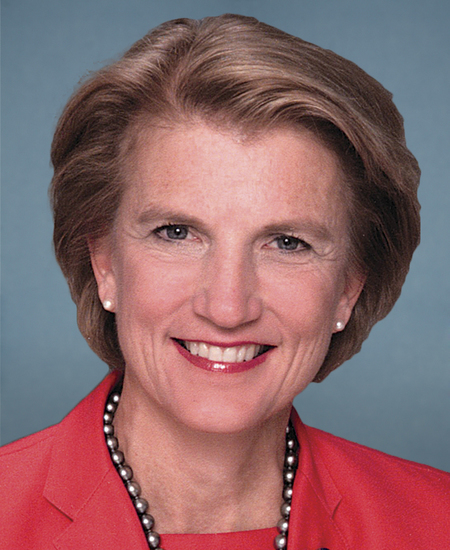
Sen. Shelley Moore Capito
Sponsored bills
Maddy summaryThis bill directs the U.S. Treasury to instruct American representatives at multilateral development banks (like the World Bank and Asian Development Bank) to oppose new loans to China. It is based on findings that China exceeded the income threshold for graduation from development assistance in 2016 and has since received over $20 billion in loans from these institutions. The bill requires annual reports tracking China's borrowing, U.S. voting efforts to end lending to countries that have surpassed graduation thresholds, and the status of China's eligibility. It directly affects China's access to multilateral development financing and the operational policies of these banks.
Maddy summaryThis bill requires TSA to deny airport security access to travelers presenting certain immigration enforcement documents (like deportation warrants or "Notice to Appear" forms) at checkpoints. It mandates TSA to notify immigration agencies when such documents are presented and to collect biometric data (fingerprints, photos) from non-citizens without valid ID who cannot verify U.S. citizenship. Travelers departing for deportation are exempt from entry restrictions. The law directly affects individuals under immigration supervision attempting to access secured airport areas using prohibited documents.
Maddy summaryThis bill allows meat and poultry products inspected under state programs to be sold across state lines, removing a long-standing restriction that limited such sales to within a single state. It requires the federal government to permit interstate shipment of these state-inspected products and mandates that states cannot ban or restrict their sale or movement. Small meat and poultry processors in states with their own inspection programs - rather than federal inspection - would directly benefit by expanding their market reach beyond state borders. The law makes no changes to inspection standards but enables broader commerce for products already meeting federal safety requirements.
Maddy summaryThis bill modifies U.S. tax code to boost research and development (R&D) investment by businesses. It allows companies to immediately deduct R&D costs (instead of amortizing them over 5 years) and expands refundable tax credits for small businesses, raising the annual credit cap from $250,000 to $750,000 by 2032. Small businesses with gross receipts under $15 million can now qualify for higher credit rates (up to 20% of R&D costs) and may exclude years with no R&D expenses when calculating credits. The changes apply to taxable years beginning after December 2022, directly benefiting R&D-focused startups and small businesses.
Maddy summaryS 838, the Improving Access to Mental Health Act of 2023, increases Medicare coverage for clinical social workers. It raises reimbursement rates for their services under Medicare Part B from 75% to 85% of the psychologist fee schedule and removes barriers preventing coverage in skilled nursing facilities. The bill specifically expands Medicare coverage to include a defined set of clinical social work services (using specific HCPCS codes) for mental health diagnosis, treatment, and behavioral interventions. This directly affects Medicare beneficiaries, particularly older adults and people in skilled nursing facilities, by making it easier for providers to offer and bill for these mental health services starting January 1, 2024.
Maddy summaryThis joint resolution (SJRES 20) seeks to block a 2023 rule from the Department of Justice and Bureau of Alcohol, Tobacco, Firearms and Explosives (ATF) that classified certain firearms with stabilizing braces as rifles under federal law. If passed, it would nullify the rule, meaning firearms equipped with these braces would no longer be subject to the rule’s classification requirements. The resolution uses the congressional disapproval process under Title 5, U.S. Code, to stop the rule from taking effect, directly affecting firearm manufacturers and owners who use stabilizing braces on weapons.
Maddy summaryThis is a ceremonial Senate resolution (SRES 110) honoring the late James George Abourezk, the first Arab American to serve in the U.S. Senate (1973-1979) from South Dakota. It commemorates his legacy, including his work re-establishing the Senate Committee on Indian Affairs and co-authoring key Native American rights legislation like the Indian Child Welfare Act. The resolution directs the Senate to adjourn in his memory and send a copy to his family, acknowledging his service as a representative and advocate for Native American communities. As a procedural resolution, it has no legislative effect beyond commemoration.
Maddy summaryThis bill mandates a study by the Government Accountability Office (GAO) to assess how airlines prepare for weather events and natural hazards like storms, floods, and extreme heat. The GAO will evaluate airlines' operational planning, FAA oversight, and potential improvements for resilience, then report findings to Congress within 18 months. It directly affects airlines (through their operational planning) and the FAA (as regulator), but does not impose new requirements on carriers. The study aims to inform future policy decisions without altering current airline operations or regulations.
Maddy summaryThis bill removes a permitting requirement for fire retardant discharges during firefighting operations. It states that federal agencies (like the Forest Service and National Park Service), state governments, local governments, and tribal governments do not need a permit under the Clean Water Act for fire retardant used in fire suppression, control, or prevention. The key provision eliminates a specific permit requirement (Section 402 of the Federal Water Pollution Control Act) for these emergency fire activities. This directly affects agencies and personnel conducting wildfire response operations across public lands and communities.