

Maddy summaryThe PHIT Act of 2023 would allow taxpayers to deduct certain fitness expenses as medical costs on federal tax returns. It defines "qualified sports and fitness expenses" to include gym memberships, exercise classes, and equipment used exclusively for physical activity, with a yearly limit of $1,000 ($2,000 for joint filers). To qualify, fitness facilities must focus on health (not offer golf or hunting) and comply with anti-discrimination laws, while equipment costs are capped at $250 per item. This change would take effect for tax years beginning after the bill's enactment.
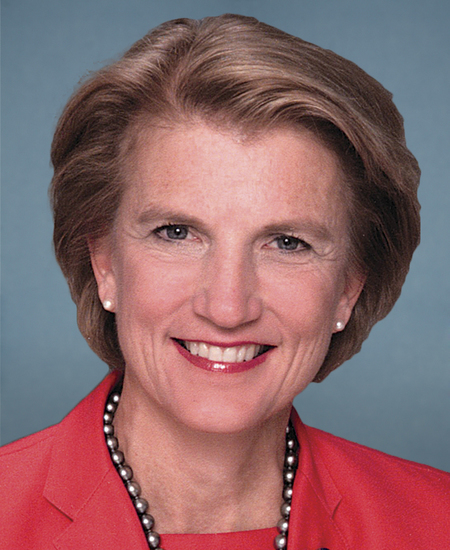
Sen. Shelley Moore Capito
Sponsored bills
Maddy summaryThis bill allows physical therapists to use temporary replacement providers (locum tenens) under Medicare, aligning their coverage rules with those already available to physicians. It directly affects physical therapists and Medicare beneficiaries by enabling uninterrupted access to physical therapy services during provider shortages. The key change amends Medicare rules to treat outpatient physical therapy services the same as physician services for temporary staffing purposes. This policy shift takes effect after the bill's enactment, ensuring physical therapy care can continue without disruption during staffing gaps.
Maddy summaryThis concurrent resolution expresses Congress's support for the Local Radio Freedom Act by opposing new fees for local radio stations playing music over the air. It states that imposing performance fees would harm the longstanding relationship between radio stations and the music industry, jeopardize emergency broadcasts and local programming, and cause economic hardship for radio stations and small businesses (like bars and retail stores) that rely on free music licensing. The resolution specifically urges against any new fee, tax, or royalty related to radio stations' public performance of sound recordings. As a non-binding statement, it does not create new law but formally advocates for maintaining the current system.
Maddy summarySRES 103 is a symbolic Senate resolution recognizing the 111th anniversary of Girl Scouts of the United States of America. It celebrates the organization’s role in providing girls with a safe, inclusive space to develop leadership skills, build relationships, and access educational experiences. The resolution does not create new laws or policies but formally acknowledges Girl Scouts’ impact on girls’ development and leadership preparation. It was introduced on March 9, 2023, by Senators Duckworth, Capito, Feinstein, Warren, Shaheen, and Ernst.
Maddy summaryThis bill authorizes the U.S. Mint to produce commemorative coins honoring working dogs, including $5 gold, $1 silver, and half-dollar coins, to be sold starting January 1, 2025. A surcharge of $35 per gold coin, $10 per silver coin, and $5 per half-dollar coin will be added to the sale price, with all surcharge funds directed to America’s VetDogs to support its service dog programs for veterans and people with disabilities. The coins are legal tender but will only be issued for one year (2025), with production limited to specified quantities (50,000 gold, 500,000 silver, 750,000 half-dollars). The bill does not create new government programs but uses commemorative coin sales to fund existing service dog initiatives.
Maddy summaryS 723, the Access to Prescription Digital Therapeutics Act of 2023, requires Medicare and Medicaid to cover "prescription digital therapeutics" (PDTs) starting in 2024. PDTs are defined as FDA-cleared software-based treatments for medical conditions, such as apps for diabetes management or mental health therapy. The bill establishes new payment rules for these digital treatments, including setting payment rates based on actual market pricing and requiring manufacturers to report private payor pricing and usage data annually. This directly affects Medicare/Medicaid beneficiaries seeking digital health tools and manufacturers of PDTs, who must comply with reporting requirements and face penalties for noncompliance. The law aims to integrate evidence-based digital health solutions into mainstream coverage under federal health programs.
Maddy summaryThis bill authorizes the U.S. Mint to produce and sell commemorative coins honoring the 1865 Sultana steamboat disaster, the worst maritime tragedy in U.S. history. It specifies three coin types ($5 gold, $1 silver, and half-dollar) with surcharges ($35, $10, and $5 per coin, respectively) that will fund the Sultana Historical Preservation Society. The funds must be used to build, operate, and maintain a museum in Marion, Arkansas, to preserve the disaster’s history through exhibits, artifacts, and educational programs. The coins, sold only in 2023, are legal tender but will not circulate; the surcharge revenue directly supports the museum’s development and operations.
Maddy summaryThis bill amends U.S. Treasury regulations to require the Secretary of the Treasury to consider terrorism facilitation when designating foreign financial institutions as "of primary money laundering concern." It specifically directs the Treasury to evaluate whether institutions knowingly provide banking services to entities designated under federal anti-terrorism regulations or facilitate payments for acts of terrorism defined in the Taylor Force Act (22 U.S.C. 2378c-1). The measure targets foreign banks that maintain correspondent accounts with U.S. banks while allegedly enabling terrorist financing through dollar transactions. It directly affects foreign financial institutions operating with U.S. correspondent banking relationships. The policy change focuses on strengthening anti-terrorism financial oversight by expanding the criteria used in Treasury designations.
Maddy summaryThe RESTRICT Act (S 686) gives the Secretary of Commerce authority to identify and address information and communications technology (ICTS) products or services that pose undue national security risks, particularly those involving foreign adversaries like China, Russia, Iran, and others. It targets transactions or holdings by entities from designated foreign adversary countries or their controlled entities, with special focus on technology used by over 1 million U.S. users, including telecommunications, data services, and critical infrastructure systems. The Secretary can refer "covered holdings" to the President, who may then compel divestment or other mitigation measures to protect U.S. critical infrastructure, election security, and sensitive data. The bill establishes specific review procedures while limiting judicial review of these national security decisions.
Maddy summaryThis bill reauthorizes the Conrad State 30 program, which allows U.S. states to request waivers enabling foreign medical graduates (J-1 visa holders) to work in medically underserved areas without having to return to their home countries. It extends the program's expiration date, creates new mechanisms for physicians to maintain legal status after completing service requirements, and adds protections against non-compete clauses in employment contracts. The bill modifies requirements for foreign medical graduates to work in underserved areas, including clarifying the 3-year service requirement and establishing a process for states to recapture waiver slots when physicians move between states. It also requires annual reporting on program usage by state and includes provisions for academic medical centers to request waivers without geographic constraints. The bill directly affects foreign-trained physicians, U.S. states, and health care facilities in underserved areas.