Maddy summaryThis bill requires Medicaid programs to use contracts with pharmacy benefit managers (PBMs) and managed care entities that mandate a pass-through pricing model for drugs. Under this model, payments must cover only the drug’s ingredient cost and a standard dispensing fee, with all payments passed directly to pharmacies, and prohibits PBMs from keeping any excess (known as spread pricing). It also mandates a national survey of retail pharmacy prices to set the average drug acquisition cost used for Medicaid reimbursements, requiring participating pharmacies to provide price data for the survey.
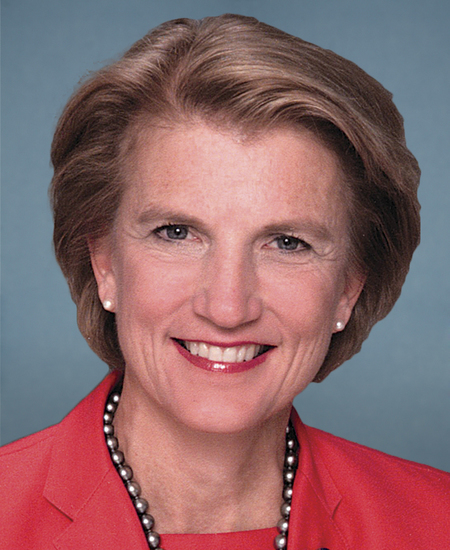
Sen. Shelley Moore Capito
Sponsored bills
Maddy summaryThis bill would block U.S. federal funding for two international environmental agreements until China's classification in those treaties changes. Specifically, it prohibits funds for the Montreal Protocol (ozone layer protection) until China is removed from "developing country" status, and blocks funds for the UN Climate Change Convention until China is added to Annex I (the list of developed nations). The bill requires the President to certify to Congress that these treaty changes have occurred before funding can resume. It affects only U.S. government spending on these agreements, not direct policy changes for citizens or businesses.
Maddy summaryThis bill establishes a federal "National Parkinson’s Project" under the Department of Health and Human Services to coordinate efforts across agencies in preventing, treating, and curing Parkinson’s disease and related conditions. It requires an integrated national plan, annual progress assessments, and a public Advisory Council - including patient advocates, researchers, and healthcare providers - to guide strategy and recommend actions. The project mandates data sharing among federal agencies and biannual reports to Congress evaluating federally funded Parkinson’s programs, aiming to improve care coordination, reduce financial burdens on Medicare and families, and advance research on environmental triggers. The law directly affects people living with Parkinson’s, their caregivers, and federal health agencies involved in research and patient services. The initiative is scheduled to sunset in 2035.
Maddy summaryS 1042 requires the Small Business Administration to create a single, publicly accessible website within one year of the bill's enactment. The website will organize federal, state, and local permit and licensing requirements for small businesses based on their location and business type. This directly affects small business owners who currently navigate multiple government agencies for permits, aiming to simplify their access to necessary licensing information. The bill does not change existing permit rules but provides a centralized resource to help small businesses understand and comply with requirements.
This resolution designates March 2023 as National Women's History Month. The resolution also recognizes the celebration of such month as a time to reflect on the contributions that women have made to the United States.
Maddy summaryThe FAST Fix Act of 2023 amends the Small Business Act to prioritize federal technology funding for small businesses in states that historically receive fewer Small Business Innovation Research (SBIR) and Small Business Technology Transfer (STTR) Phase I awards. It defines "underperforming States" as the 18 states with the lowest SBIR/STTR Phase I awards and requires the Small Business Administration to prioritize applications from businesses in these states. The bill also sets a $500,000 funding cap per award over two years, waives matching requirements for underperforming states, and mandates biennial reporting on program outcomes and state performance. This directly affects small businesses in 18 specific states and the Small Business Administration’s administration of the FAST program.
Maddy summaryThis bill (SJRES 22) seeks to block a specific rule issued by the Department of Education regarding federal student loan modifications. It targets the rule titled "Waivers and Modifications of Federal Student Loans," which included a one-time debt relief program announced in October 2022. The resolution requests Congress disapprove the rule under the Congressional Review Act, preventing the Department from implementing it. If approved, the rule would have no legal effect, directly affecting how student loan borrowers could access modifications or debt relief under that specific policy.
Maddy summaryThis bill amends the HERO Corps Program (previously called the HERO Child-Rescue Corps) within the Homeland Security Act to explicitly include investigating fentanyl trafficking alongside its existing focus on child exploitation. The key change adds "fentanyl trafficking" to the program's authorized investigative activities, allowing participants to prioritize this issue. A new provision limits fentanyl trafficking investigations to no more than 40% of the program's total investigative work. The bill directly affects the HERO Corps Program participants and their assigned investigative priorities.
STOP Act 2.0 This bill revises requirements related to advance electronic data (AED) on international mail shipments. (The STOP Act of 2018 requires international mail shipments coming into the United States to have AED to address the threat of synthetic opioids and other dangerous items.) Specifically, the bill establishes a new criminal penalty for knowingly misrepresenting the country of origin of an international mail shipment in order to avoid AED requirements. Additionally, five years after enactment, the bill terminates U.S. Customs and Border Protection's authority to exclude countries from AED requirements. The bill establishes additional reporting requirements related to AED, including a requirement for the Department of Homeland Security (DHS) to report the results of randomized tests of packages entering the United States. Further, the bill authorizes DHS, the Department of Justice, and the U.S. Postal Service to enter into partnerships with private parcel services or other private information technology entities to develop technology and processes for identifying the origin of fentanyl, other synthetic opioids, and other narcotics and psychoactive substances. The bill also authorizes DHS to share with and receive information from foreign governments regarding (1) shippers with a history of transporting illegal substances, and (2) best practices for detecting the substances. U.S. Customs and Border Protection must train its officers in detecting illicit fentanyl and other synthetic opioids. Finally, the bill directs the Government Accountability Office to evaluate the implementation of the STOP Act of 2018.

Maddy summaryThis bill proposes a constitutional amendment to require the U.S. Supreme Court to have exactly nine justices. Currently, Congress sets the Court's size through legislation, but this amendment would make the nine-justice structure a permanent requirement in the Constitution. It would need ratification by three-fourths of state legislatures within seven years to become part of the Constitution. If adopted, it would prevent Congress from changing the Court's size via ordinary legislation.