

Maddy summaryThis bill amends the Clean Air Act to prevent states from imposing standards that limit the sale or use of new internal combustion engine vehicles. It adds a new requirement that state standards must not directly or indirectly restrict such vehicles, and it prohibits the EPA from considering pre-2025 state standards as valid under existing waivers. The bill also requires the EPA to revoke certain existing waivers granted between January 2022 and the bill's enactment date if those waivers don't comply with the new standard. This directly affects states with their own vehicle emission rules (like California's ZEV program), limiting their ability to regulate internal combustion engine vehicles through EPA-approved standards.
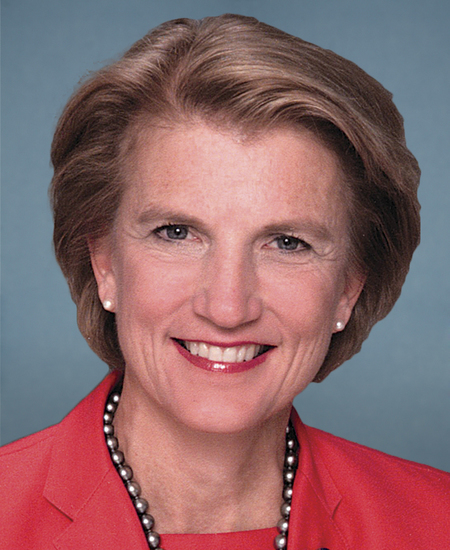
Sen. Shelley Moore Capito
Sponsored bills
Maddy summaryThis bill reauthorizes a federal program supporting pregnant and postpartum women with substance use disorders. It increases annual funding from $29.9 million to $38.9 million for fiscal years 2025-2029, updates terminology to "health care services," and requires applicants to include outreach plans targeting women disproportionately impacted by maternal substance use disorder. The program directly affects eligible women seeking treatment during pregnancy and postpartum, ensuring continued access to care through expanded funding and targeted outreach. The changes apply to the existing Public Health Service Act program (Section 508) without altering its core purpose.
Maddy summaryThe Give Kids a Chance Act of 2025 modifies FDA regulations to improve pediatric cancer drug development and extends incentives for rare pediatric disease treatments. It requires drug developers seeking approval for molecularly targeted cancer drugs to include pediatric-focused studies (e.g., dosing, safety) for specific cancer types, with new FDA guidance due within 12 months. The bill also extends the rare pediatric disease priority review voucher program through 2029 and mandates a GAO study to evaluate how effectively these vouchers spur development of treatments for rare pediatric diseases, reporting findings by 2034. This directly affects pharmaceutical companies developing cancer drugs and the FDA’s approval process, aiming to accelerate treatments for children with cancer and rare diseases.
Maddy summaryThis bill changes federal gun laws to directly benefit spouses of active-duty military members stationed overseas. It amends laws to explicitly allow spouses to receive firearms or ammunition from their service-member spouses at overseas duty stations (previously only the service member could). It also updates residency rules so spouses are treated as residents of the state where their service member is stationed for firearm law purposes, rather than their home state. These changes simplify legal firearm access for military families living abroad and take effect 180 days after the bill becomes law.
Maddy summaryS. 925 (Credit for Caring Act of 2025) creates a 30% tax credit for eligible family caregivers incurring qualified expenses to care for a certified relative with long-term care needs. It directly affects caregivers who earn over $7,500 annually and pay expenses exceeding $2,000 per year for care recipients certified by a healthcare professional as needing at least 180 days of care during the tax year. The credit covers costs like human assistance, home modifications, transportation, and respite care, with a maximum annual credit of $5,000 (adjusted for inflation). The credit phases out for taxpayers with modified adjusted gross income above $75,000 ($150,000 for joint filers). The bill applies to taxable years beginning after December 31, 2024.
Veterans 2nd Amendment Protection Act of 2025 This bill prohibits the Department of Veterans Affairs (VA) from transmitting certain information to the National Instant Criminal Background Check System (NICS) utilized by licensed importers or dealers of firearms. Specifically, the bill prohibits the VA from transmitting personally identifying information of a veteran or a beneficiary to the NICS solely on the basis that such veteran or beneficiary has an appointed fiduciary to manage their benefits, unless there is an order or finding of a judicial authority that such veteran or beneficiary is a danger to themselves or others.
Maddy summaryS 912, the Securing American Agriculture Act, requires the U.S. Department of Agriculture (USDA) to annually assess U.S. dependency on critical agricultural inputs supplied by the People’s Republic of China, including fertilizers, seeds, veterinary drugs, and equipment. The bill directs the USDA to report to Congress on supply chain vulnerabilities and recommend actions to reduce reliance on Chinese sources, such as promoting domestic or nearby production. It mandates that any private data shared for this assessment be aggregated and anonymized to protect business confidentiality, prohibiting disclosure of identifiable information. This bill directly affects USDA operations and the agricultural sector by establishing a formal process to evaluate and address supply chain risks.
Maddy summaryThis bill authorizes the U.S. Mint to produce commemorative coins honoring Roberto Clemente, a Hall of Fame baseball player and humanitarian, including $5 gold, $1 silver, and half-dollar coins. The coins, to be minted between January 1, 2027, and December 31, 2027, will feature designs reflecting Clemente's baseball career and activism, with surcharges funding the Roberto Clemente Foundation's youth sports, education, and disaster relief programs. The foundation will receive all surcharges ($5-$35 per coin) to support its mission, while the coins themselves are legal tender. This procedural bill does not create new policy but commemorates Clemente's legacy through a limited coin issuance.
Maddy summaryThis bill increases tax benefits for working families by expanding child care tax credits. It raises the employer-provided child care credit from 25% to 50% of qualified expenses (with the maximum credit increasing from $150,000 to $500,000), and adds a new refundable household care credit allowing up to 50% of eligible expenses (capped at $5,000 for one child or $8,000 for two+ children). Small businesses receive enhanced benefits, with a 60% credit rate and higher maximum ($600,000) for qualifying employers. The changes directly affect working parents, caregivers, and small businesses that provide or support child care.
Maddy summarySCONRES 8 is a Senate concurrent resolution supporting the Local Radio Freedom Act. It urges Congress not to impose a new fee or charge on local radio stations for playing music over the air, or on businesses like bars and restaurants that play radio broadcasts publicly. The resolution argues that such a fee would disrupt the current system where radio stations provide free promotional support to the music industry and essential local services like emergency weather updates. It claims the existing model has fostered a thriving music and broadcasting sector without harming small businesses or consumers. This resolution does not create law but expresses congressional support for maintaining the current fee-free system.