

Accountability Through Electronic Verification Act This bill expands the E-Verify program by requiring all employers to use it and permanently reauthorizes the program. Currently, E-Verify use is voluntary for most employers, although some states mandate its use. All employers must use E-Verify to confirm the identity and employment eligibility of all recruited, referred, or hired individuals, including current employees who were never verified under the program. Failure to use E-Verify shall create a rebuttable presumption that the employer is violating immigration law. U.S. Citizenship and Immigration Services must generate weekly reports about individuals who have received a final nonconfirmation of employment eligibility. The Department of Homeland Security (DHS) must use the report to enforce immigration laws. The bill increases civil and criminal penalties for hiring non-U.S. nationals ( aliens under federal law) who are not authorized to work. DHS must bar repeat offenders and those criminally convicted from holding federal contracts, grants, or cooperative agreements. The Social Security Administration, Internal Revenue Service, Department of the Treasury, and DHS must jointly establish a program to share information to help identify non-U.S. nationals who are not authorized to work. The bill establishes the Employer Compliance Inspection Center within Homeland Security Investigations of U.S. Immigration and Customs Enforcement. The center's duties include processing I-9 employment eligibility verification forms and ensuring compliance with employment eligibility laws. DHS must report to Congress on ways to simplify procedures relating to I-9 forms and on whether the I-9 process should be eliminated.
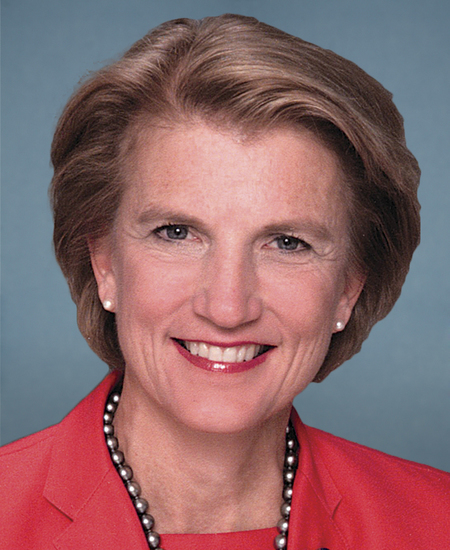
Sen. Shelley Moore Capito
Sponsored bills
Maddy summaryThe Working Families Flexibility Act of 2025 allows private sector employees to earn time off instead of cash for overtime hours, at a rate of 1.5 hours of time off for every hour of overtime worked. To qualify, employees must have worked at least 1,000 hours for their employer in the prior 12 months, and agreements for time off must be voluntary, in writing, and not tied to employment conditions. Employers must pay cash for unused time off by January 31 each year (or another agreed 12-month period), with a cap of 160 hours of accrued time. The bill excludes public employees, includes enforcement provisions for violations, and expires 5 years after enactment.
Maddy summaryThis bill prohibits U.S. government spending in Gaza territory until the President certifies to Congress that funds won't benefit Hamas, designated terrorist groups, or entities controlled by them. It also blocks U.S. funds channeled through United Nations entities in Gaza unless the President certifies those entities aren't promoting anti-Israel or anti-Semitic content. The certification requirements apply to all federal funding, including aid delivered via international organizations. This directly affects U.S. foreign aid programs operating in Gaza by imposing new conditions before funds can be used.
Maddy summaryThis bill repeals federal waivers that allow California to set its own vehicle and engine emission standards under the Clean Air Act. It directly affects California's Air Resources Board (CARB), prohibiting the state from adopting or enforcing standards for nonroad engines (like construction equipment, farm vehicles, and locomotives) or new motor vehicles. Key provisions include removing federal authorization for California's vehicle standards (Section 177) and invalidating all existing waivers for state emission rules. The bill would eliminate California's ability to enforce its own emission requirements for these categories, shifting authority entirely to federal standards.
Maddy summaryThis bill amends Section 60123(b) of Title 49, U.S. Code, to expand criminal penalties for interfering with energy infrastructure. It broadens the prohibited actions from "damaging or destroying" to include vandalizing, tampering with, disrupting operations or construction, or preventing operations of energy facilities like pipelines. The change directly affects individuals who interfere with energy transportation infrastructure, increasing legal consequences for a wider range of disruptive acts. The bill focuses on strengthening existing penalties without creating new programs or funding.
Radiation Oncology Case Rate Value Based Program Act of 2025 or the ROCR Value Based Program Act This bill establishes a specialized payment program under Medicare for providers and suppliers of radiation oncology services. Specifically, the Centers for Medicare & Medicaid Services (CMS) must establish a program under which radiation therapy providers (i.e., hospital outpatient departments) and suppliers (i.e., physician group practices and freestanding radiation therapy centers) receive payments for each episode of care provided to individuals with specified types of cancer. An episode of care means the period beginning on the day radiation therapy planning is furnished to the individual and ending (1) for individuals with bone or brain metastases, 30 days later; and (2) for individuals with other cancer types, 90 days later. Participation in the program is mandatory for providers and suppliers that participate in Medicare, unless the provider or supplier is part of a state-based Center for Medicare & Medicaid Innovation model or qualifies for a significant hardship exemption. The CMS must set payment rates for the program based on national payment rates with specified adjustments (e.g., geographic adjustments). Providers and suppliers who provide certain transportation services for individuals under their care may receive an additional payment. Providers and suppliers must be accredited in accordance with certain standards, subject to payment reductions. The Government Accountability Office must report on (1) implementation of the program, and (2) underserved areas that are in need of more or newer radiation therapy resources.
Maddy summaryThis bill, the Major Richard Star Act (S 1032), allows veterans with combat-related disabilities to receive both their military retired pay and Veterans Affairs disability compensation simultaneously. It amends U.S. Code sections to remove the automatic reduction in retired pay that previously forced these veterans to choose between the two payments. The key change ensures veterans with combat-related disabilities qualify for full retired pay without offset against their VA disability benefits, effective for payments starting after the bill's enactment date. This directly affects veterans receiving military retired pay under Chapter 61 who also qualify for VA disability compensation for combat-related injuries.
Maddy summaryThe PARC Act requires all National Park units that charge entrance fees to accept cash payments. It directly affects visitors who pay with cash and park staff managing fee collection. The key provision amends federal law to mandate cash acceptance as a standard payment method at every fee-charging park. This policy change ensures cash remains a valid option for park entry fees without altering fee amounts or park operations.
Maddy summaryS 990, the Freedom to Haul Act of 2025, prohibits the Environmental Protection Agency (EPA) from implementing or enforcing Phase 3 greenhouse gas emissions standards for heavy-duty vehicles (finalized in April 2024). It amends the Clean Air Act to require that future emissions rules for vehicles cannot mandate specific technologies or limit the availability of new trucks based on engine type. This directly affects EPA regulatory authority and vehicle manufacturers, ensuring a broader range of new truck options remains available. The bill focuses on preventing regulatory restrictions on vehicle choice, not on emissions outcomes.
Maddy summaryThis bill repeals the EPA's 2024 emissions standards for light- and medium-duty vehicles and amends the Clean Air Act to prevent future regulations from mandating specific technologies or limiting new vehicle availability based on engine type. It directly affects the EPA's regulatory authority and vehicle manufacturers by blocking technology mandates and restrictions on engine types in new vehicles. Key provisions require the EPA to revise regulations within 24 months to align with these changes, ensuring no federal rules limit vehicle choices based on engine technology. The bill's title is misleading, as it does not address automobile retail sales or consumer choice at dealerships.