

This bill increases the annual limit on the tax credit for qualified railroad track maintenance expenses (also referred to as the short line railroad tax credit) and expands eligibility for claiming the credit. Under current law, the tax credit is limited each tax year to $3,500 multiplied by the sum of the number of miles of railroad track owned or leased by the taxpayer (miles owned or leased) and the number of railroad track miles assigned to the taxpayer by a Class II or III railroad (miles assigned). This bill increases the annual limit to $6,100 multiplied by the sum of miles owned or leased and miles assigned. The $6,100 amount used in the calculation of the tax credit limit is adjusted for inflation for tax years beginning after 2025. The bill also expands eligibility for the tax credit to include gross expenses for maintaining railroad tracks owned or leased as of January 1, 2024. Under current law, the tax credit is limited to gross expenses for maintaining railroad tracks owned or leased as of January 1, 2015.
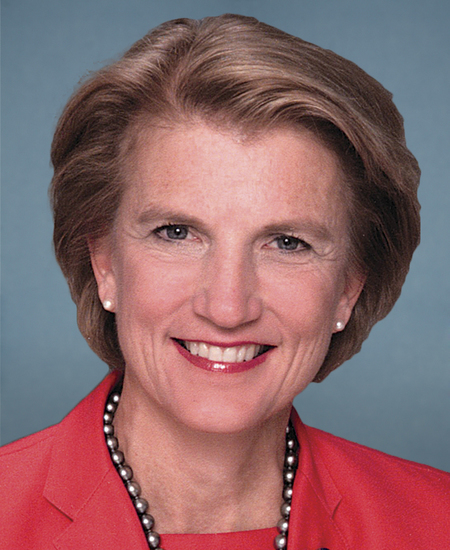
Sen. Shelley Moore Capito
Sponsored bills
Maddy summaryThe Stand with Israel Act would prohibit U.S. federal funds from being used to pay the U.S. share of United Nations dues or contributions to UN programs, specialized agencies, or related entities if the UN or a UN entity expels, downgrades, or suspends Israel's membership or restricts Israel's full and equal participation as a member state. This means the U.S. government would withhold payments to the UN in cases where the UN takes such actions against Israel. The bill directly affects the Department of State and other federal agencies responsible for UN funding, requiring them to block these payments under specified conditions. It does not compel the UN to act but would prevent U.S. financial support in response to UN decisions impacting Israel's membership status.
Maddy summaryThis bill directs the Department of Education to use the International Holocaust Remembrance Alliance (IHRA) definition of antisemitism when reviewing discrimination complaints under Title VI of the Civil Rights Act. It specifically applies to cases involving discrimination based on Jewish ancestry or ethnic characteristics in schools and programs receiving federal funding. The bill clarifies that this guidance does not expand the Department’s authority, alter existing discrimination standards, or affect First Amendment rights. It aims to ensure consistent enforcement against antisemitism in federally funded education settings, building on existing Department practices since 2019.
Maddy summarySRES 186 designates April 29, 2025, as National Fentanyl Awareness Day to raise public awareness about the dangers of counterfeit fentanyl pills. The resolution specifically aims to inform families and young people about how fake pills - often disguised as legitimate medications - contribute to overdose deaths, citing that illicit fentanyl was involved in 81% of drug deaths among youth aged 14-23 in 2023. It does not create new laws or funding but formally supports existing efforts to combat counterfeit pills and encourages awareness campaigns. The resolution highlights alarming statistics, including 51,010 fentanyl-related overdose deaths in 2024 and low youth awareness (only 55% of teens knew about counterfeit pills).
Maddy summaryThe Affordable Housing Credit Improvement Act of 2025 updates the Low-Income Housing Tax Credit program to increase affordability and accessibility for low-income households. It raises state allocation amounts through revised per capita calculations, modifies income eligibility rules to better serve extremely low-income households, and adds protections for domestic violence victims in housing. The bill expands "difficult development areas" to include rural areas and Indian lands, and changes the program's name from "Low-Income Housing Credit" to "Affordable Housing Credit" to better reflect its purpose. These changes aim to make affordable housing more accessible while improving transparency and accountability in the program's implementation.
Maddy summaryThis resolution designates April 2025 as "Second Chance Month" to raise public awareness about barriers faced by people with criminal records. It directly affects individuals returning from incarceration who encounter automatic legal and societal restrictions - such as employment, housing, and education access - often unrelated to their original offense. The resolution calls on communities, employers, and organizations to promote awareness of these "collateral consequences" and support reentry efforts through public actions and programs. It is a non-binding symbolic gesture, not a policy change, referencing existing laws like the Second Chance Act of 2007 and First Step Act of 2018.
Maddy summaryThis bill requires most health insurance plans to cover diagnostic and supplemental breast examinations with no out-of-pocket costs (like deductibles or copays) for enrollees. It specifically covers medically necessary exams used to evaluate abnormalities (diagnostic) or for high-risk screening (supplemental), following national cancer guidelines. Insurance plans may still require prior authorization but cannot impose cost-sharing for these services. The rule applies to group and individual plans starting January 1, 2026, and does not override stricter state laws protecting coverage.
Maddy summaryThis resolution designates the week of April 19-27, 2025, as "National Park Week" in the U.S. Senate. It encourages the public to responsibly visit, experience, and support national parks across the United States. The resolution highlights the National Park System’s role in preserving natural and cultural resources while acknowledging its economic impact and recreational value. It does not create new laws or alter funding, focusing solely on recognition and public engagement.
Maddy summarySRES 181 designates April 14-20, 2025, as "National Osteopathic Medicine Week" to honor osteopathic physicians and medical students in the U.S. The resolution recognizes over 157,000 osteopathic physicians, their training in rural and underserved communities, and their 150-year history since the founding of the first osteopathic medical school. It specifically acknowledges their whole-person healthcare approach and contributions to the U.S. healthcare system. This is a symbolic resolution with no new policy or funding changes; it simply celebrates the profession.
Maddy summaryThe Combating Organized Retail Crime Act amends federal law to strengthen legal tools for addressing organized retail crime, including theft from stores, online, and supply chains. It establishes a new Organized Retail and Supply Chain Crime Coordination Center within the Department of Homeland Security to coordinate Federal, State, local, and tribal law enforcement efforts. The Center will share information, assist with investigations, track crime trends, and provide training to combat these crimes. The bill expands legal definitions to include organized retail crime as a specific category and requires annual reports on the Center's activities. The Center will operate for 7 years before sunset.