

Supplemental Oxygen Access Reform Act of 2025 or the SOAR Act of 2025 This bill establishes certain requirements with respect to the payment and provision of supplemental oxygen and related services under Medicare. For example, the bill provides for separate payments, indexed to inflation, of oxygen and related equipment, supplies, and services under Medicare (rather than under the competitive acquisition program). It also specifically covers services that are provided by respiratory therapists under Medicare and provides for an additional payment adjustment for these services. Additionally, the bill (1) requires the Centers for Medicare & Medicaid Services to develop an electronic template for providers to use when prescribing oxygen and related equipment, supplies, and services; and (2) establishes certain rights for beneficiaries receiving these items and services, such as the right to choose their suppliers and to receive clear communications and be informed about the services provided.
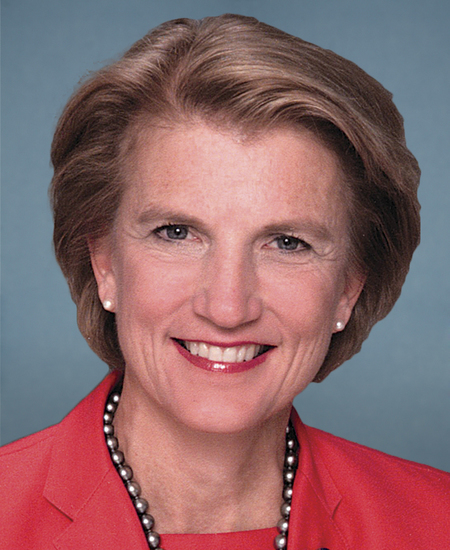
Sen. Shelley Moore Capito
Sponsored bills
Maddy summaryS 1423, "Hammers' Law," expands a legal limitation on certain damages from commercial aviation accidents to include cruise ship voyages. It defines a "cruise ship" as a passenger vessel carrying at least 250 people with sleeping accommodations, embarking or disembarking in the U.S., and not on a coastwise voyage. The bill specifically extends the existing rule that limits claims for "nonpecuniary damages" (like loss of companionship or emotional harm) to apply to cruise ship incidents, just as it does for commercial aviation accidents. This change directly affects passengers involved in accidents on qualifying cruise ships by restricting their ability to seek compensation for certain non-monetary losses.
Maddy summaryThe FIGHT Act of 2025 amends the Animal Welfare Act to ban gambling on animal fighting events (including broadcasts), prohibit transporting roosters (defined as male chickens over 6 months old) for fighting, and make it illegal to sponsor, exhibit, or allow minors under 16 to attend such events. It allows citizens to file civil lawsuits to stop violations after 60 days' notice to authorities, with fines up to $5,000 per violation. The law also permits seizure of property used to facilitate violations, such as land or buildings. It does not override state or local laws on animal fighting unless there is a direct conflict.
Maddy summaryThis bill increases the federal tax credit for rehabilitating historic buildings from 20% to 30% for projects under $3.75 million (or $5 million in rural areas), up from the current rate. It allows property owners to transfer unused credits to other taxpayers and expands eligibility to include more building types. The bill also removes certain tax adjustments for these projects and simplifies rules for tax-exempt properties. These changes primarily affect developers and owners of small historic properties, especially in rural communities seeking tax incentives for rehabilitation.
Maddy summaryThis bill reauthorizes a federal pilot program (extending it through 2030) to provide housing support for individuals recovering from substance use disorders. It requires states receiving funds to use at least $50 million annually for stable housing, including a new allowance for up to 1% of funds to purchase furniture for temporary housing. States must report annually on housing projects, resident demographics, program outcomes, and strategies for expanding recovery housing. The program directly affects states administering housing grants and individuals seeking stable housing during opioid recovery.
Maddy summaryThis bill makes the federal adoption tax credit refundable, allowing eligible taxpayers to receive a refund even if they owe no income tax. It directly affects families who paid qualified adoption expenses (like court fees or agency costs) but previously couldn't claim the full credit due to its non-refundable status. Key provisions include redesignating the credit in tax law as "section 36C" (making it refundable), adding standardized third-party affidavits to verify adoptions, and ensuring existing credit carryforwards are treated as refundable starting in 2025. The changes take effect for tax years beginning after December 31, 2024.
Maddy summaryThis bill (S 1481) repeals a specific provision (Section 13532 of Public Law 115-97) related to advance refunding bonds. It restores the previous rules allowing state and local governments to issue these bonds for infrastructure projects, as if the 2017 amendment had never been enacted. The change directly affects state and local governments seeking to refinance existing debt using advance refunding bonds. The bill takes effect upon enactment and does not create new funding or alter infrastructure project eligibility.
Maddy summaryThis bill requires the Federal Trade Commission (FTC) to study how pharmacy benefit managers (PBMs) and other intermediaries affect prescription drug prices and competition. Specifically, the FTC must report within one year on whether PBMs charge different prices to pharmacies, steer patients toward pharmacies they own, use pharmacy data for profit, or design formularies to favor expensive drugs. The bill also mandates an interim report within six months and a separate study on sole-source drug manufacturers and enforcement challenges. It does not directly change drug prices or create new regulations, but instead seeks to gather data to inform potential future policy actions. The study focuses on transparency and competition in the pharmaceutical supply chain, with no immediate price-reducing mechanisms.
Maddy summaryThis resolution (SRES 159) is a ceremonial Senate measure honoring the late Senator John Bennett Johnston, Jr. (1932-2024), who represented Louisiana in the U.S. Senate from 1972 to 1997. It commemorates his career, including his work on energy policy, flood control, and Louisiana conservation efforts, and requests the Senate adjourn in his memory while sending condolences to his family. As a non-binding resolution, it has no policy impact or direct effect on any individuals or laws.
Maddy summarySenate Joint Resolution 45 seeks to block an Environmental Protection Agency (EPA) rule that would have allowed California to enforce its Advanced Clean Cars II vehicle emission standards. The resolution uses the congressional disapproval process under federal law to declare the EPA rule invalid, preventing California from implementing its stricter pollution controls for cars and trucks. If passed, this resolution would stop the rule from taking effect, meaning California could not override federal vehicle emission standards with its own requirements. The bill directly affects California's ability to set state-level environmental regulations for motor vehicles and the EPA's regulatory authority.