

Maddy summaryThis bill (S 1949) creates new penalties for manufacturing or distributing candy-flavored drugs marketed to minors. It specifically targets producers who combine schedule I or II controlled substances with candy/beverage products, market them to appear like candy, or modify them with candy-like flavors/coloring, knowing they’ll be sold to people under 18. First offenses carry up to 10 additional years in prison, while repeat offenses carry up to 20 additional years. Exceptions apply for FDA-approved medications sold as prescribed and products altered under a doctor’s direction for legitimate medical use.
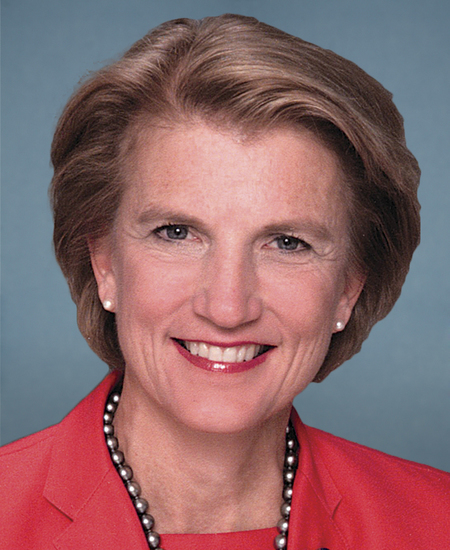
Sen. Shelley Moore Capito
Sponsored bills
Maddy summaryThis bill (SJRES 55) is a congressional resolution seeking to block a rule issued by the National Highway Traffic Safety Administration (NHTSA). The NHTSA rule, published in January 2025, established safety standards for hydrogen fuel systems in vehicles. The resolution aims to nullify this rule through a formal disapproval process under federal law, meaning the safety standards would not take effect. This directly affects hydrogen vehicle manufacturers and dealers who would have been required to comply with the NHTSA rule.
Maddy summaryThis resolution (SRES 255) is a ceremonial Senate measure honoring former U.S. Senator Christopher "Kit" Bond of Missouri, who died on May 13, 2025. It recognizes his 40+ years of public service, including his roles as Missouri Governor (1973-1977, 1981-1985) and U.S. Senator (1987-2011). The resolution directs the Senate to adjourn briefly as a mark of respect and transmit a copy to his family. It has no policy impact or direct effect on constituents, as it is purely commemorative.
Maddy summarySRES 250 is a symbolic Senate resolution designating May 2025 as National Foster Care Month. It recognizes the challenges faced by the approximately 368,530 children in foster care in the U.S. and encourages Congress to develop policies improving their lives. The resolution does not create new laws or funding; it solely raises awareness and acknowledges foster parents, workers, and youth. It highlights issues like prolonged care (average 22.6 months), educational instability, and the need for better support for youth aging out (18,538 in 2022). As a procedural resolution, it has no binding effect on policy changes.
Maddy summaryThis resolution recognizes May as Jewish American Heritage Month to celebrate Jewish Americans' contributions to U.S. society, culture, and history. It calls on elected officials, civil society leaders, and educational institutions to condemn antisemitism, educate the public about Jewish heritage, and ensure the safety of Jewish communities. The resolution cites rising antisemitic incidents - documented by the ADL as a 344% increase over five years - and emphasizes countering hate through awareness and inclusion. It does not create new laws but urges proactive measures to protect Jewish Americans, particularly following the post-October 7, 2023, surge in antisemitism.
Maddy summaryThe Crime Victims Fund Stabilization Act of 2025 amends the law governing deposits into the Crime Victims Fund, adding two new sources: funds from declined criminal prosecutions (without conviction) and certain False Claims Act recoveries (from 2025 through 2030). It specifically excludes two types of False Claims Act funds from these deposits: payments to whistleblowers (qui tam plaintiffs) and reimbursements for government fraud damages. This bill directly affects the Crime Victims Fund, which provides support to victims of crime, and adjusts how federal agencies handle False Claims Act cases. The changes aim to modify the fund's funding sources without altering the False Claims Act itself.
Maddy summaryS 1843, the Second Chance Reauthorization Act of 2025, extends funding for existing federal reentry programs through 2030 instead of 2023. It updates timeframes across multiple programs, including state reentry demonstration projects (adding substance use disorder treatment and housing services), family-based substance abuse grants, prison education evaluations, career training for incarcerated individuals, and community mentoring programs. These programs directly support people returning from incarceration by providing critical services like recovery support, job training, and transitional housing. The bill makes no new policy changes but continues current federal funding mechanisms for reentry assistance.
Maddy summarySRES 236 is a non-binding Senate resolution condemning Russia’s abduction and forced transfer of Ukrainian children, citing over 19,500 confirmed cases as of April 2025. It urges that all Ukrainian children abducted by Russia be returned before any peace agreement is finalized, emphasizing this as a prerequisite for a just resolution to the war. The resolution references Russia’s changed adoption laws, violations of international treaties, and documented human rights abuses against children in occupied territories. It does not create new law but formally expresses the Senate’s position on this issue.
Maddy summaryThis bill requires Medicare Advantage plans to implement electronic prior authorization systems by 2028 and report detailed transparency data starting in 2027. Plans must publicly disclose approval/denial rates, average processing times (including for appeals), technology use, and other metrics for covered medical services. It mandates 24-hour response standards for expedited requests and routinely approved services, with data collection to analyze access patterns and potential disparities in rural/low-income communities. These changes directly affect Medicare Advantage plans, providers, and seniors enrolled in these plans by standardizing and increasing visibility into prior authorization processes.
Maddy summaryThis bill expands benefits for public safety officers (like police and firefighters) who develop certain cancers linked to their work. It creates a presumption that specific cancers - such as lung, bladder, or mesothelioma - were caused by job-related exposure to carcinogens, if the officer served at least 5 years, was diagnosed within 15 years of leaving active duty, and the cancer caused death or permanent disability. The list of covered cancers will be updated every 3 years based on medical evidence from agencies like the National Institute for Occupational Safety and Health. Claims must be filed within 3 years of the bill’s enactment, applying to cases involving deaths or disabilities occurring after January 1, 2020.