

Maddy summaryThis bill restricts how credit bureaus share consumer credit reports during mortgage applications. It limits sharing with third parties unless the request is for a firm mortgage offer or the recipient is the loan originator, servicer, or a bank holding the consumer's account. The law directly affects consumers (by limiting data sharing), credit bureaus (requiring new compliance), and mortgage lenders/banks (with restricted access). Key provisions require explicit consumer authorization for sharing and prevent broad data use during prescreening for home loans.
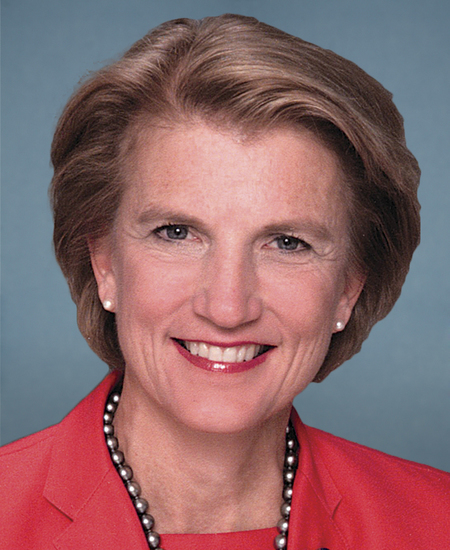
Sen. Shelley Moore Capito
Sponsored bills
Maddy summaryThis bill creates a new Office of Policy Development and Cybersecurity within the National Telecommunications and Information Administration (NTIA). The office, led by an Associate Administrator, will develop market-based policies to promote innovation, competition, and digital inclusion in communications technologies while coordinating cybersecurity and privacy policies. It will conduct studies on internet access, foster collaboration between security researchers and service providers, and provide guidance on securing communications networks. The bill directly affects the NTIA's operations and indirectly impacts the broader communications industry, small businesses, and rural service providers through its policy coordination efforts.
Maddy summaryThis resolution designates June 6, 2025, as National Naloxone Awareness Day to raise public awareness about naloxone, a life-saving medication that reverses opioid overdoses. It urges federal, state, local governments, and organizations to improve access to naloxone and educate communities on its use, without creating new laws or funding. The resolution focuses on recognition and education, not policy changes or mandates.
Maddy summaryThis bill reauthorizes the NIH's Institutional Development Award (IDeA) program, formally naming it as such and defining eligible states. It targets research institutions in states receiving below-median NIH grant funding (referred to as "IDeA States"), directly affecting those institutions and their ability to compete for NIH funding. Key provisions include requiring NIH to annually report on program strategy, specific awards made, integration efforts with non-IDeA states, and measurable outcomes like research quality improvements over five years. The bill clarifies program administration and mandates transparency through public reporting, without creating new funding or altering eligibility criteria.
Maddy summaryThe Insure Cybersecurity Act of 2025 establishes a working group within the Commerce Department to improve clarity around cyber insurance policies. The working group, composed of federal agencies (like CISA and the FTC), state regulators, and stakeholders, will analyze and explain technical policy terms, coverage limitations, and how policies relate to common cyber incidents (such as ransomware) in plain language for customers - especially small businesses. It will develop voluntary resources for insurers, brokers, and customers to better evaluate coverage and understand policy terms, and submit a report to Congress within one year. The bill does not change insurance regulations but focuses on making existing policies more transparent and accessible.
Treat and Reduce Obesity Act of 2025 This bill expands Medicare coverage of intensive behavioral therapy for obesity. Specifically, the bill allows coverage for therapy that is provided by (1) a physician who is not a primary care physician; or (2) other health care providers (e.g., physician assistants and nurse practitioners) and approved counseling programs, if provided upon a referral from, and in coordination with, a physician or primary care practitioner. Currently, such therapy is covered only if provided by a primary care practitioner. The bill also allows coverage under Medicare's prescription drug benefit of drugs used for the treatment of obesity or for weight loss management for individuals who are overweight.
Maddy summaryS 1974 (the ABC-ED Act of 2025) requires hospitals to track real-time emergency department bed capacity and boarding rates using modernized public health data systems, with grant funding to support this. It also creates a Medicare pilot program testing improved emergency care for older adults (through staffing, infrastructure, and geriatric protocols) and for psychiatric crisis patients (via dedicated units and faster transfers to post-acute facilities). The bill mandates a study by the Comptroller General to evaluate best practices for these data systems and their impact on emergency department wait times, boarding rates, and EMS offload times. The study must be completed within one year of enactment and reported to Congress. This bill directly affects hospitals, emergency departments, and post-acute care facilities (like skilled nursing homes) through new data requirements and pilot program participation.
Maddy summaryS 1960 (PEAKS Act) modifies distance requirements for critical access hospitals (CAHs) in rural areas with mountainous terrain or limited road access. It allows hospitals already designated as CAHs that met the 15-mile distance rule at their last certification to be deemed compliant after January 1, 2026, provided they have a new facility within 10-15 miles. This change specifically affects CAHs in remote regions where road conditions make meeting standard distance thresholds difficult. The bill requires the Health Secretary to issue regulations within one year of enactment to implement these provisions. It does not alter current CAH requirements but extends flexibility for qualifying hospitals facing geographic challenges.
Maddy summaryThe Nutrition CARE Act of 2025 (S 1971) expands Medicare Part B coverage to include medical nutrition therapy for beneficiaries with eating disorders, starting January 1, 2026. It directly affects Medicare beneficiaries diagnosed with eating disorders, including those from historically underserved groups like Black, Indigenous, and People of Color who face significant treatment gaps. The bill amends Medicare law to cover 13 hours of initial medical nutrition therapy (including a 1-hour assessment) and 4 hours annually for ongoing management, provided by registered dietitians or nutrition professionals following a referral from a physician or psychologist. This change addresses a current gap where Medicare did not cover outpatient medical nutrition therapy for eating disorders, aligning coverage with established treatment guidelines.
Maddy summaryThe Energy Choice Act (S 1945) prohibits state or local governments from restricting how energy is delivered to end-users based on the energy source. It specifically bans laws or regulations that limit connection, installation, or access to energy services (like natural gas, electricity, or renewable fuels) solely because of the energy type. This directly affects state/local agencies and utilities by preventing them from imposing source-specific restrictions on energy infrastructure. The bill aims to ensure all energy sources can be delivered without local regulatory barriers based on their origin.