

Maddy summaryThe Richard L. Trumka Protecting the Right to Organize Act of 2023 strengthens workers' rights to organize and bargain collectively by amending key labor laws. It clarifies that multiple employers can be held accountable for labor practices (joint employer definition), makes it harder for employers to misclassify workers as independent contractors, and prohibits employers from permanently replacing workers who strike. The bill requires employers to provide detailed voter lists for union elections, strengthens protections against anti-union discrimination, and increases penalties for unfair labor practices (up to $100,000 for repeat violations). It directly affects workers seeking union representation, employers who must comply with new requirements, and labor organizations conducting organizing campaigns. The bill aims to make it easier for workers to form unions and negotiate better wages and working conditions.
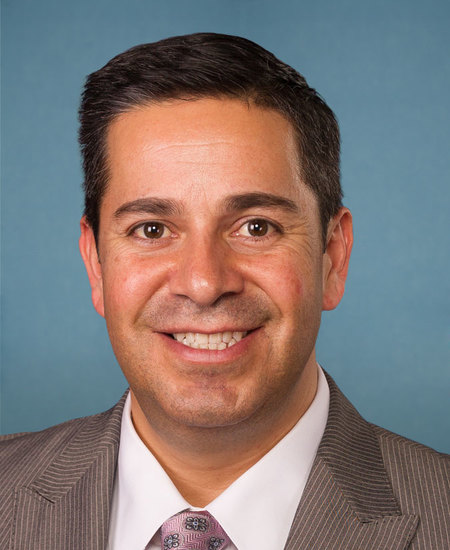
Sen. Ben Ray Luján
Sponsored bills
Maddy summarySRES 294 is a symbolic Senate resolution expressing support for designating May 2023 as "American Stroke Month." It does not create new laws or allocate funds, but encourages public awareness about stroke prevention, recognition of symptoms (using the F.A.S.T. acronym), and emergency response. The resolution specifically urges Americans to learn stroke risk factors, identify warning signs, and call 911 immediately during a stroke. It also commends organizations and efforts promoting stroke education and care improvements. As a procedural resolution, it directly affects public awareness efforts but has no binding legal effect on policy or healthcare.
Maddy summaryThis bill provides additional funding to cover administrative costs for three federal nutrition programs. State agencies administering the Commodity Supplemental Food Program, Emergency Food Assistance State plans, and the Seniors Farmers' Market Nutrition Program will receive extra funds - 70%, 20%, and 10% respectively - of existing appropriations designated for these programs. The funding, totaling $1 million annually for fiscal years 2024 through 2028, directly supports state agencies' operational expenses. It does not change program eligibility or benefits but ensures states have resources to manage these nutrition assistance programs efficiently.
Maddy summaryS 2306, the New Mexico Veteran Burial Dignity and Honor Act, requires the U.S. Department of Veterans Affairs to replace all flat grave markers with upright markers at Santa Fe National Cemetery by January 1, 2028. It also mandates that all future markers installed at this cemetery after the bill's enactment must be upright. The bill authorizes $15 million in funding for fiscal years 2024-2028 to cover the marker replacement costs. This policy directly affects veterans buried at Santa Fe National Cemetery and their families by changing the physical markers at gravesites.
Maddy summaryThis bill authorizes the U.S. Mint to produce commemorative coins for the 2028 Los Angeles Olympic and Paralympic Games. It specifies four coin types ($5 gold, $1 silver, half-dollar clad, and proof silver $1) with set mintage limits, design requirements (including "2028" and "Liberty" inscriptions), and a 1-year issuance window starting January 1, 2028. All coins include surcharges ($5-$50 per coin) that fund the U.S. Olympic and Paralympic Committee for the Games and legacy programs like youth sports promotion. The coins are legal tender but sold at face value plus surcharge and production costs, with no net cost to the federal government.
Maddy summaryThis bill changes how biosimilar drugs are approved by automatically considering them interchangeable with brand-name drugs, removing a previous requirement for separate approval. It requires the FDA to brief congressional health committees before demanding certain safety studies on switching between biosimilars and reference drugs. The law affects drug manufacturers seeking FDA approval for biosimilars and the FDA itself. These changes apply only to new applications approved after the bill's enactment.
Maddy summaryThe Fairness for Farm Workers Act (S 2253) updates overtime rules for agricultural workers under federal law. It gradually reduces the maximum workweek before overtime pay applies: starting at 55 hours in 2024, decreasing to 40 hours by 2027 for most farms. The bill also removes existing exemptions that previously allowed farms to avoid overtime pay for certain workers. Small farms (with 25 or fewer employees) have delayed compliance dates, with full 40-hour limits applying by 2030 for them, compared to 2027 for larger farms.
Maddy summaryThe Social Security 2100 Act (S 2280) would make significant changes to strengthen Social Security benefits for current and future recipients. Key provisions include eliminating the 5-month waiting period for disability benefits, increasing minimum benefits for long-term low earners, extending child benefits for post-secondary students up to age 26, and providing caregiver credits for family members caring for dependent relatives. The bill also changes how benefits are calculated by including earnings over $400,000 in the benefit formula, using more accurate cost-of-living adjustments based on CPI-W or CPI-E, and repealing provisions that reduce benefits for some government workers. These changes would directly affect millions of Social Security beneficiaries, with most provisions applying to benefits payable from 2025 through 2034.
Maddy summarySRES 284 is a Senate resolution expressing support for designating June 2023 as "National Dairy Month." It recognizes the dairy industry's role in providing essential nutrients like calcium and vitamin D for a healthy diet, its economic impact (supporting $793 billion in U.S. economic activity and 3.2 million jobs), and dairy producers' environmental stewardship. The resolution does not create new laws or policies but serves as a symbolic acknowledgment of the industry's contributions. It was introduced by multiple senators and refers to nutritional guidelines emphasizing dairy's health benefits.
Maddy summaryThis bill establishes a voluntary federal program to help landowners reduce groundwater use while maintaining agricultural production. It allows eligible entities (like state governments, tribes, or nonprofits) to purchase conservation easements on groundwater rights from landowners in areas facing significant groundwater depletion, covering up to 65% of the easement costs. The easements require measurable reductions in groundwater pumping but permit continued farming and compatible land uses, with programs prioritizing areas where groundwater monitoring exists. Landowners with eligible land - such as cropland, rangeland, or pasture - can participate, and the program must support local groundwater management goals while protecting community and environmental benefits.