

Maddy summaryThis bill, known as the DISCLOSE Act of 2026, strengthens campaign finance transparency by requiring corporations, labor organizations, Super PACs, and other entities to disclose more information about their spending and funding sources. It closes loopholes that allow foreign nationals to contribute to U.S. elections by expanding disclosure requirements and prohibiting foreign money in ballot initiatives and referenda. The legislation also mandates that certain advertisements include lists of top funders and requires reporting of spending related to federal judicial nominations. Additionally, it streamlines administrative processes for challenging campaign finance laws and ensures coordination between the Federal Election Commission and financial authorities to enforce these rules.
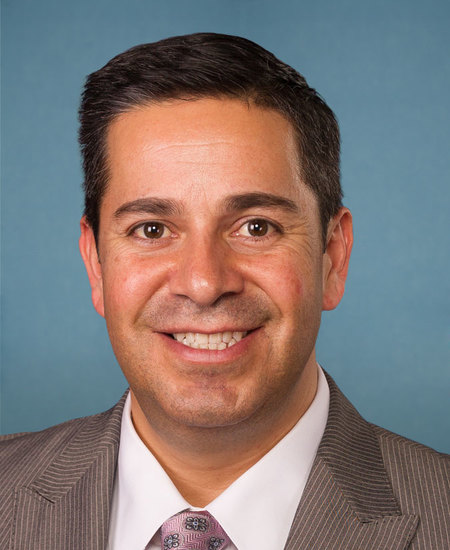
Sen. Ben Ray Luján
Sponsored bills
Maddy summaryThis bill, called the AI Fraud Accountability Act of 2026, makes it a federal crime to use artificial intelligence or other technology to create fake images or voices of real or imaginary people with the intent to defraud others of money or property. It also gives the Federal Trade Commission authority to enforce these rules and allows for criminal penalties including fines and up to three years in prison for violators. The law includes exceptions for law enforcement and intelligence activities, and it does not restrict parody, satire, or journalism protected by the First Amendment. Additionally, the bill creates a working group to develop best practices for detecting digital impersonation fraud and establishes international cooperation agreements to help combat cross-border violations.
NASA Transition Authorization Act of 2025 This bill reauthorizes through FY2025 the programs and activities of the National Aeronautics and Space Administration (NASA). The bill also revises certain existing NASA programs and establishes new programs related to space exploration, research, and technology. For example, the bill directs NASA to continue its efforts to support crewed lunar landings and Mars explorations, including through partnerships with the private sector (i.e., the Moon to Mars and Artemis programs). The bill also requires NASA to maintain the capability for a continuous human presence in low-Earth orbit until and beyond the retirement of the International Space Station (ISS). NASA may solicit proposals for the development of a commercial space station in low-Earth orbit. When such a station is ready, NASA must initiate an orderly transition of operations from the ISS to the commercial station. NASA must also develop a de-orbit vehicle for the eventual retirement of the ISS. ( Low-Earth orbit encompasses orbits at an altitude of 1,200 miles or less.) In addition, NASA is authorized to develop an architecture for lunar communications and navigation, and must develop a strategy to implement a standardized lunar time to support operations and infrastructure on and around the moon. NASA must also continue to conduct research relating to advanced air mobility, unmanned aircraft systems (i.e., drones), and hypersonic technologies. Finally, the bill requires the Government Accountability Office to report on fire and emergency services at NASA launch and reentry facilities.
Maddy summarySRES 624 is a symbolic Senate resolution designating the week of March 2-6, 2026, as "National Social and Emotional Learning Week." It recognizes the role of social and emotional learning (SEL) in supporting students' academic success, well-being, and long-term outcomes, citing research on SEL's benefits. The resolution does not create new laws or funding but encourages federal agencies to advance SEL initiatives. It directly affects no specific group, as it is a non-binding expression of support. The resolution was introduced by Senators Durbin, Kaine, Van Hollen, and others.
Maddy summaryThis bill would transition Puerto Rico from its current nutrition assistance block grant system to the federal Supplemental Nutrition Assistance Program (SNAP), aligning it with how other U.S. states receive food aid. The legislation requires Puerto Rico to submit an operational plan within 180 days, with the Department of Agriculture providing technical assistance and approval or feedback on the plan. During a five-year transition period, Puerto Rico would continue receiving consolidated block grant funds while gradually shifting to SNAP, with annual reports tracking funding adjustments needed for the change. Once the transition is complete, Puerto Rico would be formally recognized as a state for SNAP purposes and would receive funding based on the same cost-of-living adjustments applied to other states.
Maddy summaryThis resolution designates February 21-28, 2026, as "National FFA Week" to honor the National FFA Organization’s work in agricultural education. It recognizes FFA’s role in developing leadership and career skills for students (with over 1 million members nationally) and celebrates the 50th anniversary of Alaska’s State FFA Association, which has 19 chapters and 493 members. As a symbolic resolution, it has no legal effect but formally expresses Senate support for FFA’s mission.
Maddy summaryThis resolution (SRES 617) designates February 2026 as "Career and Technical Education (CTE) Month" to symbolically recognize CTE programs nationwide. It supports CTE's role in preparing students for high-demand careers by promoting workforce readiness through academic and technical skills training. The resolution encourages educators, counselors, parents, and school administrators to advocate for CTE as a valid educational pathway. As a non-binding Senate resolution, it does not create new laws or allocate funds but affirms bipartisan support for CTE's importance in workforce development.
Maddy summarySRES 621 designates the week of February 23-27, 2026, as "National Public Schools Week" to recognize the role of public schools in U.S. education. The resolution highlights public schools' importance in fostering inclusive learning environments and preparing students for civic and economic participation, citing that 87% of U.S. children attend public schools. It does not create new laws, funding, or policy changes - it is a symbolic gesture by the Senate without binding effect. The resolution aligns with broader efforts to support public education but focuses solely on commemoration.
Maddy summaryThis bill, titled the Enhanced Cybersecurity for SNAP Act of 2026, requires the U.S. Department of Agriculture to update cybersecurity and digital service regulations for Electronic Benefit Transfer (EBT) cards used in the Supplemental Nutrition Assistance Program. The law mandates that states issue chip-enabled EBT cards within four years, ban magnetic stripe cards on new cards, and eliminate replacement fees for cards lost, stolen, or damaged due to fraud. It also requires online transaction security measures, provides funding for retailers to upgrade payment terminals, and establishes reporting requirements to track fraud and system performance.
Maddy summaryThis bill, known as the Direct File Act of 2026, would establish a government-run online platform for taxpayers to prepare and file their individual income tax returns for free. It requires the Treasury Department to create a user-friendly system that uses IRS data to simplify the process, offers customer support, and is available in multiple languages and on mobile devices. The legislation also prohibits the Treasury from entering into agreements that would limit its ability to provide these tax preparation and filing services. Additionally, the bill allows eligible states to integrate their state tax filing with the federal system and provides funding to states that meet certain standards for doing so.