

Maddy summarySRES 615 is a Senate resolution celebrating Black History Month, acknowledging the historical contributions of African Americans to U.S. society across fields like civil rights, arts, science, and leadership. The resolution encourages all citizens to reflect on this history as part of the nation's ongoing journey toward equality, without creating new laws or policies. It specifically recognizes figures such as Frederick Douglass, Maya Angelou, and Rosa Parks, and emphasizes the importance of Black History Month in February as a time for communal learning and inspiration. This ceremonial resolution was introduced by multiple senators and passed unanimously by the Senate in 2026.
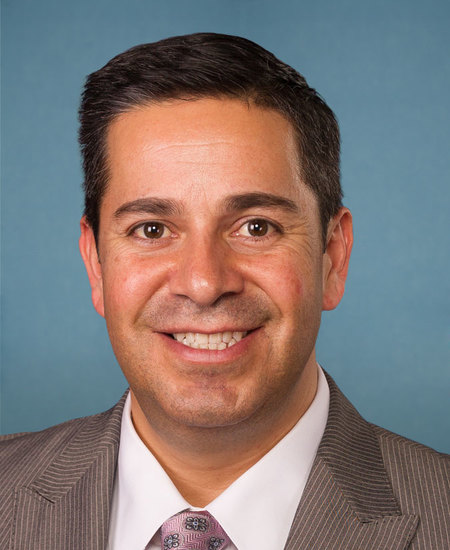
Sen. Ben Ray Luján
Sponsored bills
Maddy summaryS 3905, the Tariff Refund Act of 2026, requires U.S. Customs and Border Protection (CBP) to refund all duties unlawfully collected under the International Emergency Economic Powers Act (IEEPA) to importers within 180 days of the bill's enactment, including interest. It mandates CBP to reliquidate previously processed imports to calculate refunds and prioritizes small businesses for faster processing, with coordinated outreach to them via the Small Business Administration. The bill also requires CBP to submit regular reports to Congress detailing refund progress and timelines. This directly affects importers who paid IEEPA duties, with specific provisions to streamline refunds for small business importers.
Maddy summaryThe SAVES Act of 2025 establishes a five-year pilot program at the Department of Veterans Affairs (VA) to fund nonprofit organizations that provide service dogs to eligible veterans with specific disabilities, such as blindness, mobility issues, PTSD, or traumatic brain injury. Nonprofits must apply competitively, meet training and animal welfare standards (including ADA compliance), and provide service dogs at no cost to veterans, with the VA covering all program expenses. The VA will also provide ongoing veterinary insurance for the dogs, which continues even after the pilot ends. This program is funded with $10 million annually for five years, targeting veterans as defined by VA medical criteria.
Maddy summaryS 233, the "Restoring Confidence in the World Anti-Doping Agency Act of 2025," requires the U.S. Office of National Drug Control Policy to ensure the World Anti-Doping Agency (WADA) has fair U.S. representation and governance reforms. It mandates a 90-day review to assess WADA’s governance model, conflict-of-interest policies, and inclusion of independent athletes (defined as those not affiliated with major sports bodies) in decision-making roles. If reforms are lacking, the U.S. may withhold full membership dues and issue a report detailing barriers to U.S. representation on WADA’s Executive Committee, Foundation Board, and committees. The bill directly affects U.S. participation in WADA governance and aims to strengthen U.S. influence in anti-doping standards.
Maddy summaryThis concurrent resolution (SCONRES 25) commemorates the 15th anniversary of the January 8, 2011, Tucson shooting that killed six people and injured 13, including former Congresswoman Gabby Giffords. It honors the victims (such as Judge John Roll, Gabriel Zimmerman, and 9-year-old Christina-Taylor Green), survivors like Giffords and Ron Barber (who later became a U.S. Representative), and the community's response. The resolution expresses support for survivors, recognizes Giffords’ advocacy against gun violence, and reaffirms commitment to respectful dialogue and opposing political violence. As a symbolic gesture, it does not enact new laws or policy changes.
Maddy summaryThis bill (S 3866) updates the Federal Aviation Administration’s (FAA) aircraft type certification process to accelerate approval for new aviation technologies like air taxis and advanced air mobility vehicles. It directly affects aircraft manufacturers, FAA staff, and infrastructure providers (such as vertiport operators) by requiring the FAA to publish clear timelines for certification milestones and establish standardized criteria for when the FAA issues formal "issue papers" about safety concerns. Key mechanisms include mandating a public transparency plan within 180 days, setting standard expected timelines for key certification steps (like responses to industry requests), and revising delegation rules to improve efficiency while maintaining safety. The bill aims to reduce delays for innovative aircraft without compromising safety standards, focusing on predictable processes for emerging technologies.
Maddy summaryThis bill prohibits grocery stores from charging unreasonably high prices (defined as 120% or more of a product’s average price over the prior six months) unless they prove the increase stems from uncontrollable costs like supply chain issues. It bans using personal data - such as facial recognition or purchase history - to set different prices for individual shoppers and requires clear signage about facial recognition use at store entrances. Large grocery stores (over 10,000 sq ft) must replace electronic shelf labels with physical price tags. The Federal Trade Commission enforces these rules, allowing states and consumers to seek $3,000 per violation in court for price gouging or data misuse.
Maddy summaryThis bill establishes minimum nurse staffing requirements for nursing homes participating in Medicare and Medicaid. It requires facilities to provide 24-hour registered nurse coverage (transitioning from 8-hour daily coverage within 180 days of enactment) and maintain a minimum of 3.48 hours of nursing care per resident daily. The bill mandates a study every four years to review staffing standards based on resident needs and safety data, with findings informing future regulations. Additionally, it directs states to use a portion of collected civil penalties to fund workforce programs like student loan repayment and career pathway development for nursing home staff.
Maddy summaryThis bill requires the Department of Energy (DOE) and the National Oceanic and Atmospheric Administration (NOAA) to collaborate on research using advanced computing techniques - like AI, high-performance computing, and data analytics - to improve weather and climate models. It establishes a competitive funding process for federal agencies, National Laboratories, and universities to develop new models and optimize computing infrastructure, with up to three "centers of excellence" at National Labs prioritizing existing NOAA partnerships and AI computing expertise. The bill mandates reports to Congress within two years detailing progress, collaboration effectiveness, and future opportunities, and expires after five years. It directly affects NOAA, DOE, National Laboratories, and academic institutions participating in the funded research.
Maddy summary# Summary of Workplace Discrimination and Harassment Legislation This comprehensive bill expands protections against workplace discrimination and harassment while strengthening enforcement mechanisms for workers. Key provisions include: 1. **Expanded Protections (Section 301)**: - Extends anti-discrimination protections to independent contractors, interns, fellows, volunteers, and trainees under major civil rights laws - Creates "covered establishment" definition for entities engaging these workers 2. **Nondisclosure/Nondisparagement Clause Ban (Section 302)**: - Prohibits employers from requiring workers to sign nondisclosure or nondisparagement clauses covering harassment or discrimination - Establishes strict requirements for settlement agreements (including 21-day consideration period, 7-day revocation period, and clear written disclosure) - Protects workers' right to report harassment to the EEOC without penalty 3. **Arbitration Restrictions (Section 303)**: - Bans mandatory pre-dispute arbitration agreements that prevent class or collective actions - Establishes new requirements for post-dispute arbitration agreements - Allows workers to sue employers who violate these provisions 4. **Federal Contractor Compliance (Section 304)**: - Requires federal contractors to disclose past violations of labor and civil rights laws - Establishes Labor Compliance Advisors at executive agencies - Creates a system for monitoring contractor compliance with labor laws 5. **Grant Programs (Sections 401-436)**: - Creates national grants to prevent and address employment discrimination - Establishes grants for legal assistance for low-income workers facing discrimination - Creates a system of state advocacy for workers' rights through state-level systems The bill aims to strengthen worker protections against discrimination and harassment while expanding access to legal remedies and creating new mechanisms for enforcement and prevention. It also includes provisions to ensure federal contractors comply with labor and civil rights laws and establishes new reporting requirements for contractors with past violations.