

Maddy summaryThe FINANCE Act creates a new program to provide financial planning services to family caregivers of older adults and individuals with Alzheimer's or related disorders. It defines "family caregivers" as unpaid adult relatives (including older relatives age 55+ caring for children or disabled family members) who provide in-home care, excluding those with professional financial arrangements. The bill authorizes grants to state agencies, nonprofits, senior centers, and tribal organizations to deliver services like guidance on public benefits, budgeting, long-term care costs, debt management, and legal referrals for estate planning. All services must be accessible, including translation for non-English speakers and formats compatible with assistive technology. This directly supports unpaid caregivers managing financial stress while caring for loved ones.
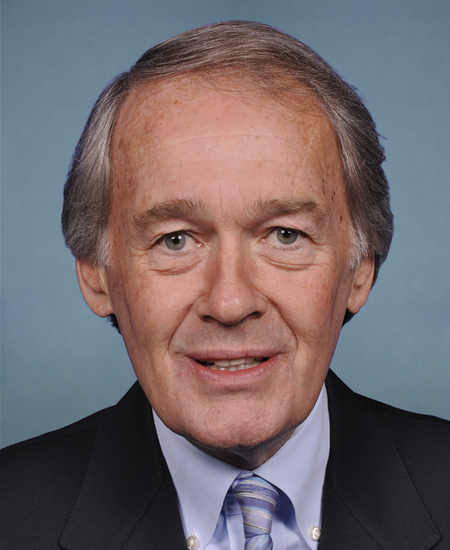
Sen. Edward J. Markey
Sponsored bills
Maddy summaryThis symbolic Senate resolution (SRES 504) officially recognizes November 20-December 20, 2025, as "National Survivors of Homicide Victims Awareness Month." It directly supports survivors of homicide victims - families, communities, and individuals affected by gun violence and homicide - by calling for increased awareness and improved support services. The resolution urges the public, organizations, and communities to promote healing, center survivors' needs, and advocate for better behavioral health access and higher homicide clearance rates. It does not create new laws or funding but serves as a formal expression of support for survivors' well-being.
Maddy summaryThis bill (S 3222) requires electric and natural gas utilities to halt disconnections for non-payment during any government shutdown that causes a lapse in funding for the Department of Health and Human Services (HHS). It mandates that utilities must not disconnect service due to inability to pay, waive late fees and reconnection charges, and make reasonable efforts to restore service to disconnected households. The law applies to all consumers served by utilities operating under state regulatory authority during the period when HHS appropriations lapse. State regulators would oversee implementation but cannot require consumers to pay for costs incurred by utilities due to this moratorium, unless specific conditions are met.
Maddy summaryS 3206, the Transgender Health Care Access Act, authorizes $10 million annually for medical education grants to improve training on gender-affirming care in health professions schools and residency programs. It allocates $15 million yearly to expand transgender care capacity at community health centers and $5 million to support rural providers through collaborative training networks. The bill directly affects transgender patients by increasing access to specialized care and healthcare providers through new training requirements. It focuses on funding education and infrastructure improvements, with specific provisions for curricula development, provider training, and community health center capacity building.
Maddy summaryThis bill increases federal funding for fishing industry safety programs from $3 million to $6 million annually (2025-2029) and requires new training focused on behavioral and physical health risks - including substance use disorder and worker fatigue - for commercial fishing vessel operators and crewmembers. It mandates that safety training programs address these specific health risks and expands research grants to include wellness initiatives. Grants will be awarded competitively with criteria developed in consultation with the Coast Guard. The law directly affects commercial fishing crews and operators by requiring health-risk training and increasing funding for wellness-focused safety programs.
Maddy summaryThe EXPERTS Act of 2025 increases transparency in federal rulemaking by requiring agencies to disclose conflicts of interest in studies submitted by interested parties, including funding sources and potential biases. It establishes an Office of the Public Advocate to help individuals participate in rulemaking, conduct social equity assessments, and ensure rules consider disproportionate impacts on protected classes. The bill also streamlines regulatory review processes, mandates justification for withdrawn rules, and penalizes entities that submit false information to agencies. These provisions apply to all federal agencies conducting rulemaking under the Administrative Procedure Act. The law aims to make regulatory processes more transparent, inclusive, and accountable to the public.
Maddy summaryThe Background Check Expansion Act requires most private firearm transfers between unlicensed individuals to go through a licensed dealer, who must conduct a background check as if the dealer were selling the firearm. Exceptions include transfers between close family members (like parents and children), law enforcement, temporary safety-related transfers (e.g., preventing domestic violence), and transfers for hunting or target shooting with specific safeguards. Licensed dealers must provide a notice about the background check requirement and have the buyer sign a certification form. The bill does not create a national gun registry and preserves states' authority to enact stricter firearm laws. It takes effect 180 days after enactment.
Maddy summaryThis Senate resolution (SRES 502) designates November 2025 as "National Family Caregivers Month" to honor the over 63 million unpaid family caregivers in the U.S. who provide essential care to loved ones with chronic illnesses, disabilities, or aging needs, estimated to be worth $600 billion annually. It specifically commends these caregivers - disproportionately women - facing challenges like financial strain and isolation, and references the 2022 National Strategy to Support Family Caregivers as a policy framework. The resolution encourages public awareness and support for caregivers but does not create new laws or funding. As a symbolic gesture, it directly affects no individuals or programs, serving solely to recognize and raise awareness about caregivers' contributions.
Maddy summarySRES 501 is a ceremonial Senate resolution recognizing November 2025 as National Native American Heritage Month. It encourages the American public to observe the month through programs and activities that celebrate Native American cultural contributions, heritage, and history. The resolution does not create new legal obligations or funding, serving solely as a symbolic acknowledgment of Native American communities' enduring impact on U.S. society.
Maddy summaryThis bill amends the Federal Tort Claims Act to create an exception preventing lawsuits against the President (or someone who becomes President while a case is pending) for any tort claim, regardless of when the incident occurred. It directly affects the President and future presidential candidates who might face civil lawsuits during their presidency. The key provision adds a new exception to federal law, blocking all such claims from proceeding in court. This is a procedural change to existing tort law, not a new policy affecting the general public. The bill would apply to any pending or future lawsuits against the President.