

Maddy summaryThis bill amends 42 U.S.C. § 1983 (the main federal civil rights statute) by adding "of the United States" before "of any State" in its text. It would directly affect individuals seeking to sue federal officials for constitutional violations committed while acting under federal authority. The key mechanism is a narrow textual change to clarify that lawsuits can be brought against federal actors under this statute, similar to existing provisions for state officials. This is a procedural adjustment to existing law, not a new policy. (Note: This bill does not create new rights but modifies how an existing legal remedy applies.)
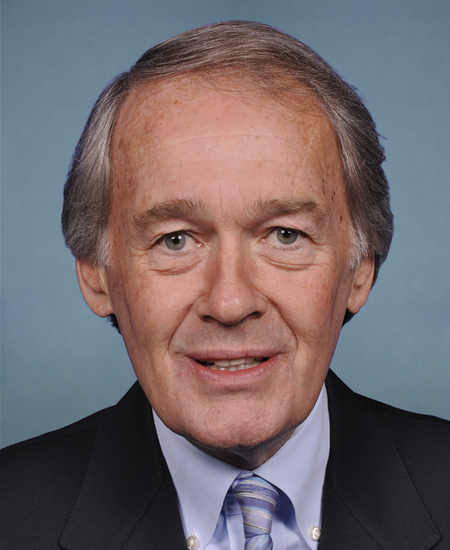
Sen. Edward J. Markey
Sponsored bills
Maddy summaryThis bill (S 3196) gives most Department of Veterans Affairs (VA) employees the right to have a representative (like a union member or chosen person) present during any VA examination that might lead to disciplinary action, if the employee requests it. It directly affects VA workers in covered positions, excluding senior executives, certain appointed staff, and political appointees. The key provision requires the VA Secretary to provide this representation opportunity during such examinations, using the employee’s work time if needed. The bill aims to ensure VA employees have support during potentially disciplinary proceedings.
Maddy summaryThis bill (S 3195) repeals a specific section (Section 213) from the 2026 appropriations law and restores an older provision (Section 10 of the 2005 Legislative Branch Appropriations Act) as if the repealed section had never existed. It directly affects how legislative branch funding is administered, correcting a technical error in the appropriations process. The bill makes no new policy changes but restores the original funding mechanism that was inadvertently altered by the 2026 law. It is purely procedural, with no direct impact on public programs or citizens' daily lives.
Maddy summaryThis bill waives upfront guarantee fees and reduces equity injection requirements for veteran-owned businesses seeking SBA loans under $1 million. It directly affects veterans, military spouses, and certain military-connected individuals (including surviving spouses of service-connected deceased veterans) who own small businesses. Key provisions include eliminating guarantee fees for eligible loans and lowering required down payments by at least 5 percentage points for startups or ownership changes. The bill also requires the SBA to publish data on veteran business participation in loan programs and outreach services. These changes aim to address documented barriers to capital access faced by veteran entrepreneurs, as highlighted in federal reports.
Maddy summarySJRES 90 is a joint resolution directing the removal of U.S. military forces from Venezuela when their actions lack congressional authorization. It requires the President to withdraw troops unless Congress has declared war or passed a specific authorization for military force against Venezuela. The resolution applies to all current military operations in Venezuela not covered by existing congressional approval. It includes an exception allowing military action for self-defense against imminent attacks.
Maddy summaryThis non-binding Senate resolution condemns President Trump's November 1, 2025, social media claim that criticism of him (specifically referencing comedian Seth Meyers' commentary) is "illegal." It reaffirms that the First Amendment protects criticism of the president and urges Trump administration officials to avoid using regulatory or enforcement powers (like FCC actions) to punish critics. The resolution specifically references Trump's prior attacks on late-night comedians and FCC Chairman Brendan Carr's threats against broadcasters.
Maddy summaryS 3146 (Restoring Access for Detainees Act) would require U.S. Immigration and Customs Enforcement (ICE) to provide immigration detainees in DHS custody with specific communication services. It mandates 200 free monthly minutes for calls to family or legal representatives, unlimited free minutes for communications with legal entities (like courts, immigration officials, or the UN Refugee Agency), and private communication opportunities with lawyers or oversight officials during initial detention and location changes. The bill also prohibits facilities from restricting legal call duration or monitoring protected communications, while requiring clear public policies on call timing and location. This directly affects detained immigrants seeking legal assistance or family contact during immigration proceedings.
Maddy summaryThis bill ensures uninterrupted funding for Head Start programs in fiscal year 2026 by appropriating necessary funds from the Treasury if regular or continuing appropriations for that year are not enacted by September 30, 2026. It directly affects Head Start programs and the children and families they serve by preventing service disruptions during funding gaps. The key mechanism requires funding to continue under the same conditions as fiscal year 2025 (as established by the Full-Year Continuing Appropriations and Extensions Act, 2025) until either regular appropriations are passed, a specific appropriations resolution is enacted, or September 30, 2026. The bill does not create new funding but maintains current levels to avoid program interruptions.
Maddy summaryThis bill waives the government guarantee fee for certain small business loans under the Small Business Administration's 7(a) program when made to veteran-owned businesses or their spouses. It specifically applies to loans under $1 million that are not made under other special provisions. Eligible borrowers include veterans, reserve component members, individuals in transition assistance programs, and surviving spouses of veterans who died in service or from service-connected disabilities. The change modifies existing Small Business Act provisions to remove this fee requirement for qualifying loans.
Maddy summaryS 107, the Lumbee Fairness Act, extends federal recognition to the Lumbee Tribe of North Carolina. This bill directly affects the Lumbee Tribe and its members residing in Robeson, Cumberland, Hoke, and Scotland counties, North Carolina. Key provisions include making the Tribe eligible for all federal services and benefits provided to federally recognized tribes, authorizing the Secretary of the Interior to take land into trust for the Tribe, and establishing that members in those counties are deemed to reside near an Indian reservation for service delivery. The bill amends the 1956 Act to remove previous restrictions and formally recognize the Tribe under federal law.