

Maddy summarySRES 482 is a ceremonial Senate resolution recognizing November 3-7, 2025, as "National Veterans Small Business Week." It does not create new laws or policies but formally acknowledges veteran-owned small businesses, which employ nearly 3.3 million people and generate over $952 billion in annual sales. The resolution expresses support for these businesses and appreciation for veterans' entrepreneurship, while highlighting the Senate Committee on Small Business and Entrepreneurship’s annual observance of this week. It has no direct impact on regulations, funding, or veteran business operations.
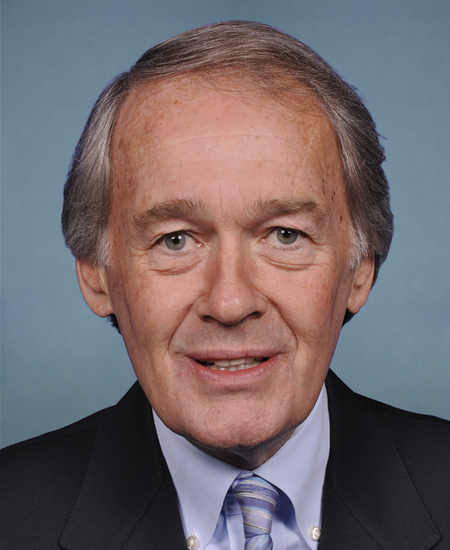
Sen. Edward J. Markey
Sponsored bills
Maddy summarySRES 481 is a non-binding Senate resolution urging the Trump administration to use the USDA’s existing $4.5 billion contingency funds and interchange authority to fund the Supplemental Nutrition Assistance Program (SNAP) for November 2025. The resolution states that SNAP is an entitlement program requiring government funding, and the USDA legally has the authority to draw from these reserves to avoid benefit disruptions. This would directly support the 42 million Americans who rely on SNAP, including 16 million children, 8 million seniors, 4 million people with disabilities, and 1.2 million veterans. The resolution does not change the law but calls for immediate action to maintain food assistance during a potential funding gap.
Maddy summaryS 3090, the No Nuclear Testing Act of 2025, prohibits using federal funds for any explosive nuclear weapons test that produces a yield (actual detonation). It blocks funding for fiscal year 2026 and any available pre-2026 funds, preventing agencies from conducting or preparing for such tests. The bill explicitly allows nuclear stockpile stewardship activities that comply with the existing zero-yield standard. This directly affects U.S. defense agencies and programs seeking to conduct nuclear explosive tests using federal appropriations.
Maddy summaryThis bill ensures uninterrupted access to SNAP (food stamps) and WIC benefits during government funding gaps in fiscal year 2026. It authorizes the Treasury to provide emergency funds if Congress fails to pass full-year appropriations for the Department of Agriculture by September 30, 2025, covering all missed benefits retroactively from September 30, 2025. State agencies administering these programs would be reimbursed for costs incurred during the funding lapse. The funding automatically terminates once Congress passes 2026 appropriations or by September 30, 2026.
Maddy summaryThis bill provides temporary student loan relief for federal employees and their supporting contractors during government shutdowns. If a shutdown lasts 14+ days in 2026 or later, the Secretary of Education must suspend all federal student loan payments for these "covered individuals," halt interest accrual, and count the suspended months toward loan forgiveness eligibility. It also requires credit reporting agencies to treat suspended payments as if made on time and allows refunds for payments made during qualifying shutdowns. The relief applies retroactively from September 2025.
Maddy summaryThis bill provides back pay to federal employees, military personnel, and certain contractors who lost compensation due to a government funding lapse during the period from October 1, 2025, through the bill's enactment date. It appropriates funds from the Treasury to cover "standard employee compensation" (including base pay, allowances, and benefits) for all covered individuals during the shutdown period, requiring agencies to distribute payments within 7 days of enactment. The funds may only be used for this specific purpose and cannot be redirected to other agency needs. The pay is retroactive to September 30, 2025, treating affected individuals as if they had received full pay continuously during the shutdown.
Maddy summaryThe TREATS Act amends the Controlled Substances Act to allow telehealth evaluations as an alternative to in-person medical evaluations for prescribing certain controlled substances. Specifically, it permits one telehealth evaluation (conducted via real-time audio/video systems meeting Social Security Act standards) instead of an in-person visit when prescribing FDA-approved medications for substance use disorder treatment (schedules III-V). This directly affects healthcare providers who prescribe these medications, expanding their ability to use telehealth for initial patient assessments. The change maintains the requirement for at least one evaluation (either in-person or telehealth) while updating the process to include telehealth options for this specific treatment context.
Maddy summaryThis bill ensures federal employees, contractors, and military personnel affected by a government shutdown starting October 1, 2025, receive their regular pay and benefits during the shutdown period. It appropriates funds to cover standard pay, allowances, and benefits for "covered individuals" until appropriations are enacted (the "termination date"). The bill also prohibits agencies from implementing layoffs or placing employees on administrative leave for more than 10 workdays during the shutdown. It applies retroactively to September 30, 2025, and charges the costs to future appropriations.
Maddy summaryThis resolution designates October 1, 2025, as "Energy Efficiency Day" to recognize the economic and environmental benefits of energy efficiency. It celebrates private sector innovation and federal energy efficiency policies, referencing historical achievements like over 80 quadrillion BTUs in energy savings and $1 trillion in annual cost avoidance. The resolution has no binding provisions and is purely ceremonial, calling for public observance through programs and activities. It does not create new laws or directly affect any specific groups.
Maddy summarySRES 337 is a ceremonial resolution recognizing the 250th anniversary of the U.S. Postal Service, which was founded on July 26, 1775, by the Second Continental Congress. The resolution highlights the postal service's historical significance, growth from 75 post offices to over 30,000 locations, and its role in uniting the nation. It honors postal employees and invites the public to celebrate by writing letters, buying stamps, or recognizing postal workers. As a commemorative resolution, it contains no new policy or funding provisions.