

Maddy summaryThe Right to Override Act (S 2997) requires healthcare facilities and health plans to establish policies allowing healthcare professionals to override AI-driven clinical decision support systems (AI/CDSS) when they believe it's appropriate for patient care or to comply with law. The bill prohibits employers from taking adverse employment actions against healthcare professionals who override AI/CDSS outputs in good faith, and it provides whistleblower protections for those reporting violations of the law. Covered entities must provide training on AI/CDSS usage, establish committees with healthcare professional representation to oversee implementation, and maintain policies that prevent the sharing of override data that could identify specific professionals. Enforcement will be handled by the Department of Health and Human Services for policy violations and the Department of Labor for employment-related violations, with civil penalties up to $769,870 for repeat violations. This bill directly affects healthcare professionals, healthcare facilities, health plans, and other covered entities that use AI/CDSS in clinical settings.
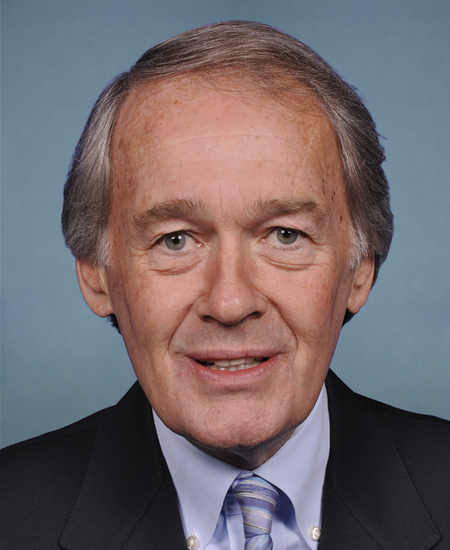
Sen. Edward J. Markey
Sponsored bills
Maddy summaryS 2994, the Voter Purge Protection Act, prevents states from removing voters from registration lists based on non-voting or failure to respond to mail. It requires states to use verified evidence - like death records or permanent out-of-state moves - for removals, not just non-voting history. Voters removed must receive 48-hour notice with reinstatement options, and states must publicly announce list maintenance efforts. The bill also allows voters to update their address through election day at polling locations or central sites, ensuring continued eligibility after moving within the same state. This directly protects voters who might otherwise be incorrectly purged due to administrative errors or lack of contact.
Maddy summarySJRES 71 is a joint resolution that would terminate the national emergency declared by the President on January 20, 2025, regarding energy. This emergency was established under Executive Order 14156 and the National Emergencies Act (50 U.S.C. 1601 et seq.). The resolution directly ends the legal authority enabling the executive branch to use emergency powers for energy-related policies, without altering existing energy laws or creating new regulations. It affects only the executive branch's emergency designation, not public policy or private entities.
Maddy summaryThis non-binding Senate resolution expresses concern about rising book bans in schools and libraries, citing data showing over 6,800 individual book removals since July 2024 across 23 states. It highlights how bans disproportionately target books about race, LGBTQ+ experiences, and marginalized histories - such as *The Handmaid’s Tale* and *Maus* - and urges schools to follow established guidelines for handling book challenges. The resolution calls for returning books removed from military schools under recent executive orders and opposes content-based censorship in public education.
Maddy summaryThis bill prohibits health care entities (like hospitals, clinics, and nursing facilities) and their for-profit owners from selling or leasing property to real estate investment trusts (REITs) if the deal risks weakening the entity's finances or public health. It requires the Health and Human Services (HHS) Secretary to review all such proposed transactions before they proceed. Violations can result in civil penalties up to $10,000 per incident, with states also having enforcement authority. The law directly affects health care providers participating in Medicare and their corporate owners, focusing on preventing financial instability through REIT arrangements.
Maddy summaryS 2977, the FAST Justice Act, creates a 120-day timeline for the Merit Systems Protection Board (MSPB) to act on federal employee appeals. If the MSPB fails to take action within 120 days (excluding certain cases), affected federal employees or job applicants can file a civil lawsuit in federal court. The bill specifies where these lawsuits may be filed - based on where the personnel action occurred, where the employee would have worked, or the agency's main office - and ensures courts use the standard review applicable to MSPB decisions. This procedural change directly affects federal workers whose appeals are stalled at the MSPB, aiming to expedite resolution of personnel disputes.
Maddy summaryThis bill allows federal contractors, their employees, and certain federal grant recipients or District of Columbia government workers affected by government shutdowns to withdraw up to $30,000 (adjusted for inflation) from retirement plans without the usual 10% early withdrawal penalty. Withdrawals must be repaid within three years to avoid tax consequences, and the withdrawn amount is spread over three years for tax purposes. It specifically applies during periods of federal appropriations lapses (at least two weeks) when workers face unpaid leave or reduced pay. The bill modifies tax rules to treat these distributions as eligible for penalty-free access under defined circumstances.
Maddy summaryThis bill requires federal agencies to adjust contract prices for contractors affected by government funding lapses (like shutdowns), ensuring contractors can cover costs for employees who were furloughed, laid off, or had reduced hours. It mandates that contractors receive reimbursement for paying employees at their standard rate during the lapse or restoring paid leave used instead of work. The reimbursement is capped at $1,442 per week (pro-rated for part-time workers), and contractors must provide proof of costs to the agency. Agencies must report to Congress within a year on how many contractor employees were impacted and how compensation was handled.
Maddy summaryThis bill provides emergency financial relief for federal employees affected by government shutdowns. It allows workers on furlough or working without pay during a shutdown lasting at least two weeks to withdraw up to $30,000 (adjusted annually for inflation) from their Thrift Savings Plan (TSP) retirement accounts without the usual 10% tax penalty. The bill also prevents missed TSP loan payments during shutdowns from being treated as taxable distributions, protecting employees from unexpected tax bills. These provisions apply to withdrawals and loan payments made after September 30, 2025, directly supporting federal workers facing income disruption during funding lapses.
Maddy summarySRES 424 is a non-binding Senate resolution affirming the Senate's commitment to First Amendment protections for free speech and press. It calls on the President to uphold these rights, declares that government agencies must not use licensing or regulations to punish media for content or viewpoints, and condemns threats to revoke media licenses based on editorial content. The resolution also rebukes political violence against individuals exercising free speech. As a symbolic statement, it does not create new laws or alter existing legal obligations.