

Maddy summarySRES 428 is a Senate resolution recognizing Hispanic Heritage Month from September 15 to October 15, 2025. It formally acknowledges the cultural heritage, historical contributions, and economic impact of Latino communities across the United States. The resolution urges all Americans to observe the month through programs and activities celebrating Latino achievements. It does not create new laws, funding, or obligations but serves as a symbolic recognition of Latino contributions to U.S. society.
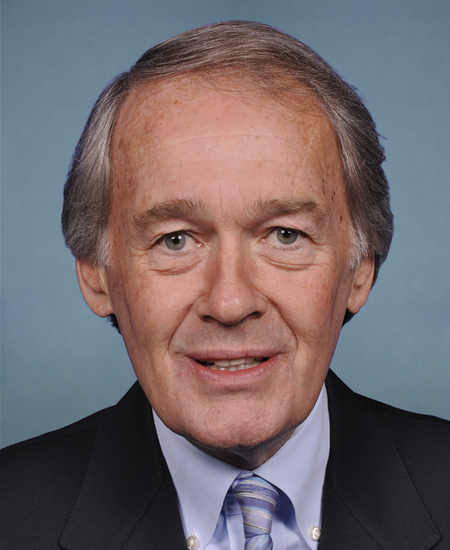
Sen. Edward J. Markey
Sponsored bills
Maddy summarySRES 423 is a Senate resolution recognizing October 2025 as Filipino American History Month. It celebrates the history, culture, and contributions of Filipino Americans to the United States, building on prior congressional recognition that began in 2009. The resolution encourages public observance through educational programs and activities, highlighting Filipino Americans' roles in U.S. history, military service, and fields like healthcare and the arts. It does not create new laws or policies but serves as a symbolic acknowledgment of their enduring impact.
Maddy summaryThe Child Care for Every Community Act establishes a national program to provide universal, high-quality child care and early learning services for all children not yet required to attend school, regardless of family income. The bill creates a system where designated "prime sponsors" (such as states, localities, or nonprofits) must provide comprehensive services including health, educational, nutritional, and social support with full-day (10+ hours) and year-round care. It requires fees to be based on family income (capping at 7% of income), ensures no family is denied services due to inability to pay, and mandates specific quality standards for programs and staff qualifications. The bill also includes special provisions for children with disabilities, dual language learners, homeless children, and children from Native American communities, with the federal government covering 90% of costs (100% for specific groups) while requiring states to maintain their own funding levels for child care programs.
Maddy summaryS 2956, the Used Car Safety Recall Repair Act, requires manufacturers to reimburse dealers for used vehicles with unresolved safety recalls. If a manufacturer fails to provide a remedy within 60 days of a recall notice, they must pay dealers 1% of the vehicle's fair market value per month (prorated daily) until repairs are made or payments reach the vehicle's full value. The bill prohibits dealers from selling, leasing, or loaning used vehicles with active safety recalls until repairs are completed, unless specific exceptions apply (e.g., recall information wasn't available at sale time). It directly affects dealers selling more than five vehicles annually and used car buyers, ensuring safety fixes are addressed before transactions. The law takes effect one year after enactment.
Maddy summaryThis resolution (SRES 418) expresses the U.S. Senate's support for designating September 20-27, 2025, as "National Estuaries Week." It does not create new laws or funding but aims to raise public awareness about the ecological and economic importance of estuaries. The resolution highlights estuaries' role in supporting jobs, economic output, and coastal protection, while acknowledging ongoing threats like pollution and habitat loss. It is a symbolic gesture directed at the public, government officials, and organizations working to protect estuaries.
Maddy summaryThis bill, S 2930, directly affects U.S. nuclear spending by imposing specific caps and prohibitions on weapons programs to reduce costs. It limits deployed strategic warheads to 1,000 (aligned with New START Treaty levels), caps submarine purchases at eight Columbia-class vessels, restricts ICBMs to 150, and bans funding for new systems like the LGM-35 Sentinel ICBM, F-35 nuclear capability, low-yield warheads, and the Uranium Processing Facility. The bill requires annual reports to Congress on implementation and cost savings, aiming to cut projected nuclear modernization costs by billions over the next decade. These changes apply to the Department of Defense and Energy budgets starting in fiscal year 2026.
Maddy summaryThis bill requires the Federal Trade Commission (FTC) to conduct a one-year study on neural data privacy and governance, including risks of behavioral manipulation and gaps in current laws. The study will analyze how neural data (from brain-monitoring devices) and related biometric data are collected, used, and transferred, with recommendations for future privacy protections. It directly affects the FTC (which must complete the study) and federal agencies (which will later receive guidance on using neural technology). The bill does not create new regulations but sets the stage for potential future policy changes based on the FTC's findings.
Maddy summaryThis resolution expresses the Senate's strong disapproval of Federal Communications Commission Chairman Brendan Carr for threatening to penalize ABC and Disney over late-night host Jimmy Kimmel's political commentary. It states Carr's comments - made on September 17, 2025 - were unconstitutional and dangerous, violating the First Amendment by implying government coercion over protected speech. The resolution condemns Carr for abusing his position and calls for him to retract his threats, emphasizing the importance of press independence from government pressure. (Note: As a non-binding resolution, it does not create new law but formally states the Senate's position.)
Maddy summaryThe GREEN Streets Act (S 2890) requires states and metropolitan areas to establish specific targets for reducing vehicle miles traveled and greenhouse gas emissions from transportation systems. It mandates that states set minimum standards for decreasing per capita vehicle miles traveled through investments in transit, sidewalks, bike lanes, and land use planning that supports multimodal transportation. States failing to meet these targets must obligate 33% of their federal highway funds toward meeting the targets, with this requirement increasing by 2% annually until targets are achieved. The bill also requires analysis of projects that increase traffic capacity, particularly those affecting environmental justice communities, and establishes new performance measures for transit accessibility and multimodal transportation options.
Maddy summaryThe Pipeline Accountability Act of 2025 requires pipeline operators to install rupture-mitigation valves on pipelines in high consequence areas within five years, aiming to minimize product release during ruptures. It establishes an Office of Public Engagement to coordinate community outreach and provide transparency about pipeline safety, and mandates that pipeline operators disclose safety data including incident history, pipeline locations, and potential impact zones to the public. The bill prohibits pipeline releases that would require incident reporting and creates new pathways for private citizens to pursue civil actions for pipeline safety violations. These provisions apply to natural gas, hazardous liquid, and carbon dioxide pipeline operators, with specific requirements for both existing and new infrastructure.