

Maddy summaryThis bill, the PrEP Access and Coverage Act of 2026, requires most health insurance plans to cover HIV prevention medication without charging patients any cost-sharing fees. It directly affects people enrolled in private insurance, Medicare, Medicaid, and other government health programs by mandating that these plans cover the medication, related lab tests, and follow-up care without requiring prior approval. The law also prohibits insurance companies from denying life, disability, or long-term care insurance to individuals taking HIV prevention medication and requires a public education campaign to increase awareness about the medication.
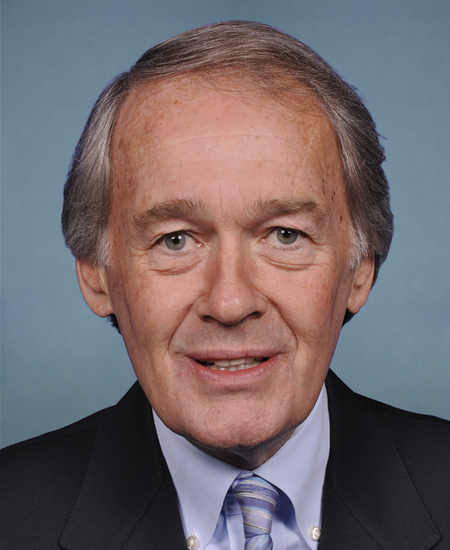
Sen. Edward J. Markey
Sponsored bills
Maddy summaryThis bill, known as the DISCLOSE Act of 2026, strengthens campaign finance transparency by requiring corporations, labor organizations, Super PACs, and other entities to disclose more information about their spending and funding sources. It closes loopholes that allow foreign nationals to contribute to U.S. elections by expanding disclosure requirements and prohibiting foreign money in ballot initiatives and referenda. The legislation also mandates that certain advertisements include lists of top funders and requires reporting of spending related to federal judicial nominations. Additionally, it streamlines administrative processes for challenging campaign finance laws and ensures coordination between the Federal Election Commission and financial authorities to enforce these rules.
Maddy summaryThis bill, titled the Websites and Software Applications Accessibility Act of 2026, establishes uniform accessibility standards for web content and applications used by employers, public entities, public accommodations, testing entities, and commercial providers. It requires these covered entities to ensure their digital platforms are accessible to individuals with disabilities, meaning the content must be perceivable, operable, understandable, and robust for users with various disabilities. The bill directs the Department of Justice and the Equal Employment Opportunity Commission to develop and update specific technical standards within 24 months of enactment, with staggered compliance deadlines for small entities. It also creates enforcement mechanisms allowing for civil penalties and damages, establishes a technical assistance center to help entities comply, and provides grants to small entities for remediating inaccessible digital content.
Maddy summaryThis bill, known as the Connect the Grid Act of 2026, would require the Electric Reliability Council of Texas (ERCOT) to connect its power grid with neighboring regional grid operators. The legislation removes current exemptions that have kept ERCOT largely independent from federal oversight and mandates the construction of new transmission lines to increase power flow capacity between Texas and surrounding regions. Key provisions include setting specific minimum power transfer levels, prioritizing the use of existing land rights and degraded sites for new infrastructure, and requiring environmental reviews for all projects. The bill also expands funding for transmission projects and directs a study on the benefits of connecting U.S. power grids with Mexico.
Maddy summaryThe Smarter Sentencing Act of 2026 reduces mandatory minimum prison sentences for certain federal drug offenses involving couriers who only transport or store drugs or money. Under the bill, couriers face reduced minimum sentences of 5 years instead of 10 years for major drug offenses, and 2 years instead of 5 years for lesser offenses, while maintaining longer sentences for repeat offenders or those with serious prior convictions. The law applies to cases sentenced after enactment and allows courts to reduce sentences for past cases upon motion. The bill also directs the Sentencing Commission to update sentencing guidelines within 120 days and requires the Attorney General to report on how cost savings from reduced sentences will be used to address prison overcrowding and improve law enforcement spending.
Maddy summaryThis bill would transition Puerto Rico from its current nutrition assistance block grant system to the federal Supplemental Nutrition Assistance Program (SNAP), aligning it with how other U.S. states receive food aid. The legislation requires Puerto Rico to submit an operational plan within 180 days, with the Department of Agriculture providing technical assistance and approval or feedback on the plan. During a five-year transition period, Puerto Rico would continue receiving consolidated block grant funds while gradually shifting to SNAP, with annual reports tracking funding adjustments needed for the change. Once the transition is complete, Puerto Rico would be formally recognized as a state for SNAP purposes and would receive funding based on the same cost-of-living adjustments applied to other states.
Maddy summarySRES 618 is a Senate resolution recognizing the vital role of career and technical education (CTE) educators and work-based learning coordinators in preparing students for careers, classrooms, and life. It highlights that these professionals deliver hands-on skills training, support workforce pipelines in critical economic sectors, and address persistent shortages in CTE staffing (reported in 25 states for the 2025-2026 school year). The resolution formally commends CTE educators and coordinators for their contributions and emphasizes that improving their wages, benefits, and working conditions would help reduce staffing gaps. It does not create new programs or funding but serves as a symbolic endorsement of CTE’s importance to U.S. economic competitiveness.
Maddy summarySRES 621 designates the week of February 23-27, 2026, as "National Public Schools Week" to recognize the role of public schools in U.S. education. The resolution highlights public schools' importance in fostering inclusive learning environments and preparing students for civic and economic participation, citing that 87% of U.S. children attend public schools. It does not create new laws, funding, or policy changes - it is a symbolic gesture by the Senate without binding effect. The resolution aligns with broader efforts to support public education but focuses solely on commemoration.
Maddy summaryThis bill, known as the Direct File Act of 2026, would establish a government-run online platform for taxpayers to prepare and file their individual income tax returns for free. It requires the Treasury Department to create a user-friendly system that uses IRS data to simplify the process, offers customer support, and is available in multiple languages and on mobile devices. The legislation also prohibits the Treasury from entering into agreements that would limit its ability to provide these tax preparation and filing services. Additionally, the bill allows eligible states to integrate their state tax filing with the federal system and provides funding to states that meet certain standards for doing so.
Maddy summarySRES 615 is a Senate resolution celebrating Black History Month, acknowledging the historical contributions of African Americans to U.S. society across fields like civil rights, arts, science, and leadership. The resolution encourages all citizens to reflect on this history as part of the nation's ongoing journey toward equality, without creating new laws or policies. It specifically recognizes figures such as Frederick Douglass, Maya Angelou, and Rosa Parks, and emphasizes the importance of Black History Month in February as a time for communal learning and inspiration. This ceremonial resolution was introduced by multiple senators and passed unanimously by the Senate in 2026.