

Maddy summaryThis bill, titled the Working Americans' Tax Cut Act, proposes two main tax changes: it creates an alternative maximum tax rate of 25.5% for low- and middle-income individuals earning less than 175% of a cost-of-living exemption, and it imposes a progressive surcharge on high-income individuals earning over $1 million. The low-income provision calculates taxes based on income above a living expense threshold that adjusts annually with inflation, while the high-income surcharge applies rates of 5%, 10%, and 12% to income brackets above $1 million, $2 million, and $5 million respectively. Both provisions use modified adjusted gross income as the base for calculations and apply to taxable years beginning after December 31, 2025. The bill would directly affect individual taxpayers by altering how their income is taxed under the Internal Revenue Code.
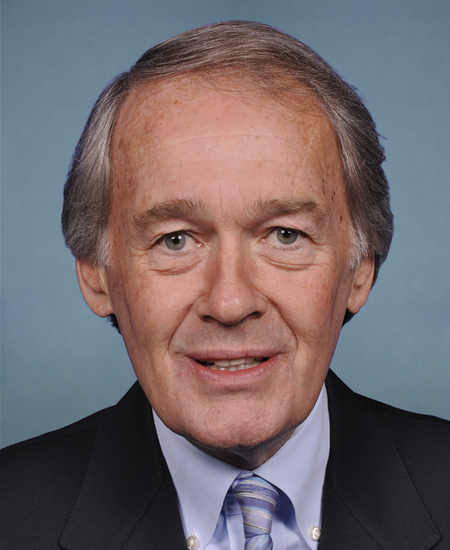
Sen. Edward J. Markey
Sponsored bills
Maddy summaryThis bill extends the authorization period for the Young Fishermen's Development Program from 2026 to 2031 by amending Section 5(a) of the existing law. It directly affects young commercial fishermen who rely on the program for training, financial assistance, and support to enter or expand their fishing businesses. The key mechanism is a simple date change in the law’s expiration timeline, ensuring current program funding and operations continue without altering existing eligibility or benefits. The bill does not introduce new requirements or funding streams - it only prolongs the existing program’s validity. This is a procedural extension, not a substantive policy change.
Maddy summaryThis concurrent resolution formally recognizes March 10, 2026, as "Abortion Provider Appreciation Day" to honor abortion providers and staff for their work in delivering essential reproductive care. It highlights their courage amid challenges including clinic closures, safety threats, and increased harassment following the Dobbs decision. The resolution symbolically affirms Congress's support for providers' safety and patients' access to abortion care, without creating new legal requirements or affecting any individuals directly. (1 sentence; procedural resolution)
Maddy summaryThis bill, titled the Small Business Liberation 2.0 Act, exempts small businesses from import duties imposed under Section 122 of the Trade Act of 1974 and requires refunds of any such duties already paid by small businesses. It also prohibits companies from raising prices on affected goods by more than the cost of the duties themselves during a five-year period following duty implementation. The Federal Trade Commission would enforce these rules, with state attorneys general allowed to bring civil actions against violators, while small businesses remain exempt from the price gouging restrictions.
Maddy summaryThis bill directs the National Aeronautics and Space Administration Administrator to officially designate national high-energy astrophysics hubs. These hubs would be research facilities, universities, government entities, or non-governmental organizations that operate missions supporting U.S. leadership in high-energy astrophysics and related scientific fields. The designated hubs must provide training, workforce development, technology transfer, and collaborative resources for academic, governmental, and commercial partners. The legislation aims to maintain U.S. global leadership in this scientific area by ensuring current facilities continue serving scientific, educational, and commercial interests beyond the duration of current flagship missions.
Maddy summaryThis bill, known as the Professional Degree Access Restoration Act, aims to restore federal student loan limits that were previously reduced for graduate and professional students. It directly affects students pursuing advanced degrees such as law, medicine, and education by increasing the amount of federal loans they can access. The legislation reverses specific loan cap reductions established by Public Law 119-21, allowing students to borrow more money during their period of instruction. By amending the Higher Education Act of 1965, the bill removes certain restrictions on annual and aggregate loan amounts for these student categories.
Maddy summaryThe Supplemental Security Income Restoration Act of 2026 updates eligibility rules and benefit amounts for the Supplemental Security Income (SSI) program, which provides financial assistance to low-income individuals with limited resources. The bill increases income and resource limits for SSI recipients, exempts certain retirement accounts and tribal welfare payments from counting toward eligibility limits, and extends the SSI program to U.S. territories including Puerto Rico, the U.S. Virgin Islands, Guam, and American Samoa. Additionally, the legislation repeals a marriage penalty that previously reduced benefits for married couples and clarifies how various state tax credits and in-kind support are treated when determining eligibility.
Maddy summaryThis bill, titled the Stop Militarizing Our Streets Act of 2026, would prohibit the Department of Defense from selling or purchasing certain weapons and ammunition in the commercial marketplace. It directly affects the Department of Defense, private contractors, and firearms dealers by restricting access to military-grade assault weapons and high-caliber ammunition. The law requires dealers to meet strict background check standards, maintain detailed electronic records, implement security measures, and complete mandatory training on recognizing illegal activity. Additionally, the bill mandates annual reporting to Congress on government-owned plants that produce firearms and ammunition for commercial sale.
Maddy summaryThis bill, titled the Family Grocery and Farmer Relief Act, aims to increase competition in the U.S. meatpacking industry by requiring the Federal Trade Commission to break up large companies that control multiple types of meat processing. It prohibits major meatpacking firms from operating in more than one protein line (beef, pork, or poultry) and mandates divestiture of assets for companies that exceed market concentration thresholds. The legislation also targets foreign-owned meatpacking companies by requiring them to divest U.S. operations and includes provisions to prevent vertical consolidation between packers and feedlots. Additionally, the bill directs the FTC to use existing authority to address unfair pricing practices and authorizes funding for farmers' cooperatives and small businesses to acquire divested meatpacking facilities.
This joint resolution directs the President to remove U.S. Armed Forces from hostilities within or against Iran unless a declaration of war or authorization to use military force for such purpose has been enacted. The resolution specifies that it shall not be construed to prevent the United States from defending against an attack on the United States or its personnel or facilities in other nations.