

Maddy summaryS 3905, the Tariff Refund Act of 2026, requires U.S. Customs and Border Protection (CBP) to refund all duties unlawfully collected under the International Emergency Economic Powers Act (IEEPA) to importers within 180 days of the bill's enactment, including interest. It mandates CBP to reliquidate previously processed imports to calculate refunds and prioritizes small businesses for faster processing, with coordinated outreach to them via the Small Business Administration. The bill also requires CBP to submit regular reports to Congress detailing refund progress and timelines. This directly affects importers who paid IEEPA duties, with specific provisions to streamline refunds for small business importers.
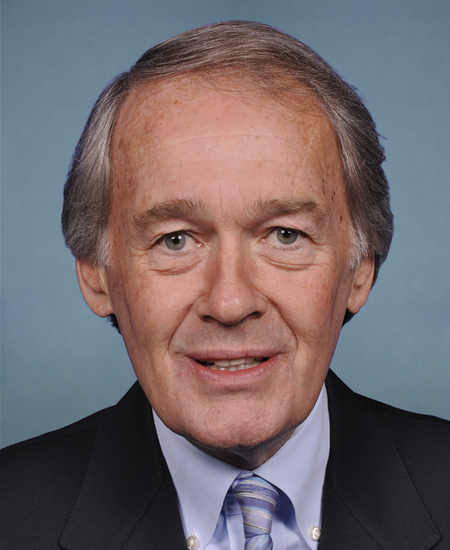
Sen. Edward J. Markey
Sponsored bills
Maddy summaryThe American Homeownership Act restricts tax deductions for interest and depreciation on residential properties owned by institutional investment entities or "large owners" (defined as those holding 50+ single-family units). It creates exceptions for new construction, rehabilitation of uninhabitable properties, sales to individuals for primary residence, and properties serving affordable housing through tax credit programs. The bill also prohibits federal housing agencies from selling properties or providing mortgage loans to these large investors and allocates savings from these tax changes to fund affordable housing programs. These provisions aim to encourage homeownership by limiting tax benefits for large-scale rental property ownership while directing resources toward affordable housing development.
Rotorcraft Operations Transparency and Oversight Reform Act or the ROTOR Act This bill addresses aviation safety by increasing requirements for aircraft tracking and communication using Automatic Dependent Surveillance-Broadcast (ADS-B) technology and expanding oversight. As background, ADS-B for broadcasting (Out) and receiving (In) transmits information (e.g., location and weather information) between aircraft and air traffic control. Under the bill, aircraft must generally operate with ADS-B In equipment to provide the aircraft with location information of other aircraft and traffic advisories. Current law does not require this equipment. Current Federal Aviation Administration (FAA) regulations allow aircraft performing a sensitive government mission to be excepted from requirements for using ADS-B Out equipment. This bill limits which flights may be considered sensitive government missions (e.g., not training flights) and requires additional reporting and notifications for the exception. The Government Accountability Office must review the use of the ADS-B Out exception and the Office of the Inspector General (OIG) of the Department of Transportation must annually audit FAA oversight of operations that use the exception. Further, the bill repeals a 2025 law that exempts certain military helicopters from the ADS-B Out requirements for the Washington, DC, metropolitan area. The bill also requires the OIG of the Army to audit the Army’s coordination with the FAA, the FAA to establish an office to coordinate airspace usage of military aircraft and review the safety of flight operations and routes around airports, and the FAA to enter into memoranda of understanding with military agencies for safety information sharing.
Maddy summaryThis concurrent resolution (SCONRES 25) commemorates the 15th anniversary of the January 8, 2011, Tucson shooting that killed six people and injured 13, including former Congresswoman Gabby Giffords. It honors the victims (such as Judge John Roll, Gabriel Zimmerman, and 9-year-old Christina-Taylor Green), survivors like Giffords and Ron Barber (who later became a U.S. Representative), and the community's response. The resolution expresses support for survivors, recognizes Giffords’ advocacy against gun violence, and reaffirms commitment to respectful dialogue and opposing political violence. As a symbolic gesture, it does not enact new laws or policy changes.
Maddy summaryThe SPARK Act establishes the Spark Program to support underserved small businesses by providing grants to eligible organizations like incubators, accelerators, and community development financial institutions. It directly affects minority-owned businesses (which face twice the denial rate for financing), women-owned businesses, rural businesses, and businesses in economically distressed areas by offering free mentorship, counseling, and access to capital. The program requires participating organizations to provide 5-year services with no fees for businesses and track metrics including jobs created, capital accessed, and business growth. It also creates a Spark Financing Program that provides grants up to $20,000 and low-interest loans to covered small businesses. Annual reports will track outcomes including demographic breakdowns of participants and business retention rates.
Maddy summaryThe Healthy Families Act would require most private employers and certain government entities to provide employees with earned paid sick time, allowing workers to take up to 56 hours per year for their own health needs, caring for family members, or addressing domestic violence, sexual assault, or stalking. Employees would earn 1 hour of paid sick time for every 30 hours worked, with the ability to use it for medical appointments, caring for family members with health needs, or seeking safety from violence. The bill prohibits employers from retaliating against workers who use this time and requires employers to post clear notices about the policy. It applies to most private employers, with specific provisions for government entities like the Library of Congress and Government Accountability Office.
Maddy summaryThis bill requires the Federal Trade Commission (FTC) to study firearm advertising and marketing for unfair or deceptive practices, such as ads targeting people under 18, implying illegal use, or promoting semiautomatic assault weapons. Within two years, the FTC must report findings to Congress and then create regulations to ban these practices within 18 months of the report. These regulations would apply to firearm manufacturers, dealers, and importers, prohibiting specific deceptive marketing tactics. Violations would be enforced under existing FTC authority, with penalties matching current unfair business practice violations.
Maddy summaryThis bill creates a $200 million fund for small businesses that suffered at least a 25% revenue loss due to recent federal immigration enforcement actions in their area. Eligible businesses must be small (as defined by the Small Business Act), not operate over 15 locations, and not be publicly traded. Grants cover verified revenue losses up to $1 million total per business or $500,000 per physical location, with applicants certifying they haven’t received other compensation for these losses. The fund, available for fiscal year 2026, requires fraud checks including tax verification and database cross-referencing during applications.
Maddy summary# Summary of Workplace Discrimination and Harassment Legislation This comprehensive bill expands protections against workplace discrimination and harassment while strengthening enforcement mechanisms for workers. Key provisions include: 1. **Expanded Protections (Section 301)**: - Extends anti-discrimination protections to independent contractors, interns, fellows, volunteers, and trainees under major civil rights laws - Creates "covered establishment" definition for entities engaging these workers 2. **Nondisclosure/Nondisparagement Clause Ban (Section 302)**: - Prohibits employers from requiring workers to sign nondisclosure or nondisparagement clauses covering harassment or discrimination - Establishes strict requirements for settlement agreements (including 21-day consideration period, 7-day revocation period, and clear written disclosure) - Protects workers' right to report harassment to the EEOC without penalty 3. **Arbitration Restrictions (Section 303)**: - Bans mandatory pre-dispute arbitration agreements that prevent class or collective actions - Establishes new requirements for post-dispute arbitration agreements - Allows workers to sue employers who violate these provisions 4. **Federal Contractor Compliance (Section 304)**: - Requires federal contractors to disclose past violations of labor and civil rights laws - Establishes Labor Compliance Advisors at executive agencies - Creates a system for monitoring contractor compliance with labor laws 5. **Grant Programs (Sections 401-436)**: - Creates national grants to prevent and address employment discrimination - Establishes grants for legal assistance for low-income workers facing discrimination - Creates a system of state advocacy for workers' rights through state-level systems The bill aims to strengthen worker protections against discrimination and harassment while expanding access to legal remedies and creating new mechanisms for enforcement and prevention. It also includes provisions to ensure federal contractors comply with labor and civil rights laws and establishes new reporting requirements for contractors with past violations.
Maddy summarySRES 605 is a Senate resolution formally rejecting former President Donald Trump's public statements suggesting he could "nationalize" or "commandeer" federal elections. It states that the Constitution grants primary authority over elections to state and local officials (per Article I, Section 4), not the president, and declares any attempt to override this would be unconstitutional. The resolution explicitly rejects the idea that the president has lawful power to take direct control of elections and warns such actions would undermine federalism and the rule of law. As a symbolic measure, it does not create new law but affirms the Senate's position on constitutional boundaries.