

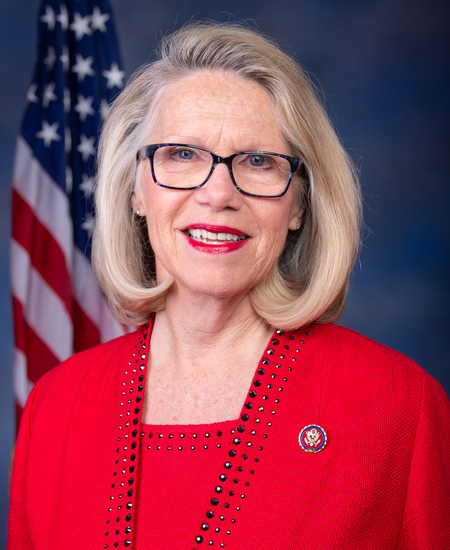
Photo of Carol D. Miller
R United States House · District 1 · West Virginia On the 2026 ballot

Rep. Carol D. Miller

Compare
Total votes
2,837
all sessions
Attendance
97%
85 missed
Lower than 82% of chamber peers
With party
97%
of cast votes
Near the chamber average
Bipartisan score
2%
crosses aisle rarely
Near the chamber average
Sponsored
893
bills & resolutions
Near the chamber average
Committees
3
assignments
893 bills and resolutions

Sponsored bills

Total
893
Primary
91
Co-sponsor
802
This page
893
matching current filters
Co-sponsor HR 2880
In committee · Indiana House · Co-sponsor
Protecting Patients Against PBM Abuses Act

Maddy summaryThis bill regulates pharmacy benefit managers (PBMs) working with Medicare Part D prescription drug plans. It prohibits PBMs from earning income based on drug prices or rebates (requiring flat fees instead), mandates equal reimbursement for all network pharmacies, and requires PBMs to report how much of drug rebates they pass through to Medicare plans. The law also mandates annual compliance certifications and requires the government to publish aggregated transparency data (without revealing specific plan details) starting in 2024. These changes directly affect Medicare Part D plans and the seniors who rely on them for prescription drug coverage.

In committee Dec 17, 2024 1 co-sponsor
Primary HR 2774
In committee · Indiana House · Lead sponsor
Accelerating Individuals into the Workforce Act

Maddy summaryHR 2774, the Accelerating Individuals into the Workforce Act, creates federal grants for states to run demonstration projects providing wage subsidies to help Temporary Assistance for Needy Families (TANF) recipients and low-income adults (unemployed or earning under 200% of the federal poverty line) enter and keep jobs. States must design subsidy programs covering up to 50% of wages for up to 12 months per participant, while ensuring no job displacement and coordinating with other workforce programs. The bill requires states to report monthly on participants, retention rates in unsubsidized jobs after 2-4 quarters, and median earnings, and mandates a rigorous federal evaluation using randomized trials or strong research methods. Funds are reserved at $100 million for fiscal year 2023, with implementation starting October 1, 2023.

In committee Dec 17, 2024 0 co-sponsors
Co-sponsor HR 2707
In committee · Indiana House · Co-sponsor
MADE in America Act

Maddy summaryHR 2707, the MADE in America Act, creates a 25-30% federal tax credit for manufacturers producing specific health products (including drugs, medical devices, personal protective equipment, and diagnostic tools) in designated "distressed zones." These zones are census tracts with over 30% poverty rates that are also designated as qualified opportunity zones. The credit applies to wages paid to employees working in these zones and qualified production costs (like equipment and materials), increasing to 30% if most employees reside locally. It directly affects pharmaceutical and medical device manufacturers operating in eligible low-income areas, aiming to incentivize domestic production of critical health products.

In committee Dec 17, 2024 1 co-sponsor
Co-sponsor HR 2667
In committee · Indiana House · Co-sponsor
Fighting Trade Cheats Act of 2023

Maddy summaryHR 2667, the "Fighting Trade Cheats Act of 2023," increases penalties for importers who commit customs fraud or gross negligence. It triples civil penalties for fraudulent violations (to three times the domestic value) and raises gross negligence penalties to ten times, while adding five-year import bans for fraud and two-year bans for gross negligence. The bill also allows U.S. businesses, unions, or trade groups harmed by such violations to sue violators in federal court for triple damages, attorney fees, and injunctions against further imports. Additionally, it excludes violators and their affiliated companies from the Importer of Record program, with special rules to block shell companies evading customs laws. This directly affects importers who violate customs laws and U.S. businesses competing with those imports.

In committee Dec 17, 2024 1 co-sponsor
Co-sponsor HR 2407
In committee · Indiana House · Co-sponsor
Nancy Gardner Sewell Medicare Multi-Cancer Early Detection Screening Coverage Act

Maddy summaryThis bill would require Medicare to cover FDA-approved blood tests that screen for multiple cancers simultaneously (like breast, lung, or colorectal cancer) for beneficiaries. It directly affects Medicare recipients aged 65+ who could access these new screenings once per year, without prior authorization. The key provision adds "multi-cancer early detection screening tests" to Medicare's covered services under Part B, defining them as blood tests analyzing cell-free DNA, while maintaining existing coverage for standard screenings like mammograms. The bill does not change current coverage for individual cancer screenings but ensures Medicare keeps pace with new medical technology.

In committee Dec 17, 2024 1 co-sponsor
Co-sponsor HR 1755
In committee · Indiana House · Co-sponsor
Uzbekistan Normalized Trade Act

Maddy summaryHR 1755 allows the U.S. President to grant Uzbekistan permanent normal trade relations (NTR) status, removing special tariffs on Uzbek exports entering the U.S. market. It terminates the requirement for annual U.S. reviews of Uzbekistan's trade status under a 1974 law. The change takes effect only after Uzbekistan joins the World Trade Organization (WTO). This directly affects Uzbekistan's exporters by enabling their goods to enter the U.S. under standard tariff rates.

In committee Dec 17, 2024 1 co-sponsor
Co-sponsor HR 1770
In committee · Indiana House · Co-sponsor
Equitable Community Access to Pharmacist Services Act

Maddy summaryThis bill expands Medicare Part B coverage to include specific pharmacist services, directly affecting Medicare beneficiaries and pharmacists who provide these services. It adds new coverage for pharmacist evaluations and treatments related to certain illnesses (like COVID-19, flu, or strep throat) and public health emergencies, requiring payment at 80% of the lesser of actual charge or 85% of physician payment rates (100% during emergencies). The bill also prohibits balance billing for these services, ensuring beneficiaries pay only the standard Medicare copayment. These changes aim to improve access to pharmacist care during health crises while aligning payment with existing physician service frameworks.

In committee Dec 17, 2024 1 co-sponsor
Co-sponsor HR 1694
In committee · Indiana House · Co-sponsor
Emergency Care Improvement Act

Maddy summaryThe Emergency Care Improvement Act would permanently allow freestanding emergency centers (FECs) to receive Medicare and Medicaid reimbursement for emergency services. FECs are independently licensed facilities operating 24/7 with on-site physicians, providing emergency care equivalent to hospital-based emergency rooms. The bill sets payment rates for FECs equal to hospital outpatient department rates for higher-level emergency services, based on existing Medicare payment structures. This change would apply to over 110 FECs, mostly in Texas, which previously operated under a temporary pandemic waiver and demonstrated 21.8% cost savings to Medicare for similar care.

In committee Dec 17, 2024 1 co-sponsor
Co-sponsor HR 1666
In committee · Indiana House · Co-sponsor
Protecting Access to Ground Ambulance Medical Services Act of 2023

Maddy summaryHR 1666 extends deadlines for ambulance service reimbursement rules under Medicare. It amends Section 1834(l) of the Social Security Act by changing dates from 2025 to 2028 in two specific provisions: paragraph (12)(A) and paragraph (13)(A). This delay gives ambulance providers additional time to adjust to existing Medicare payment rules. The bill directly affects Medicare-certified ambulance services and the patients relying on ground ambulance care covered by Medicare.

In committee Dec 17, 2024 1 co-sponsor
Co-sponsor HR 1610
In committee · Indiana House · Co-sponsor
Chiropractic Medicare Coverage Modernization Act of 2023

Maddy summaryHR 1610 would modernize Medicare coverage for chiropractic care by removing the current restriction that limited beneficiaries to one chiropractic service per visit. It expands coverage to include all services provided by licensed chiropractors within their state-authorized scope, aligning Medicare with VA, military, and private insurance practices. The bill requires chiropractors to complete a Secretary-approved educational webinar to cover non-spinal services, while still allowing payment for spinal manipulation treatments without this requirement. This directly affects Medicare beneficiaries seeking chiropractic care and chiropractors seeking Medicare reimbursement for their services.

In committee Dec 17, 2024 1 co-sponsor
Showing 371 to 380 of 893 bills
Previous 1 … 37 38 39 … 90 Next