

Maddy summaryHR 4794, the Dietary Supplements Access Act, allows health savings accounts (HSAs), flexible spending accounts (FSAs), and health reimbursement arrangements (HRAs) to cover dietary supplements as qualified medical expenses. The bill amends the Internal Revenue Code to treat payments for dietary supplements - defined under federal law (21 U.S.C. 321(ff)) - as medical care, directly affecting individuals using these accounts to pay for supplements like vitamins or minerals. Key provisions require HSAs, FSAs, and HRAs to reimburse supplement costs under the same rules as other medical expenses. The change applies to taxable years beginning after the bill’s enactment.
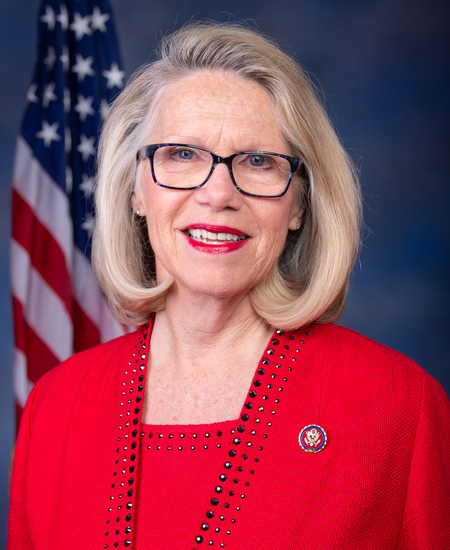
Rep. Carol D. Miller
Sponsored bills
Maddy summaryHR 4307, the Medical Supply Chain Resiliency Act, establishes a framework for the U.S. to negotiate agreements with trusted foreign partners to secure reliable supplies of critical medical goods like drugs and devices. It directs the President to create "trusted trade partner agreements" with countries that maintain open trade during health emergencies, protect intellectual property, and reduce unnecessary trade barriers. These agreements would eliminate duties or restrictions on medical goods, diversify supplier networks, and harmonize regulatory standards to prevent shortages like those seen during the pandemic. The bill directly affects U.S. manufacturers, healthcare providers, and importers by aiming to reduce over-reliance on a few nations for essential medical products.
Maddy summaryHR 4073, the Duty Drawback Clarification Act, clarifies U.S. tariff classifications for imported whiskies by creating specific subheadings in the Harmonized Tariff Schedule. It replaces a single tariff line with eight new subheadings that categorize whiskies by type (Irish/Scotch, Bourbon, Rye, or "Other") and container size (under or over 4 liters), each with a uniform duty rate of $2.04 per liter. This change directly affects whiskey importers and manufacturers who must now classify products using these new codes when entering goods into U.S. commerce. The bill streamlines duty calculation and drawback claims (refunds of duties on imported goods later exported) by standardizing the tariff structure for whiskey categories.
Maddy summaryThe Leveling the Playing Field 2.0 Act (HR 3882) updates U.S. trade law to better address international trade practices that disadvantage American businesses. It establishes special rules for handling multiple investigations of the same merchandise (called "successive investigations"), requiring the Commerce Department to consider previous injury determinations when making new findings. The bill also creates mechanisms to address market distortions from foreign government subsidies, including currency undervaluation, and strengthens procedures to prevent duty evasion through certification requirements for importers. These changes primarily affect foreign exporters of goods subject to U.S. antidumping and countervailing duty investigations, as well as U.S. importers of those goods.
Maddy summaryHR 3739, the FAIR TARIFF Act of 2023, requires U.S. Customs to refund overpaid duties for specific imports from European Union countries during two defined periods: October 18-December 17, 2019, and January 12-February 10, 2022. It targets products classified under certain Harmonized Tariff Schedule codes (e.g., 9903.89.10-9903.89.49 for 2019, 9903.89.57-9903.89.59 for 2022) that were incorrectly taxed due to tariff misclassification. Importers must apply for refunds within one year of the law’s enactment, with refunds processed within 180 days of application. The bill also mandates a 60-day advance notice in the Federal Register before implementing new tariff increases under Section 301 of the Trade Act of 1974.
Maddy summaryThis bill establishes a minimum payment floor for Medicare reimbursements to rural hospitals not located in frontier states. It sets a 0.85 minimum for the area wage index used in hospital inpatient payments (starting October 2023) and a similar floor for outpatient department payments (starting January 2024). This prevents Medicare payments from dropping below 85% of the standard wage index for eligible rural hospitals. The bill includes budget neutrality requirements to ensure overall Medicare payments don't increase, while exempting hospitals already receiving payments above the floor.
Maddy summaryHR 3611, the Kazakhstan Permanent Normal Trade Relations Act of 2023, makes Kazakhstan's existing "normal trade relations" (NTR) status permanent by removing the need for annual U.S. presidential reviews under the Trade Act of 1974. This bill directly affects U.S. trade policy with Kazakhstan, ending the requirement for the President to annually determine whether Kazakhstan meets emigration freedom standards (which it has satisfied since 1997). The key provision allows the President to formally extend permanent NTR treatment to Kazakhstan's products, eliminating the current annual review process. Once enacted, Kazakhstan would automatically receive the same most-favored-nation tariff rates as other NTR countries, streamlining trade without further congressional action.
Maddy summaryHR 3086, the "Find It Early Act," requires health insurance plans to cover breast cancer screenings with no cost-sharing for certain individuals at higher risk of breast cancer. The bill affects people with increased risk (based on medical criteria or dense breast tissue) or those needing screening due to factors like age, race, ethnicity, or family history. Key provisions mandate coverage for 2D/3D mammograms, ultrasounds, MRI, and other technologies without frequency limits for these groups. This applies to group health plans, Medicare, Medicaid, TRICARE, and VA healthcare systems starting January 1, 2024. The law aims to improve early detection by removing financial barriers to necessary screenings.
Maddy summaryThis bill changes tax rules to treat direct primary care (DPC) membership fees as deductible medical expenses. It defines DPC as a fixed monthly fee (capped at $150 per person, $300 for families) for primary care services only, excluding procedures requiring anesthesia, prescription drugs (except vaccines), or lab tests. The law ensures these fees can be claimed on tax returns like other medical costs, while clarifying DPC arrangements aren’t considered health insurance plans. It applies to fees paid for DPC services provided through employment or directly to patients, effective for 2024 tax years.
Maddy summaryThis bill regulates pharmacy benefit managers (PBMs) working with Medicare Part D prescription drug plans. It prohibits PBMs from earning income based on drug prices or rebates (requiring flat fees instead), mandates equal reimbursement for all network pharmacies, and requires PBMs to report how much of drug rebates they pass through to Medicare plans. The law also mandates annual compliance certifications and requires the government to publish aggregated transparency data (without revealing specific plan details) starting in 2024. These changes directly affect Medicare Part D plans and the seniors who rely on them for prescription drug coverage.