

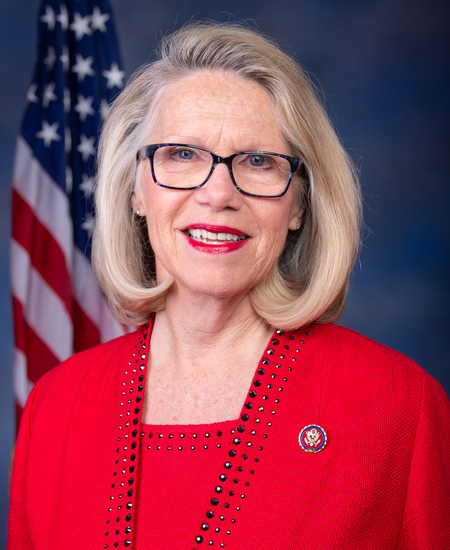
Photo of Carol D. Miller
R United States House · District 1 · West Virginia On the 2026 ballot

Rep. Carol D. Miller

Compare
Total votes
2,837
all sessions
Attendance
97%
85 missed
Lower than 82% of chamber peers
With party
97%
of cast votes
Near the chamber average
Bipartisan score
2%
crosses aisle rarely
Near the chamber average
Sponsored
893
bills & resolutions
Near the chamber average
Committees
3
assignments
893 bills and resolutions

Sponsored bills

Total
893
Primary
91
Co-sponsor
802
This page
893
matching current filters
Co-sponsor HR 1406
In committee · Indiana House · Co-sponsor
Sustainable Cardiopulmonary Rehabilitation Services in the Home Act

Maddy summaryThis bill makes permanent Medicare coverage for cardiac and pulmonary rehabilitation services delivered via telehealth in patients' homes, which were temporarily allowed during the pandemic. It removes geographic restrictions that previously required in-person visits or limited services to specific locations like clinics. The change directly affects Medicare beneficiaries needing heart or lung rehabilitation and healthcare providers offering these programs. It ensures home-based telehealth visits for cardiac, intensive cardiac, and pulmonary rehabilitation receive the same coverage as in-clinic services under Medicare.

In committee Dec 17, 2024 1 co-sponsor
Co-sponsor HR 751
In committee · Indiana House · Co-sponsor
FAIR Act

Maddy summaryHR 751, the FAIR Act, requires hospitals running medical residency programs to report annual data on applicants and acceptances from both osteopathic (DO) and allopathic (MD) medical schools starting in 2024. Specifically, hospitals must submit the number of applicants and accepted candidates from each medical school type, confirm they accept both DO and MD applicants, and state that COMLEX and USMLE exam scores are equally accepted. The Health Secretary must then publish this data online for public transparency. The bill directly affects hospitals operating residency programs and aims to make their admissions processes more visible, without mandating specific acceptance rates or changing admission criteria.

In committee Dec 17, 2024 1 co-sponsor
Primary HR 478
In committee · Indiana House · Lead sponsor
WFCA Act of 2023

Maddy summaryHR 478, the WFCA Act of 2023, expands tax benefits for dependent care by adding qualified sports, tutoring (including small-group), and art expenses to eligible costs under IRS Section 129. It raises the age limit for qualifying dependents from 13 to 15 and increases the annual benefit cap from $5,000 to $15,000 for families. The bill also allows unused benefits of $20 or more to carry forward to the next tax year without affecting gross income. These changes directly affect families with children under 15 who use dependent care assistance programs for eligible educational or extracurricular activities.

In committee Dec 17, 2024 0 co-sponsors
Primary HR 479
In committee · Indiana House · Lead sponsor
Targeting Child Care Funds Based on Poverty Act of 2023

Maddy summaryThis bill changes how federal child care funding is distributed to states. It directs that any additional funds for fiscal year 2024 or later must be allocated based on each state's share of children under 13 living in poverty. This replaces the previous distribution method with a new formula prioritizing states with higher concentrations of low-income children in that age group. The change directly affects states receiving child care funds under the Social Security Act's child care program.

In committee Dec 17, 2024 0 co-sponsors
Primary HR 476
In committee · Indiana House · Lead sponsor
Helping HANDS for Families Act

Maddy summaryHR 476, the Helping HANDS for Families Act, amends the Social Security Act to modernize how family support services are delivered. It allows states to use digital portals for families and children to access community-based support services, such as childcare or counseling, through an electronic or digital platform. This change directly affects families receiving these services by providing a new digital access method for existing support programs. The bill does not create new benefits but updates the framework for delivering current services more efficiently. It focuses on improving access to community support through technology, without altering the core services provided.

In committee Dec 17, 2024 0 co-sponsors
Co-sponsor HR 407
In committee · Indiana House · Co-sponsor
Protect the UNBORN Act

Maddy summaryHR 407, the "Protect the UNBORN Act," prohibits federal agencies from implementing or enforcing two specific executive orders issued by President Biden in 2022 (Executive Orders 14076 and 14079), which aimed to protect access to reproductive healthcare services. The bill bans the use of federal funds, including those from the 2022 Consolidated Appropriations Act, to carry out, administer, or enforce these executive orders. It directly affects federal agencies and programs that would otherwise comply with the Biden administration's policies on reproductive healthcare access. The bill does not create new healthcare rules but blocks the implementation of existing executive actions.

In committee Dec 17, 2024 1 co-sponsor
Co-sponsor HR 7
In committee · Indiana House · Co-sponsor
No Taxpayer Funding for Abortion and Abortion Insurance Full Disclosure Act of 2023

Maddy summaryThis bill bans federal funding for abortions in most cases, prohibiting the use of taxpayer money for abortion services or health insurance plans covering abortion. Exceptions allow funding for abortions resulting from rape, incest, or when a pregnancy endangers a woman's life. It requires health insurance plans sold through the Affordable Care Act (ACA) marketplaces to clearly disclose any separate costs for abortion coverage and prohibits ACA subsidies from being used for plans that cover abortion (except in the specified exceptions). The law directly affects federal programs like Medicaid, ACA marketplace plans, and insurers offering health coverage to individuals using federal subsidies.

In committee Dec 17, 2024 1 co-sponsor
Co-sponsor HJRES 142
In committee · Indiana House · Co-sponsor
Providing for congressional disapproval under chapter 8 of title 5, United States Code, of the rule submitted by the Department of Labor relating to "Retirement Security Rule: Definition of an Investment Advice Fiduciary".

Maddy summaryHJRES 142 is a congressional disapproval resolution targeting a Department of Labor rule issued on April 25, 2024. It seeks to block the "Retirement Security Rule: Definition of an Investment Advice Fiduciary" (89 Fed. Reg. 32122), which defined standards for financial advisors handling retirement accounts. If passed, this resolution would make the Labor Department's rule ineffective, directly affecting retirement plan advisors and financial institutions subject to the regulation. The bill uses a specific procedural mechanism under Title 5, U.S. Code, to nullify the rule without creating new law.

In committee Dec 16, 2024 1 co-sponsor
Co-sponsor HR 5863
Signed into law · Indiana House · Co-sponsor
Federal Disaster Tax Relief Act of 2023

Maddy summaryThis bill provides tax relief for individuals affected by specific disasters by excluding certain compensation payments from taxable income. It covers wildfire relief payments for losses incurred in federally declared wildfires after 2014 (including expenses like repairs, lost wages, and emotional distress), and payments related to the February 2023 East Palestine, Ohio, train derailment (covering property damage, closing costs, and inconvenience). Payments already covered by insurance or other sources are excluded from this tax benefit. The relief applies to payments received during 2020-2025 for wildfires and from February 2023 onward for the East Palestine incident, with extended deadlines for related tax claims.

Signed into law Dec 12, 2024 1 co-sponsor
Co-sponsor HR 2685
In committee · Indiana House · Co-sponsor
Mining Schools Act of 2024

Maddy summaryThe Mining Schools Act of 2024 establishes a federal grant program to strengthen domestic mining education by funding eligible schools. It defines eligible "mining schools" as accredited mining/engineering programs at higher education institutions or specific geology/engineering departments at 4-year public universities in states with significant mining-related economic activity. The Department of Energy will award up to 10 competitive annual grants for recruiting students and enhancing programs focused on critical minerals, environmental reclamation, sustainable extraction, and domestic mineral production. An advisory board of industry and academic experts will help select grantees and ensure funds are used as intended. The program is authorized to receive $10 million yearly from 2024 through 2031.

In committee Dec 12, 2024 1 co-sponsor
Showing 381 to 390 of 893 bills
Previous 1 … 38 39 40 … 90 Next