

Maddy summaryHJRES 154 is a resolution seeking to block a Bureau of Land Management (BLM) rule that would have updated the process for leasing federal lands for oil and gas extraction. The rule, published in the Federal Register on April 23, 2024, specifically addressed "Fluid Mineral Leases and Leasing Process" (89 Fed. Reg. 30916). If passed, this resolution would cancel the rule under the Congressional Review Act, preventing it from taking effect. This action would directly impact the BLM's regulatory authority and oil and gas companies operating on federal lands.
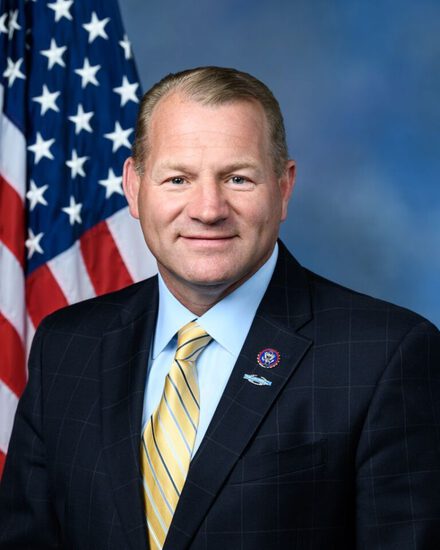
Rep. Troy E. Nehls
Sponsored bills
Maddy summaryHR 8548, the ATD Act, amends immigration law to require automatic deportation for certain non-citizens who violate release conditions. If an immigration officer files an affidavit stating an alien failed to comply with a release condition under Section 236(a), the immigration judge must order their removal without requiring the alien to appear in court. This directly affects non-citizens in immigration proceedings who miss required check-ins or other release terms. The bill creates a specific procedural mechanism for swift removal in these cases, bypassing standard court appearances.
Maddy summaryHR 6248, the "Think Differently Transportation Act," requires Amtrak to submit detailed annual reports to Congress about its compliance with the Americans with Disabilities Act (ADA). Specifically, the bill mandates that Amtrak’s reports include an action plan to fix non-compliant rail cars and stations (per a 2020 Department of Justice settlement), plus a status update on all Amtrak-served stations. For each station, the report must clarify Amtrak’s responsibility level (sole, shared, or none), timelines for compliance, and the entity responsible for non-Amtrak portions. This bill directly affects Amtrak’s reporting obligations and Congress’s oversight of ADA accessibility in rail services.
Maddy summaryHR 3317, the Rolling Stock Protection Act, removes a lifetime exemption in federal procurement rules for railroad equipment (rolling stock). It amends U.S. Code Section 5323(u)(5) to eliminate an exception that previously allowed certain government contracts to bypass standard procurement requirements indefinitely. This change directly affects federal agencies and contractors purchasing railroad equipment, requiring all such contracts to follow standard procurement processes without permanent exemptions. The bill makes a technical adjustment to existing law, ensuring consistent application of procurement rules for all rolling stock contracts.
Maddy summaryHR 8360, the "No Toxic Chemicals in Cosmetics Act," bans the sale of sunscreens and cosmetics containing specific parabens (like methylparaben and propylparaben) after a two-year implementation period. It directly affects cosmetic manufacturers and retailers who would need to reformulate or remove products containing these preservatives from interstate commerce. The bill amends the Federal Food, Drug, and Cosmetic Act to define such products as "adulterated," making them illegal to sell. This creates a clear regulatory change for the cosmetics industry, requiring compliance with the new restrictions by the two-year deadline.
Maddy summaryThis bill prohibits federal funding for identity cards issued to undocumented immigrants, specifically blocking the ICE Secure Docket Card program and similar DHS initiatives. It also bans using any card issued for immigration status access as proof of identity to qualify for federal benefits like SNAP or Medicaid. The bill requires the DHS Inspector General to report within six months on existing programs providing free identity cards to people unlawfully present in the U.S. It directly affects undocumented immigrants seeking to access federal benefits through such cards and DHS programs.
Maddy summaryHR 8430, the Reshape Alternatives to Detention Act of 2024, terminates existing alternatives-to-detention programs like the Case Management Pilot and Young Adult Case Management programs. It mandates GPS monitoring for all non-detained immigrants throughout immigration proceedings, requires mandatory check-ins within 14 days, and redirects funds from terminated programs to expand detention bed capacity. The bill prohibits participation in alternatives-to-detention programs for immigrants moving to jurisdictions with sanctuary policies and requires biometric data submission for program eligibility. These provisions directly affect immigrants enrolled in the Intensive Supervision Appearance Program (ISAP) and alter immigration enforcement procedures.
Maddy summaryHR 8434 designates the United States Postal Service facility at 107 North Hoyne Avenue in Fritch, Texas, as the "Chief Zeb Smith Post Office." This bill changes the official name of the physical post office location for all federal references, including laws, maps, and documents. It directly affects the postal facility in Fritch by establishing its new official designation. The bill has no policy or funding impact - it is purely a ceremonial naming resolution.
Maddy summaryThis bill requires immigration authorities to detain and deport non-citizens who assault law enforcement officers while on duty or because of their officer status. It amends immigration law to mandate detention for individuals already inadmissible under certain immigration categories who commit assaults against officers during official duties. The Secretary of Homeland Security must issue a detainer and take custody if the person isn't already detained by authorities. The bill defines "assault" by local law and includes firefighters and first responders as protected "law enforcement officers."
Maddy summaryHR 7109, the Equal Representation Act, requires the U.S. Census Bureau to add a citizenship status checkbox to the 2030 and future decennial censuses, asking respondents to identify if they are U.S. citizens, U.S. nationals, lawful residents, or unlawful residents. It then mandates excluding noncitizens (both lawful and unlawful residents) from the population count used to determine each state's number of congressional seats and electoral votes starting with the 2030 census. This bill directly affects how states are apportioned representation in Congress and presidential electoral votes, based solely on the citizen population. The key change is shifting the apportionment base from total population to citizen population alone, using the new census data.