

Maddy summaryHJRES 170 is a resolution seeking congressional disapproval of a federal rule that would have required new housing projects financed by the Department of Housing and Urban Development (HUD) or the Department of Agriculture (USDA) to meet specific energy efficiency standards. The rule, published in April 2024, aimed to set these standards for new construction in federally subsidized housing. If passed, this resolution would block the rule under the Congressional Review Act, making it legally void. It directly affects developers and builders of HUD- and USDA-financed housing by removing the requirement to comply with these energy standards.
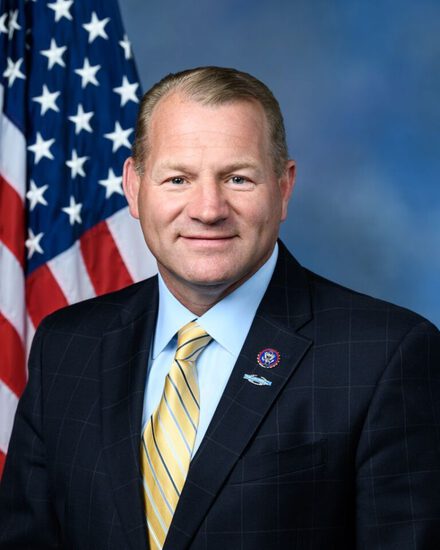
Rep. Troy E. Nehls
Sponsored bills
Maddy summaryHRES 901 is a U.S. House resolution expressing support for democracy and human rights in Pakistan. It calls on the U.S. President and Secretary of State to collaborate with Pakistan to uphold democratic processes, human rights, and the rule of law. The resolution urges Pakistan to protect freedoms of speech, assembly, and press, and to avoid arbitrary detention or suppression of political participation. It also condemns efforts to undermine Pakistan's electoral or judicial systems, including harassment of citizens during protests or interference with elections.
Maddy summaryHRES 1305 is a procedural resolution that formally rescinds subpoenas issued by the January 6th Select Committee to four individuals (Stephen Bannon, Mark Meadows, Daniel Scavino Jr., and Peter Navarro) and withdraws the committee’s recommendations finding them in contempt of Congress. The bill specifically cancels subpoenas from September 2021, October 2021, and February 2022, along with related contempt resolutions adopted in 2021-2022. It does not alter legal proceedings but withdraws the committee’s authority to enforce these actions. The resolution is supported by House members who argue the committee was partisan and illegitimate, though the bill itself only addresses the committee’s procedural actions.
Maddy summaryThis bill rescinds unspent funds from specific federal programs. It targets leftover money from pandemic relief (like the CARES Act and American Rescue Plan) and certain infrastructure initiatives (including education stabilization funds and transportation programs like the Congestion Mitigation Program). The rescission is limited to amounts already allocated for Israel, Ukraine, and Indo-Pacific security supplements under recent appropriations. Unspent funds must be returned to the Treasury, with no new spending created.
Maddy summaryHRES 1303 is a resolution passed by the U.S. House of Representatives on June 14, 2024, that condemns the Biden administration's suspension of pending approvals for liquefied natural gas (LNG) exports to countries without free trade agreements with the U.S. The resolution argues this action is politically motivated, citing studies showing economic benefits of LNG exports and noting that previous administrations conducted similar environmental reviews without halting permits. It calls for lifting the suspension to restore confidence in the energy sector, prioritize U.S. workers and communities, and align with the administration's stated goals of economic growth. As a non-binding resolution, it does not change policy but formally expresses congressional disapproval of the administration's approach.
Maddy summaryHR 537 authorizes a Congressional Gold Medal to honor 60 diplomats who saved Jewish lives during the Holocaust by issuing visas and passports against their governments' orders, risking expulsion and personal danger. The medal will be presented to the next of kin of these diplomats, alongside representatives from their home countries, and permanently displayed at the United States Holocaust Memorial Museum. The bill also permits the sale of bronze duplicates to cover production costs, with proceeds going to the U.S. Mint. This legislation recognizes the diplomats' humanitarian actions without creating new government programs or altering existing laws.
Maddy summaryThis bill creates a presumption that certain health conditions (myocarditis, pericarditis, thrombosis with thrombocytopenia syndrome, Guillain-Barré Syndrome, and other diseases later determined by the VA) are connected to military service for veterans who received a COVID-19 vaccine under mandatory orders between August 24, 2021, and January 10, 2023. It directly affects veterans who developed these conditions after being required to get the vaccine during that period, streamlining their path to VA disability compensation by removing the need to prove a direct link to service. The bill requires the VA to report monthly on claim statuses and outcomes for four years, including approval rates and pending cases. This changes how the VA processes claims for these specific conditions, treating them as service-connected by default for affected veterans.
Maddy summaryThis bill designates the U.S. Postal Service facility at 1810 FM 1462 in Rosharon, Texas, as the "Army Specialist 5th Class Clarence Sasser Post Office Building." It directly affects the postal service location and all official references to it. The bill updates all federal records, maps, and documents to use the new name instead of the previous designation. This is a ceremonial naming bill with no policy changes or funding impacts.
Maddy summaryHR 5403, the CBDC Anti-Surveillance State Act, prohibits the Federal Reserve from issuing or facilitating central bank digital currency (CBDC) directly or indirectly to individuals through financial institutions. It specifically bans Federal Reserve banks from offering digital products to individuals, maintaining individual accounts, or using CBDC for monetary policy implementation. The bill also clarifies that its restrictions do not apply to existing physical cash or private, permissionless digital payment systems. This bill directly affects the Federal Reserve's ability to develop or deploy a government-run digital dollar. The law aims to prevent the Federal Reserve from creating a digital currency that could enable transaction tracking or government oversight of personal financial activity.
Maddy summaryHJRES 146 is a congressional disapproval resolution targeting a Centers for Medicare & Medicaid Services (CMS) rule published on May 8, 2024, that would have clarified eligibility for health insurance subsidies under the Affordable Care Act for Deferred Action for Childhood Arrivals (DACA) recipients and certain other noncitizens. The rule aimed to allow these individuals to access premium tax credits, cost-sharing reductions, and basic health programs through health insurance marketplaces. If enacted, this resolution would block the CMS rule from taking effect, maintaining current restrictions that prevent DACA recipients from qualifying for these subsidies.