

Maddy summaryHRES 837 is a non-binding resolution passed by the U.S. House of Representatives on November 1, 2023, reaffirming U.S. commitment to the Philippines. It specifically calls for invoking the U.S.-Philippines Mutual Defense Treaty if Philippine assets (including Coast Guard vessels) are attacked in the South China Sea, urges joint U.S.-Philippines patrols in the region, and objects to China's disputed territorial claims. The resolution does not create new laws or funding but expresses congressional support for existing defense agreements and diplomatic positions. It directly addresses U.S. foreign policy toward the Philippines and the South China Sea disputes.
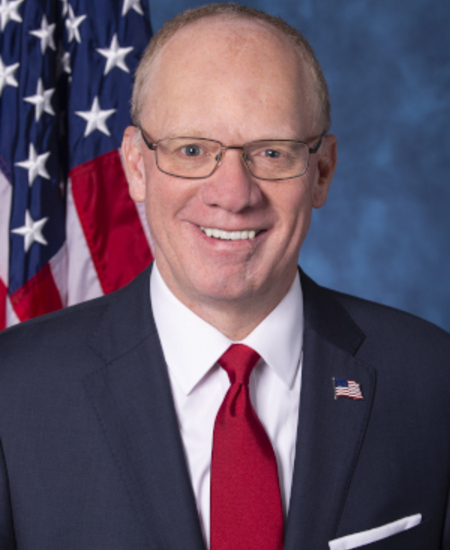
Rep. John W. Rose
Sponsored bills
Maddy summaryHR 8706, the "Dismantle DEI Act of 2024," would prohibit federal agencies from maintaining diversity, equity, and inclusion (DEI) offices, programs, or training by requiring the closure of existing DEI offices within 90 days and banning federal funding for DEI-related activities. The bill defines "prohibited diversity, equity, and inclusion practices" as those that discriminate based on race, color, ethnicity, religion, biological sex, or national origin, or require training that asserts a particular group is inherently superior or inferior. It would rescind several executive orders related to racial equity and gender inclusion, and prohibit the use of federal funds for DEI-related activities across all federal agencies, contractors, and grant recipients. The bill contains limited exceptions for Equal Employment Opportunity offices and disability rights enforcement offices as historically organized and operated.
Maddy summary# Summary of Proposed Higher Education Act Amendments This document outlines significant proposed amendments to the Higher Education Act of 1965, primarily as part of the "College Cost Reduction Act." The key elements include: ## Accreditation Reform - Major overhaul of accreditation standards, requiring accrediting agencies to demonstrate independence from trade associations - New requirements for accrediting agencies to assess student achievement outcomes, including median value-added earnings relative to median total price charged - Introduction of an "Alternative Quality Assurance Experimental Site Initiative" to test non-accredited institutions - Protections for religious institutions, including a new process for appealing accreditation decisions related to religious mission - Removal of "litmus tests" that would require institutions to support specific political viewpoints ## Student Success Initiatives - Establishment of "Postsecondary Student Success Grants" to increase participation, retention, and completion rates for high-need students - Focus on evidence-based practices, with tiered requirements (tier 1, 2, and 3 reforms) - Mandatory inclusion of high-need student populations (low-income, first-generation, military-connected, etc.) - Requirements for institutions to report on completion rates, retention rates, and student demographics ## Regulatory Changes - Repeal of numerous existing regulations including: * Closed school discharges * Borrower defense to repayment * Pre-dispute arbitration * False certification requirements * Ability-to-benefit rules * Financial responsibility regulations - New restrictions on incentive compensation for recruiters - Changes to third-party servicer definitions and regulations ## Transfer and Credit Policies - New requirement that institutions cannot deny transfer credit based solely on the source of accreditation - Requirements for transparent transfer policies - Changes to reverse transfer policies ## Other Key Provisions - Modifications to the National Advisory Committee on Institutional Quality and Integrity (NACIQI) - New definitions for "total price" and "value-added earnings" - Changes to the process for institutions to change accrediting agencies - New requirements for institutions to report on student outcomes The overall focus of these proposed amendments is to reduce regulatory burden on institutions, promote transparency, improve student outcomes (particularly for high-need students), modernize accreditation processes, and protect religious institutions' rights in accreditation decisions.
Maddy summaryHRES 1574 is a non-binding House resolution calling for the immediate removal of Federal Deposit Insurance Corporation (FDIC) Chairman Martin J. Gruenberg. It cites concerns about his leadership, including alleged mistreatment of staff, a "toxic workplace," staffing shortages, and failures in bank supervision that contributed to financial institution failures. The resolution does not change law or remove Gruenberg (as the President appoints FDIC leaders), but formally demands his removal. It was introduced by 25 Republican representatives and referred to the Financial Services Committee.
Maddy summaryHRES 1566 is a symbolic House resolution honoring all U.S. veterans on Veterans Day 2024. It recognizes the service and sacrifice of the estimated 15.8 million veterans living in the U.S. as of 2023, including those who served in conflicts from World War II to post-9/11. The resolution calls on the American public to observe Veterans Day to acknowledge veterans' role in preserving national freedom. As a non-binding resolution, it has no direct policy impact but formally expresses congressional recognition of veterans' contributions.
Maddy summaryThis bill provides one-time financial assistance to U.S. farmers growing specific crops (like corn, soybeans, wheat, cotton, and rice) during the 2024 crop year if their expected costs exceed expected returns. Payments equal 60% of the difference between the expected cost of production per acre (based on USDA cost forecasts) and the expected gross return per acre (based on projected farm prices and yields). Payments are calculated using actual planted acreage plus 50% of acreage prevented from planting due to natural disasters, with annual caps of $175,000 or $350,000 depending on the farm’s primary income source. The program uses existing USDA data sources and applies standard farm payment limits.
Maddy summaryHRES 1561 is a symbolic House resolution introduced by 11 Republican representatives on November 1, 2024, condemning President Biden's October 29, 2024, remark calling Trump supporters "garbage." The resolution states the House "condemns" this specific comment but does not create any new laws or affect any individuals or policies. It serves solely as a formal expression of disapproval from the House members who signed it. As a procedural resolution, it has no legal effect or practical impact on government operations or constituents.
Maddy summaryThe ROAD to Housing Act (HR 9990) is a comprehensive housing bill designed to improve housing access and affordability for low-income families. It includes key provisions such as enhancing housing counseling programs, creating incentives for small dollar mortgage loans under $70,000, and updating manufactured home regulations to treat homes without permanent chassis similarly to those with them. The bill also establishes new reporting requirements for housing programs, incentivizes local solutions to homelessness through grant programs, and prioritizes housing development in opportunity zones. These measures aim to increase housing choices, improve financial literacy for homeowners, and strengthen oversight of housing assistance programs. The legislation represents a multi-faceted approach to addressing housing challenges across the United States.
Maddy summaryThe BRIDGE Digital Assets Act establishes a joint 20-member advisory committee between the Commodity Futures Trading Commission (CFTC) and Securities and Exchange Commission (SEC). The committee includes equal representation from digital asset issuers, traders, researchers, and users to advise regulators on rules for digital assets and blockchain technology. It requires the agencies to publicly review the committee's findings within 3 months and explain any decisions not to act. The bill defines key terms like "digital asset" (a transferable digital value recorded on a secure ledger) and "blockchain" to guide future regulatory work.
Maddy summaryHRES 1518 designates November 12 as Creutzfeldt-Jakob Disease (CJD) Awareness Day. The resolution supports raising public awareness about CJD, a rare, fatal brain disorder affecting approximately 1-2 people per million annually in the U.S., which causes rapid neurological decline and death within months to a year. It highlights the disease's impact on patients and families and emphasizes the need for ongoing research into prion diseases like CJD, which share similarities with Alzheimer's and related dementias. As a symbolic resolution (not a law), it does not create new programs or funding but aims to increase recognition of this rare condition.