

Maddy summaryThe RIFLE Act of 2024 changes how the federal government handles violations by firearms licensees, affecting gun dealers and manufacturers who hold federal licenses. It creates a graduated penalty system where non-willful violations require the Attorney General to work with licensees to fix issues before taking action, while willful violations may lead to license suspension or revocation only after proper notice, hearing, and evidence of continued noncompliance. The bill establishes new procedures for administrative hearings, defines "willful" violations more clearly, and gives licensees 90 days to liquidate inventory after license expiration or revocation, with extensions possible for reasonable cause. These changes aim to create a more transparent process for addressing violations while maintaining public safety standards.
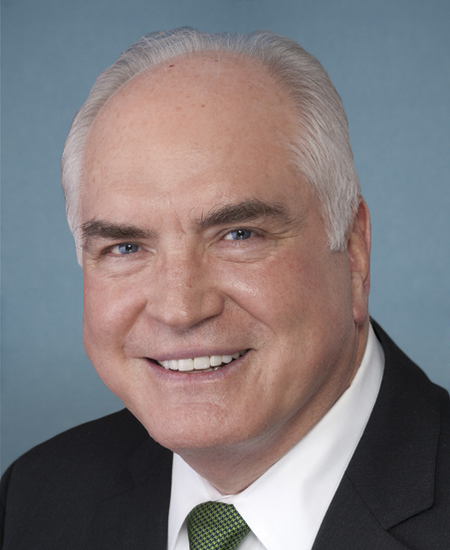
Rep. Mike Kelly
Sponsored bills
Maddy summaryThis bill establishes a 16-member Fiscal Commission in Congress to develop bipartisan recommendations for improving the federal budget and debt situation. The Commission must identify policies to balance the budget, stabilize the debt-to-GDP ratio at or below 100%, and improve long-term fiscal outlook, with recommendations requiring approval from at least 3 Republican and 3 Democratic members. The Commission must submit its report and legislative language by November 15, 2024, including economic and budgetary effects, after which Congress would consider the proposals through expedited procedures. The Commission would terminate 30 days after submitting its final report.
This resolution supports the designation of National Teach Ag Day and recognizes the important role of agricultural education and the National FFA Organization in developing the next generation of agricultural leaders.
Maddy summaryHR 1147, the Whole Milk for Healthy Kids Act of 2023, allows schools participating in the National School Lunch Program to offer whole milk as an option during lunch. It amends the school lunch law to explicitly permit schools to serve flavored and unflavored whole milk alongside reduced-fat, low-fat, and fat-free milk choices for students. The bill also requires the Secretary of Agriculture to adjust meal regulations to account for saturated fat from whole milk, ensuring it doesn't count against meal fat limits. This change directly affects participating schools and the students who receive school lunches, expanding their milk beverage options.
Maddy summaryHR 6833 amends the Work Opportunity Tax Credit (WOTC) to increase benefits for employers hiring from targeted groups. It raises the credit rate from 40% to 50% for qualified wages, with higher limits for veterans (up to $24,000/$48,000 in first/second year) and removes an age cap for Supplemental Nutrition Assistance Program (SNAP) recipients. The bill also adjusts rules for summer youth workers (capping credits at $3,000 annually) and long-term welfare recipients. These changes apply to individuals starting work after December 31, 2023.
Maddy summaryHR 6734 prohibits the use of federal funds to finalize, implement, or enforce the Bureau of Alcohol, Tobacco, Firearms, and Explosives' (ATF) proposed rule (2022R-17) defining "engaged in the business as a dealer in firearms." This bill directly affects the ATF by blocking funding for this specific regulatory rule, which was proposed in August 2023. The legislation does not create new requirements but prevents federal resources from being used to advance this particular ATF regulation.
Maddy summaryThis bill establishes tax relief for qualified residents of Taiwan earning income in the United States by reducing tax rates on interest, dividends, and royalties to 10% or 15% (instead of the standard 30%). It also exempts certain wages and income from entertainment activities under $30,000 from U.S. taxation. To qualify, individuals must meet specific residency requirements, and entities must demonstrate substantial business activity in Taiwan. The bill modifies withholding tax procedures to implement these new rates and requires reciprocal tax benefits from Taiwan to be in place.
Maddy summaryHR 4468, the Choice in Automobile Retail Sales Act of 2023, blocks the Environmental Protection Agency (EPA) from finalizing or enforcing a specific proposed rule setting emissions standards for 2027+ light-duty vehicles. It amends the Clean Air Act to prevent future EPA regulations from mandating specific vehicle technologies or limiting the availability of new vehicles based on engine type (e.g., gasoline vs. electric). The bill directly affects EPA rulemaking authority and automakers' compliance with emissions standards, ensuring new vehicle options remain diverse without technology mandates. This is a procedural change to federal emissions regulations, not a direct consumer or industry mandate.
Maddy summaryThis bill prohibits federal funding for housing undocumented immigrants on public lands managed by specific federal agencies. It blocks the use of federal money to provide temporary or permanent shelter (including encampments) for "specified aliens" - defined as individuals not legally admitted to the U.S. - on lands under the National Park Service, Bureau of Land Management, Fish and Wildlife Service, or Forest Service. The restriction applies to all housing arrangements, including leases or contracts, and directly affects how these agencies manage public lands. The policy change prevents federal agencies from using taxpayer funds to support shelter for non-admitted immigrants on federally managed properties.
Maddy summaryHRES 905 is a House resolution commemorating the 200th anniversary of the Monroe Doctrine, first articulated by President James Monroe in 1823. The resolution formally recognizes the doctrine's historical significance in establishing U.S. policy against foreign colonization in the Western Hemisphere and its enduring influence on U.S. foreign policy. It resolves that the House will "commemorate" the anniversary, "reassert" the U.S. position against foreign malign influence threatening Western Hemisphere democracies, and "recognize" the doctrine's principles as a foundational element of U.S. foreign policy. This is a purely ceremonial resolution with no new policy or funding implications.