Abortion Is Not Health Care Act of 2021 This bill prohibits a tax deduction for medical expenses paid for an abortion.
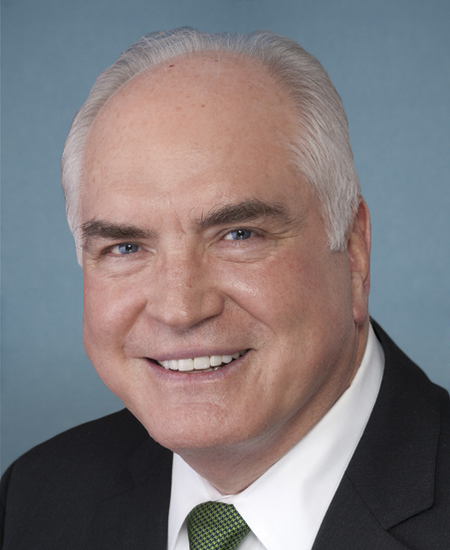
Rep. Mike Kelly
Sponsored bills
Access Technology Affordability Act of 2021 This bill allows a refundable tax credit equal to the amounts paid for qualified access technology for use by a blind individual who is the taxpayer, the taxpayer's spouse, or a dependent of the taxpayer. Qualified access technology is hardware, software, or other information technology with the primary function of converting or adapting information that is visually represented into forms or formats useable by blind individuals. The credit is limited to (1) costs that are not compensated by insurance or otherwise, and (2) an aggregate amount of $2,000 per blind individual in any period of three consecutive taxable years. The credit must be adjusted for inflation after 2021 and terminates after 2026.
Protecting American Resources, Innovation, and Sovereignty Act or the PARIS Act This bill requires the President to submit a report to Congress prior to taking certain actions under the Paris Agreement, and it gives Congress the authority to block such actions. The bill also prohibits any legal cause of action in U.S. courts pursuant to the Paris Agreement. Prior to establishing or revising a climate change-related action (referred to under the agreement as a nationally determined contribution or NDC), the President must submit a detailed report to Congress that includes information such as how the NDC will impact the level of total global emissions. If any action proposed in this report results in increased costs of energy or manufacturing, the report must include specific policy measures to prevent (1) job displacement, (2) reduced global competitiveness of U.S. goods, and (3) leaked emissions that may occur as a result of the proposed action. Congress may block the NDC by enacting a joint resolution of disapproval within 60 days of the President submitting this report.
Nurses Certification And Recognition of Experience Act of 2021 or the Nurses CARE Act of 2021 This bill expands qualifying training and competency requirements for nurse aides in Medicare skilled nursing facilities (SNFs) and Medicaid nursing facilities (NFs) for nurse aides who initially train and work during the public health emergency relating to COVID-19 (i.e., coronavirus disease 2019). Currently, SNFs and NFs may not hire nurse aides for longer than four months unless they meet certain training and certification requirements. The Centers for Medicare & Medicaid Services has waived some of these requirements during the emergency period so as to allow facilities to maintain adequate staffing levels. The bill allows individuals who complete a training program, competency assessment, and at least 80 hours of supervised work experience as a temporary nurse aide during the emergency period, and who meet other specified competency requirements, to qualify for prolonged work as nurse aides in SNFs and NFs beyond the emergency period.
Safe Testing at Residence Telehealth Act of 2021 This bill provides for Medicare payment of certain at-home diagnostic tests and telehealth assessments that are provided in relation to COVID-19 (i.e., coronavirus disease 2019). Specifically, during the public health emergency, the bill requires Medicare payment of diagnostic tests for respiratory conditions other than COVID-19 (e.g., influenza) that are used to finalize a COVID-19 diagnosis and of COVID-19 blood tests that are ordered via telehealth, as well as for related telehealth assessments, regardless of whether the practitioner who orders the test is the one who furnishes it and regardless of the location of the practitioner. The bill requires practitioners to report specified demographic data with respect to such tests and services in order to receive payment, and prohibits payment for in-person tests that were already ordered via telehealth.
Federal Reserve Transparency Act of 2021 This bill establishes requirements regarding audits of certain financial agencies performed by the Government Accountability Office (GAO). Specifically, the bill directs the GAO to complete, within 12 months, an audit of the Federal Reserve Board and Federal Reserve banks. In addition, the bill allows the GAO to audit the Federal Reserve Board and Federal Reserve banks with respect to (1) international financial transactions; (2) deliberations, decisions, or actions on monetary policy matters; (3) transactions made under the direction of the Federal Open Market Committee; and (4) discussions or communications among Federal Reserve officers, board members, and employees regarding any of these matters.