

Maddy summaryThe Immigration Visa Efficiency and Security Act of 2023 caps family-based immigrant visas for any single country at 15% (2% for dependent areas) of total visas annually, addressing longstanding visa backlogs for certain nations. It establishes new requirements for H-1B employers, including posting job openings on a Department of Labor website, meeting specific wage requirements (minimum $90,000 or prevailing wage), and preventing discrimination against workers. The bill also creates enhanced procedures for investigating H-1B violations, increases penalties for noncompliance, prohibits certain visas for nationals of "foreign adversary countries," and establishes a new pathway for employment-based immigrants to adjust their status with specific job requirements during the process.
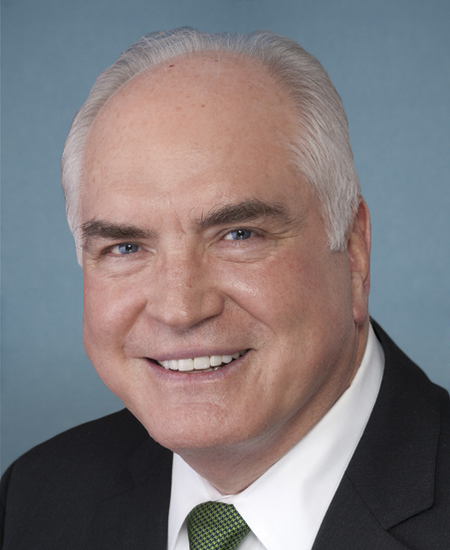
Rep. Mike Kelly
Sponsored bills
Maddy summaryThis bill allows ordained ministers, members of religious orders, and Christian Science practitioners who currently have Social Security exemptions to revoke that exemption. They can file an application by the due date of their second tax year after December 31, 2025 (2027), choosing to pay Social Security taxes starting in 2026 or 2027. Once revoked, the exemption cannot be reinstated, and late filings require back payment of taxes for the affected year. The IRS must also create a plan within 90 days to inform clergy about this option.
Maddy summaryThis bill authorizes a feasibility study to determine if a historical route taken by George Washington in 1753 - stretching approximately 500 miles from Williamsburg, Virginia, to Waterford, Pennsylvania - could qualify as a National Historic Trail. The study, mandated under the National Trails System Act, would assess the route's historical significance and suitability for designation without committing to trail creation or funding.
Maddy summaryHR 6300, the Veterans Education is Timeless Act of 2023, removes expiration dates for all Department of Veterans Affairs (VA) education benefits. It directly affects veterans and their dependents who use programs like the Post-9/11 GI Bill, Survivors' Benefits, and others, allowing them to access education benefits at any time without a deadline. The bill amends multiple sections of Title 38 to state that benefits "shall be afforded... at any time and are not subject to any delimiting date." It also requires the VA to refund veterans for contributions if they apply for a refund, and applies retroactively to all eligible individuals.
Maddy summaryHRES 875 is a symbolic House resolution expressing support for National Adoption Day (November 18, 2023) and National Adoption Month (November). It does not create new laws or policies but formally encourages the public to consider adoption and recognizes the importance of permanent families for children in foster care. The resolution highlights that approximately 114,000 children in the U.S. foster system await adoption and emphasizes the goal of securing safety and permanency for all children. It urges Americans to support adoption efforts during November and throughout the year. This resolution has no direct legal effect on adoption processes or funding.
Maddy summaryThis bill appropriates $14.3 billion in supplemental security funding to Israel following the October 7, 2023 attacks. The funding includes $4 billion for Iron Dome and David's Sling defense systems, $1.35 billion for the Iron Beam defense system development, and $3.5 billion for foreign military financing. The bill requires regular reporting to Congress on security assistance provided to Israel and designates all funds as "emergency requirements" under federal budget law. It also modifies existing laws to facilitate the transfer of defense articles and services to Israel, aiming to strengthen Israel's defense capabilities against rocket threats.
Maddy summaryHR 6288, the Data for Pediatric Brain Cancer Act of 2023, establishes a federal program to create a real-world data registry for children with rare brain tumors, initially focusing on atypical teratoid rhabdoid tumor (ATRT). The bill directs the Secretary to develop and maintain a registry collecting treatment data from routine clinical practice, which can be used to form external control groups for clinical trials when randomized trials are impractical due to the disease's rarity. It authorizes $2 million for fiscal year 2025 to fund grants for academic institutions and support data infrastructure, analysis, and collaboration with experts. This registry aims to accelerate research for pediatric brain cancer treatments by providing real-world data benchmarks for trial design, directly affecting children with rare brain tumors and the research community studying them.
Maddy summaryThis resolution (HRES 859) is a ceremonial House measure honoring U.S. veterans on Veterans Day 2023. It formally recognizes veterans' service and sacrifice, calling on the American public to observe Veterans Day to acknowledge their role in protecting U.S. freedoms. The resolution does not create new policies, allocate funds, or affect specific groups - it is purely symbolic. It was introduced by 33 bipartisan House members and passed by the House without committee action.
Maddy summaryThis bill requires colleges and universities planning to close to create and submit a detailed record-management plan to their accrediting agency. The plan must cover how student records (including transcripts, billing, and financial aid) will be stored, accessed, and handled after closure, along with a timeline for providing student contact lists to federal and state agencies. It also mandates that institutions release all financial holds on records and stop charging students for copies for one year after closing, with a possible nominal fee after that period. These requirements apply to any institution notifying its accreditor of intended closure, starting five years after the bill's enactment.
Maddy summaryThe ADOPT Act of 2023 makes it a federal crime for unlicensed individuals or organizations to provide adoption intermediary services, place adoption advertisements, or offer payments exceeding $500 to parents placing children for adoption. It directly affects prospective adoptive parents, placing parents, and unlicensed adoption facilitators by prohibiting these activities while exempting licensed agencies and attorneys. Key provisions criminalize unlicensed brokering, restrict certain advertising, and limit payments to placing parents, with penalties including fines up to $100,000 or 5 years in prison per violation. The law aims to prevent exploitation and commodification of children in domestic adoptions by requiring services through licensed providers.