

Maddy summaryHR 7257, the GLRI Act of 2024, reauthorizes federal funding for the Great Lakes Restoration Initiative. It specifically adds $500 million annually for fiscal years 2027 through 2031 to the existing program under the Federal Water Pollution Control Act. This funding directly supports ongoing environmental restoration projects in the Great Lakes region, including pollution cleanup, habitat restoration, and invasive species management. The bill extends current funding levels for the next five years without altering program requirements or eligibility.
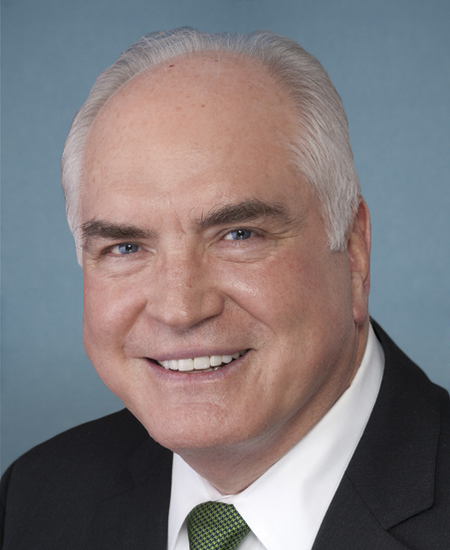
Rep. Mike Kelly
Sponsored bills
This resolution expresses the sense of the House of Representatives that former President Trump did not engage in insurrection or rebellion against, nor give aid or comfort to the enemies of, the United States.
Maddy summaryHR 7171, the Distribution Transformer Efficiency and Supply Chain Reliability Act of 2024, prevents the Department of Energy from finalizing rules requiring liquid-immersed or dry-type distribution transformers to meet efficiency standards stricter than "trial standard level 2" (as outlined in a 2023 proposed rule). The bill also mandates that any finalized rule implementing "trial standard level 1" or "level 2" efficiency standards cannot take effect for at least 10 years after the rule's finalization date. This directly affects transformer manufacturers and utilities by delaying stricter efficiency requirements and providing extended compliance timelines. The bill aims to stabilize the supply chain for these critical grid components by limiting near-term regulatory changes.
Maddy summaryThis ceremonial resolution (HRES 985) expresses the U.S. House of Representatives' support for Catholic schools during the 50th anniversary of National Catholic Schools Week. It acknowledges Catholic schools' contributions to education, diversity, and community values - highlighting their 1.7 million students, 98.9% high school graduation rate, and role in serving diverse communities - while applauding the National Catholic Educational Association and the United States Conference of Catholic Bishops for organizing the event. The resolution has no binding effect or policy changes; it solely serves as a symbolic gesture of recognition.
Maddy summaryHR 6918 blocks a specific federal regulation that would have restricted funding for pregnancy centers. It prohibits the Health and Human Services Secretary from finalizing, implementing, or enforcing a proposed rule (described in a Federal Register notice) affecting pregnancy center funding. The bill directly affects pregnancy centers - defined as organizations supporting maternal and fetal life and providing services like counseling, pregnancy testing, and material support (e.g., diapers, baby clothes). This is a procedural measure preventing a regulatory change, not creating new programs or altering existing funding.
Maddy summaryHR 3667, the Social Security Child Protection Act of 2023, allows the Social Security Administration to reissue a child's Social Security number if it was compromised before the child turned 14. Specifically, it enables parents or guardians to request a new number by submitting verified evidence (under penalty of perjury) that the original card was stolen during delivery. The bill directly affects children under 14 whose SSN was issued under specific provisions and whose confidentiality was breached via stolen cards. The key mechanism requires the Commissioner to issue a new number and document the theft in the child's records upon verified request.
Maddy summaryHR 7014, the Protect Medicaid Act, prohibits federal Medicaid funding for the administrative costs associated with providing health benefits to noncitizens who are not lawfully admitted permanent residents and are ineligible for Medicaid due to immigration status. It directly affects states that currently offer health benefits to such noncitizens, requiring them to cover administrative expenses through state funds instead of federal Medicaid dollars. The bill amends federal law to add a specific prohibition on using federal funds for these administrative costs, while leaving the provision of medical care itself unaffected. Additionally, it mandates an Inspector General report analyzing how states separate administrative costs, ensure compliance, and finance these programs, including impacts on drug pricing. The law focuses solely on administrative funding, not on restricting medical benefits for eligible individuals.
Maddy summaryHRES 974 is a non-binding House resolution supporting the designation of January 21-27, 2024, as "National School Choice Week." It encourages parents to learn about K-12 education options - including public schools, charter schools, private schools, and homeschooling - and promotes public awareness of educational choice. The resolution does not create new laws or policies but formally expresses the House's backing for this annual observance. It directly affects parents and students by highlighting available education pathways and urging communities to host events celebrating school choice. The resolution was introduced by multiple House members and referred to the Education Committee.
Maddy summaryHR 7029, the Bubble Tax Modernization Act of 2024, simplifies tax rules for certain alcoholic beverages by removing a separate tax classification for mead (honey wine). It defines "low alcohol by volume wine" to include all still wines (non-sparkling) with less than 8.5% alcohol and under 0.64g carbon dioxide per 100ml, treating them the same as mead for tax purposes. This change directly affects winemakers and beverage producers who previously faced different tax treatments for mead versus low-alcohol wine. The bill takes effect for wine produced after December 31, 2024.
Maddy summaryThe Death Tax Repeal Act would eliminate the federal estate tax and generation-skipping transfer tax for estates of people who die on or after the bill's enactment date, and for generation-skipping transfers made after that date. It would also establish a new $10 million lifetime gift tax exemption (adjusted annually for inflation) and replace the existing gift tax rate schedule with a revised structure. These changes would primarily affect high-net-worth individuals and their heirs, as the estate tax and gift tax typically apply to large estates or gifts exceeding the new exemption threshold. The bill's provisions would take effect on the date of enactment, with transitional rules for the year the bill is signed into law.