

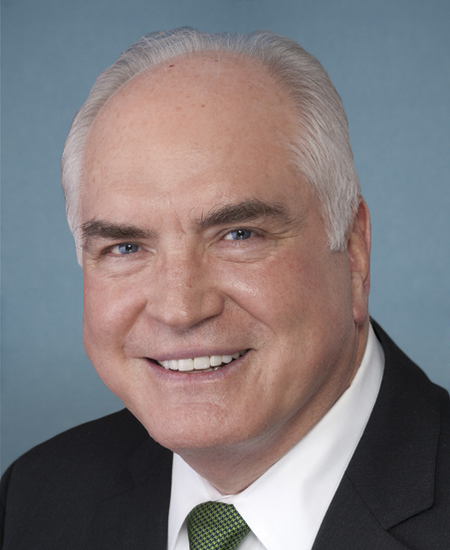
Photo of Mike Kelly
R United States House · District 16 · Pennsylvania On the 2026 ballot

Rep. Mike Kelly

Compare
Total votes
2,837
all sessions
Attendance
95%
150 missed
Near the chamber average
With party
95%
of cast votes
Higher than 86% of chamber peers
Bipartisan score
3%
crosses aisle rarely
Lower than 87% of chamber peers
Sponsored
1,026
bills & resolutions
Near the chamber average
Committees
3
assignments
1,026 bills and resolutions

Sponsored bills

Total
1,026
Primary
86
Co-sponsor
940
This page
1,026
matching current filters
Co-sponsor HR 1156
Passed · Indiana House · Co-sponsor
Pandemic Unemployment Fraud Enforcement Act

Maddy summaryHR 1156, the Pandemic Unemployment Fraud Enforcement Act, extends the time limit for prosecuting fraud related to pandemic unemployment programs. It adds a 10-year window for criminal or civil actions against individuals who falsely claimed benefits under Pandemic Unemployment Assistance (PUA), Federal Pandemic Unemployment Compensation (FPUC), or Mixed Earner Unemployment Compensation (MEUC). The law applies only to fraud committed during these specific pandemic-era programs and does not revive cases where the original statute of limitations had already expired before this bill passed. This change gives authorities more time to pursue fraud cases without altering the programs' core eligibility rules.

Passed Mar 13, 2025 1 co-sponsor
Co-sponsor HR 2036
In committee · Indiana House · Co-sponsor
Credit for Caring Act of 2025

Maddy summaryThe Credit for Caring Act of 2025 creates a federal tax credit for family caregivers of elderly or disabled relatives. It allows eligible caregivers (with over $7,500 in earned income) to claim a credit equal to 30% of qualified caregiving expenses exceeding $2,000, capped at $5,000 per year. Qualified expenses include human assistance, home modifications, respite care, counseling, lost wages for unpaid time off, and transportation, all requiring certification from a licensed healthcare provider that the care recipient has long-term needs. The credit phases out for higher earners (over $75,000 single/$150,000 joint) and requires documentation of expenses and care recipient certification.

In committee Mar 11, 2025 1 co-sponsor
Co-sponsor HR 2085
In committee · Indiana House · Co-sponsor
Mental Health Research Accelerator Act of 2025

Maddy summaryHR 2085 creates a 25% tax credit for businesses and tax-exempt entities (like hospitals or nonprofits) conducting translational research on neurodegenerative diseases and psychiatric conditions. The credit covers 25% of qualifying research expenses, with annual funding limits of $1 billion in 2026, $2 billion annually from 2027-2030, and $1 billion in 2031. Funds are allocated based on scientific merit, requiring projects to cover all research phases, prioritize new therapies for mental/neurological disorders, and encourage public-private partnerships. The credit expires after 2035 and cannot be used to offset deductions for the same expenses.

In committee Mar 11, 2025 1 co-sponsor
Co-sponsor HR 2048
In committee · Indiana House · Co-sponsor
Metastatic Breast Cancer Access to Care Act

Metastatic Breast Cancer Access to Care Act This bill expedites payment of Social Security Disability Insurance (SSDI) benefits and eligibility for Medicare coverage for those with metastatic breast cancer (i.e., breast cancer that has spread to other sites in the body). Specifically, the bill eliminates the 5-month waiting period for SSDI benefits and the subsequent 24-month waiting period for Medicare coverage for individuals with metastatic breast cancer. Under current law, individuals generally must wait 5 months after the onset of disability to begin receiving SSDI benefits and an additional 24 months to become eligible for Medicare.

In committee Mar 11, 2025 1 co-sponsor
Primary HR 2062
In committee · Indiana House · Lead sponsor
To amend the Internal Revenue Code of 1986 to treat membership in a health care sharing ministry as a medical expense, and for other purposes.

Maddy summaryHR 2062 would allow taxpayers to deduct membership fees and medical expenses paid through health care sharing ministries (HCSMs) as medical expenses on their federal tax returns, similar to other health costs. It specifically adds HCSM membership to the list of deductible medical expenses under Internal Revenue Code Section 213(d)(1) and clarifies that HCSMs are not treated as health insurance under Section 7702C. This change directly affects individuals enrolled in HCSMs, which are faith-based or community-based cost-sharing groups operating outside traditional insurance. The bill would take effect for tax years beginning after December 31, 2025.

In committee Mar 11, 2025 0 co-sponsors
Co-sponsor HR 2089
In committee · Indiana House · Co-sponsor
Generating Retirement Ownership through Long-Term Holding

Maddy summaryThis bill changes how individual investors in mutual funds (regulated investment companies) are taxed on certain dividends. It allows investors to defer paying tax on capital gain dividends that are automatically reinvested in additional fund shares through a dividend reinvestment plan. The deferred tax is recognized later when the investor sells shares or upon their death. It also establishes that shares acquired through this reinvestment are treated as held for over one year from the start, potentially qualifying for long-term capital gains rates. The rule applies only to individual investors (not estates, trusts, or dependents claimed by others).

In committee Mar 11, 2025 1 co-sponsor
Co-sponsor HR 2033
In committee · Indiana House · Co-sponsor
Military Spouse Hiring Act

Maddy summaryHR 2033, the Military Spouse Hiring Act, expands the Work Opportunity Tax Credit to include spouses of active-duty military personnel. It adds "qualified military spouse" as an eligible category for the tax credit, meaning employers who hire such spouses can claim the credit. A "qualified military spouse" is defined as someone certified by a local agency as married to an active-duty service member at the time of hire. The credit applies to hires occurring after the bill's enactment date. This directly affects military spouses seeking employment and employers hiring them, providing a tax incentive to encourage their hiring.

In committee Mar 11, 2025 1 co-sponsor
Co-sponsor HR 1990
In committee · Indiana House · Co-sponsor
American Innovation and R&D Competitiveness Act of 2025

Maddy summaryHR 1990, the American Innovation and R&D Competitiveness Act of 2025, amends tax rules for businesses to make research and development (R&D) costs more flexible. It allows companies to deduct R&D expenses immediately as business costs (instead of capitalizing them) or to spread these costs over a minimum 60-month period. The bill clarifies which R&D expenses qualify, excludes land improvements and mineral exploration costs, and ensures companies can claim R&D tax credits without conflict with expense treatment. This directly affects businesses that conduct R&D, changing how they account for these costs on tax returns starting for 2022 taxable years.

In committee Mar 10, 2025 1 co-sponsor
Co-sponsor HR 2013
In committee · Indiana House · Co-sponsor
Medicare Home Health Accessibility Act

Maddy summaryThis bill amends Medicare eligibility rules to clarify that beneficiaries needing occupational therapy *or* speech therapy qualify for home health services. It updates two sections of the Social Security Act (Parts A and B) to replace "need occupational therapy or speech therapy" with "need occupational, or speech therapy," ensuring both therapies are explicitly covered. The change directly affects Medicare beneficiaries requiring either therapy for home-based care, removing potential confusion about eligibility. The updated rules will take effect for services provided on or after January 1, 2026.

In committee Mar 10, 2025 1 co-sponsor
Primary HR 2002
In committee · Indiana House · Lead sponsor
MATCH IT Act of 2025

Maddy summaryThe MATCH IT Act of 2025 establishes national standards to improve patient matching accuracy in healthcare, directly affecting hospitals, clinics, health IT vendors, and federal agencies like CMS and HHS. It requires the Secretary of Health and Human Services to develop a uniform definition for measuring patient match rates within 180 days, accounting for duplicate records, overlaid records, and mismatch rates. The bill mandates health IT vendors to incorporate a standardized data set into their systems to support 99.9% matching accuracy, with Medicare providers earning voluntary bonus payments for achieving at least 90% matching accuracy through anonymous reporting. This aims to reduce medical errors, prevent unnecessary tests, and cut costs linked to patient misidentification, which currently cost the healthcare system over $6.7 billion annually.

In committee Mar 10, 2025 0 co-sponsors
Showing 211 to 220 of 1,026 bills
Previous 1 … 21 22 23 … 103 Next