

Maddy summaryHR 2381, the SCREENS for Cancer Act of 2025, reauthorizes and updates the National Breast and Cervical Cancer Early Detection Program (NBCCEDP). It directly affects low-income, uninsured, or underinsured women across all 50 states, territories, and tribal communities by expanding access to breast and cervical cancer screenings, diagnostic services, and patient navigation support. Key provisions include updating program language to emphasize prevention alongside detection and control, adding specific strategies to reduce disparities, and appropriating $235 million annually for fiscal years 2026-2030. The bill also requires a GAO study by 2027 to assess program eligibility, service trends, and barriers to screening access.
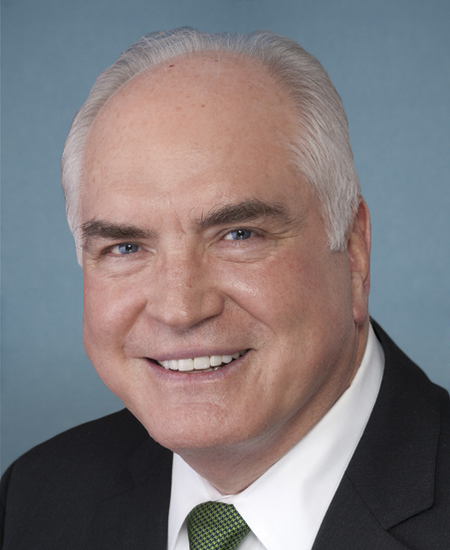
Rep. Mike Kelly
Sponsored bills
Maddy summaryThis bill amends a provision of law governing eligibility for Department of Veterans Affairs headstones, markers, and burial receptacles. It removes a requirement that a veteran must have died on or after November 11, 1998, to qualify for these burial benefits. By eliminating this date cutoff, the bill expands eligibility to veterans who died before that date. This change would directly affect veterans who died prior to November 11, 1998, and their families, allowing them to receive these burial benefits.
Maddy summaryHR 2314, the FAIR Act, requires hospitals participating in Medicare-funded residency programs to annually report data on applicants and acceptances from both osteopathic (DO) and allopathic (MD) medical schools. Hospitals must publicly affirm they consider applicants from both pathways equally and accept scores from either the COMLEX (for DOs) or USMLE (for MDs) exams. Non-compliant hospitals face a 2% reduction in Medicare payments starting in 2026 for each prior year of non-reporting. The bill directly affects hospitals receiving Medicare residency funding, aiming to increase transparency in admissions without mandating specific acceptance rates or federal oversight of medical education.
Maddy summaryHR 2242 requires states administering Temporary Assistance for Needy Families (TANF) programs to follow the same fraud prevention standards as federal agencies under the Payment Integrity Information Act of 2019. This applies directly to state TANF programs, mandating they implement measures to detect and prevent improper payments - such as payments to ineligible recipients or overpayments. The law takes effect on October 1, 2026, and requires the Health and Human Services Secretary to submit a 10-year plan to Congress for reducing improper TANF payments within one year of the bill’s enactment. The bill focuses on strengthening program integrity through existing federal payment oversight mechanisms.
Maddy summaryThe SLOT Act of 2025 raises the tax reporting threshold for slot machine winnings from $1,200 to $5,000 per play, meaning casinos no longer need to report winnings under this amount to the IRS. It directly affects slot machine players who win less than $5,000 in a single play and casino operators who previously filed tax forms for smaller wins. The threshold will automatically increase annually after 2026 based on inflation, rounded to the nearest $100. The change applies to winnings occurring after December 31, 2025.
Maddy summaryThis bill (HR 2199) prevents private health insurance plans from discriminating against patients with end-stage kidney disease (ESRD) who require dialysis. It amends the Social Security Act to prohibit plans from treating dialysis coverage differently than other medical services or applying network restrictions that disproportionately harm ESRD patients. The law clarifies that plans cannot deny or limit benefits for dialysis based on a patient’s diagnosis, while preserving a plan’s right to choose which dialysis providers are in their network. It directly affects ESRD patients and their private health insurance coverage, ensuring dialysis is treated equally with other covered medical services. The bill does not require plans to include specific dialysis providers but stops them from unfairly restricting access to necessary care.
Maddy summaryThis bill changes a tax rule for Real Estate Investment Trusts (REITs) that use taxable subsidiaries. It increases the percentage limit for assets held in these subsidiaries from 20% to 25% of a REIT's total assets, directly affecting REIT companies that operate through such subsidiaries. The key provision amends the Internal Revenue Code to restore this higher asset threshold, which had been reduced earlier. The change applies to taxable years starting after December 31, 2025.
Maddy summaryThe Medical Supply Chain Resiliency Act (HR 2213) establishes a framework for the U.S. to form agreements with foreign countries that commit to reliable medical supply chains during emergencies. It allows the President to negotiate "trusted trade partner agreements" that reduce trade barriers (like duties and quotas) for medical goods with countries meeting specific criteria, such as maintaining open trade during health crises and protecting intellectual property. These agreements require Congressional review and approval, with ongoing monitoring to ensure partners uphold commitments. The bill directly affects U.S. trade policy, foreign governments seeking partnerships, and the medical supply industry by aiming to diversify sources and secure critical products like pharmaceuticals and medical devices.
Maddy summaryHR 2121 establishes a 23-member commission to study the feasibility of creating a National Museum of Irish American History in Washington, D.C. The commission, appointed by the President and congressional leaders, will examine key issues like funding sources (without relying on federal appropriations), potential locations, whether to partner with the Smithsonian, and community engagement strategies. It must submit detailed reports within 24 months, including a fundraising plan and recommendations for potential legislation, but does not authorize the museum's construction or funding. The bill focuses solely on gathering data and recommendations to inform future decisions, with the commission terminating 30 days after final reports are submitted.
Homes for Every Local Protector, Educator, and Responder Act of 2025 or the HELPER Act of 2025 This bill establishes a program administered by the Department of Housing and Urban Development to provide mortgage assistance to law enforcement officers, elementary and secondary school teachers, firefighters, or other first responders. Specifically, these individuals may be eligible for a first-time mortgage on a primary family residence with no down payment. Instead, the mortgage is subject to a one-time, up-front mortgage insurance premium.