

Maddy summaryThis bill authorizes a posthumous Congressional Gold Medal for actor James Earl Jones to recognize his career achievements in theater and film. It directs the Treasury Secretary to strike a gold medal bearing his name, which will be presented to his son, Flynn Earl Jones, following Jones' passing. The bill also permits the sale of bronze duplicates to cover costs. As a ceremonial honor with no policy changes, it does not affect legislation or government operations.
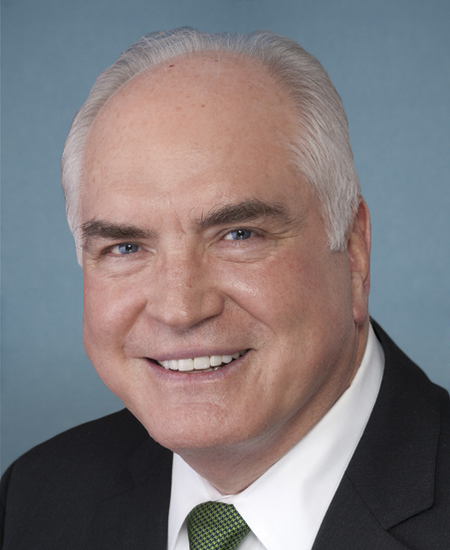
Rep. Mike Kelly
Sponsored bills
Maddy summaryHR 1905, the Protecting American Students Act, modifies how private colleges and universities calculate whether they owe an excise tax on investment income. It specifies that only students meeting specific eligibility requirements under the Higher Education Act (20 U.S.C. 1091(a)(5)) can be counted toward the tax threshold, excluding others from the calculation. The bill also requires these institutions to report both the pre- and post-adjustment student counts on their tax returns. This affects private colleges subject to the investment income tax, changing their tax calculation method and adding reporting obligations starting in 2026. The bill does not directly protect students or alter student aid but adjusts tax compliance for educational institutions.
Maddy summaryThis bill restores pension benefits for retirees affected by the termination of specific Delphi pension plans. It requires the Pension Benefit Guaranty Corporation (PBGC) to recalculate monthly benefits to the "full vested plan benefit" (the amount retirees would have received without prior reductions) and pay lump-sum payments for past underpayments, including 6% annual interest. The law applies to retirees of six Delphi pension plans, including the Delphi Hourly-Rate Employees Pension Plan and Delphi Retirement Program for Salaried Employees, who are currently receiving benefits or eligible for future payments. Payments will be funded from existing PBGC resources without changing prior asset allocations.
Maddy summaryHR 1873, the Broadband Grant Tax Treatment Act, excludes certain federal broadband grants from taxable income for recipients. It directly affects entities (like internet providers or local governments) receiving qualifying grants under specific programs, including the Broadband Equity, Access, and Deployment Program and State Digital Equity Capacity Grants established by the Infrastructure Investment and Jobs Act. The bill prevents double tax benefits by disallowing deductions for expenses covered by these excluded grants and reduces the adjusted basis of related property. This change applies to grants received in taxable years ending after March 11, 2023.
Maddy summaryHR 1881, the Methane Reduction and Economic Growth Act, creates a new tax credit for businesses that capture methane emissions from mining operations. It directly affects mining facilities (including underground, abandoned, or surface mines) that install methane capture equipment and capture at least 2,500 metric tons of methane annually. The bill provides a tax credit by modifying existing carbon capture tax rules to apply specifically to methane, requiring captured methane to be used for energy (e.g., in pipelines meeting safety standards or for industrial heat) with minimal atmospheric release. The credit applies to methane captured after December 2024, aiming to incentivize reducing methane emissions from mining sources.
Maddy summaryThis bill modifies tax reporting rules for gig economy platforms (like Uber or DoorDash) by reinstating a pre-American Rescue Plan threshold. It requires third-party payment platforms to report income to the IRS only if a gig worker earns over $20,000 in a year or completes more than 200 transactions. This directly affects low-earning gig workers who would no longer receive tax forms for smaller earnings. The change simplifies reporting for platforms and reduces administrative burden on workers with minimal income from these platforms.
Maddy summaryHR 1818, the Aviation Workforce Development Act, expands tax-advantaged 529 college savings plans to cover costs for aviation maintenance and commercial pilot training. It allows families to use 529 funds for tuition, fees, books, and equipment at qualifying schools - specifically aviation maintenance technician programs under FAA Part 147 rules or commercial pilot courses at FAA-certified flight schools (Part 61 or Part 141). The bill directly affects students pursuing these aviation careers by making their training more affordable through existing tax-advantaged savings accounts. The change applies to distributions made after the law's enactment date.
Maddy summaryHR 1787 authorizes the U.S. Mint to produce commemorative coins honoring baseball legend Roberto Clemente, including $5 gold, $1 silver, and half-dollar coins, with specific specifications for weight, size, and metal content. The bill requires the coins to feature Clemente's image and commemorative inscriptions, and mandates a surcharge ($35 for gold, $10 for silver, $5 for half-dollar) paid to the Roberto Clemente Foundation for its educational, youth sports, and disaster relief programs. All coins must be minted in 2027, sold at face value plus surcharge and production costs, and will be legal tender. The bill focuses solely on the coin program, not broader policy changes.
Maddy summaryThe American Innovation Act of 2025 modifies tax rules to support new businesses by changing how start-up and organizational costs can be deducted. It allows businesses to deduct up to $20,000 (adjusted for inflation) of initial costs in the first year, with remaining costs amortized over 15 years (180 months). The bill also preserves net operating losses and tax credits for new businesses after ownership changes, helping startups maintain tax benefits when sold or restructured. This primarily affects new businesses, startups, and small companies forming new ventures beginning after December 31, 2025.
Federal Firearms Licensee Protection Act of 2025 This bill modifies criminal penalties for an offense involving the theft of a firearm from a licensed importer, manufacturer, or dealer, or from their business premises. Specifically, the bill does the following: increases from 10 to 20 years the maximum prison term, and creates a 3- or 5-year mandatory minimum prison term for an offense that occurs during the commission of a burglary or robbery. An attempt to commit an offense is subject to the same penalties as a substantive offense.