

Maddy summaryHR 5861, the Legacy Act of 2025, mandates a study to explore creating a national system for securely storing end-of-life planning documents. The bill directs the Secretary of Health and Human Services to partner with the National Academies to research a confidential, no-cost system for storing documents like advance directives, living wills, and healthcare proxies. The study must report its status within two years and final results within four years of the bill’s enactment. This bill does not create the system itself but examines how one might be established. It directly affects individuals who use these documents for end-of-life planning, though no immediate policy changes are implemented.
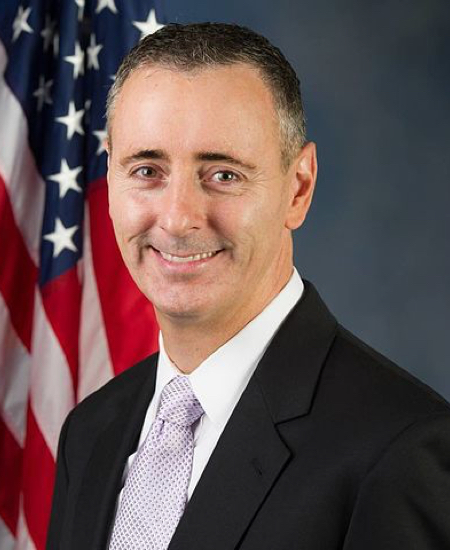
Rep. Brian K. Fitzpatrick
Sponsored bills
Maddy summaryThis bill ensures SNAP (food stamp) benefits continue uninterrupted during government funding gaps in fiscal year 2026. It directs the USDA to use existing Treasury funds to pay SNAP benefits if Congress fails to pass a full-year budget for the Department of Agriculture by September 30, 2025. The bill also covers retroactive payments for missed benefits starting September 30, 2025, through the bill's enactment date. Benefits funded this way stop once Congress enacts a full FY2026 budget for the USDA. It directly affects SNAP recipients who rely on these benefits during budget delays.
Maddy summaryHRES 824 is a ceremonial House resolution recognizing the religious and historical significance of Diwali, the festival of lights. It acknowledges Diwali’s meaning across Hindu, Sikh, and Jain traditions - symbolizing light over darkness, good over evil, and marking spiritual milestones like Guru Hargobind’s release and Lord Mahavira’s Nirvana. The resolution expresses respect for Indian-Americans and the global Indian diaspora, highlighting Diwali’s role in U.S. religious diversity. As a non-binding recognition, it does not create new laws, policies, or funding, but formally honors the cultural observance.
Maddy summaryThis bill requires the U.S. Secretary of State to certify within 60 days whether Ukrainian children kidnapped by Russia during its invasion of Ukraine have been reunited with families and reintegration into Ukrainian society is underway. If certification is not met, the Secretary must designate Russia as a state sponsor of terrorism under existing laws, triggering sanctions and restrictions. The designation would remain in effect until Russia meets specific conditions, including full child reunification and assurances against future terrorism support. The bill directly affects Russia through potential sanctions and focuses on the fate of Ukrainian children displaced since Russia’s 2022 invasion.
Maddy summaryHR 5770, the National Security Biotechnology Workforce Training Act, requires the Department of Defense to establish an annual training program for military personnel, DoD civilian employees, and contractors working with biotechnology applications in defense, threat response, or system development. The program must cover biotechnology science, AI/quantum technology intersections, ethical considerations, risk mitigation, and government procurement processes, with customized content based on job roles. Training must include interactive sessions with experts and be updated yearly to reflect technological advances. The program is mandatory for targeted personnel and will terminate five years after implementation.
Maddy summaryThe EGG SAVE Act of 2025 creates a federal tax credit for U.S. commercial egg hatcheries that install equipment to identify the sex of chicken embryos before hatching. The credit covers 50% of qualified equipment costs in 2026, 40% in 2027, and 30% in 2028, provided the equipment achieves at least 95% accuracy. It applies only to equipment purchased, installed, or used in U.S. hatcheries for commercial egg production. The credit expires for property placed in service after December 31, 2028.
Maddy summaryHR 5747, the *Preventing Illegal Laboratories and Protecting Public Health Act of 2025*, requires distributors of dangerous disease agents (like those in biosafety level 3 labs) to maintain electronic logbooks tracking every sale, lease, or transfer. These logbooks must include purchaser details, intended use, location, and security verification, with entries kept for three years and protected from public disclosure. The bill also mandates a federal review of high-containment laboratories to assess security, capacity, and risks, and establishes a dedicated team to coordinate with state/local agencies on biosafety issues. It directly affects biotech companies, research labs, and federal agencies managing pathogen distribution.
Maddy summaryHR 5755, the No Budget, No Pay Act, requires Congress to pass a budget resolution and all regular appropriations bills by October 1 each fiscal year, or members of Congress (excluding the Vice President) will not receive pay starting October 2. The bill mandates that pay is withheld for each day after October 1 until both chambers approve the budget resolution and all appropriations bills. It explicitly prohibits retroactive payment for any withheld pay period and establishes procedures for Senate and House committees to certify compliance with the deadlines. The law takes effect February 1, 2027, and directly affects congressional members' salaries based on budget process deadlines.
Maddy summaryThis bill establishes the New York-New Jersey Watershed Restoration Program to coordinate and fund habitat restoration and water quality improvements across the shared watershed region. It creates a competitive grant program providing federal matching funds (up to 90% for small/rural/disadvantaged communities) to state/local governments, nonprofits, and tribes for projects advancing habitat restoration, climate resilience, and public access. The program prioritizes communities facing environmental injustice and requires coordination with existing regional conservation plans like the Hudson River Estuary Program. Funding of $20 million annually (2026-2031) will support these activities, with 75% dedicated to the grant program and all projects supplementing existing conservation efforts.
Maddy summaryHRES 795 is a non-binding resolution condemning Hamas for the October 7, 2023, attacks that killed over 1,200 people, took 251 hostages (including Americans), and involved sexual violence. It demands Hamas immediately surrender and release all remaining hostages - specifically noting 48 people still held, including two U.S. citizens. The resolution also affirms Israel’s right to self-defense, calls for humanitarian aid to reach Palestinians, and condemns global antisemitism following the attacks. As a symbolic congressional statement, it does not create new laws or alter policies.