

Maddy summaryThis bill authorizes the U.S. Department of Justice and Department of State to provide Ukraine with law enforcement technical assistance, training, and advisory support focused on recovering forcibly transferred Ukrainian children and addressing related abductions. Key provisions include training in biometric identification, open-source intelligence, and secure communications; medical and psychological rehabilitation services for affected children; and coordination with NGOs and Ukrainian authorities to investigate and prosecute cases. The assistance directly supports Ukraine’s government, child protection services, and the children themselves who were abducted or forcibly transferred by Russia. Reports to Congress detail funding, assistance types, and efforts to align international sanctions.
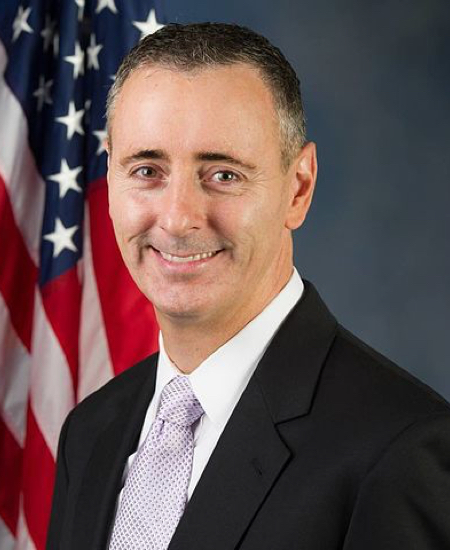
Rep. Brian K. Fitzpatrick
Sponsored bills
Maddy summaryThis symbolic resolution (HRES 857) designates the week beginning November 3, 2025, as "National School Psychology Week" to honor school psychologists. It does not create new laws or allocate funds; instead, it expresses congressional support for recognizing these professionals' roles in student mental health, academic support, and school safety. The resolution encourages public observance through ceremonies and activities highlighting how school psychologists help students succeed. It directly affects no individuals or entities through policy changes, serving solely as a formal acknowledgment of school psychologists' contributions.
Maddy summaryHRES 855 is a non-binding House resolution expressing support for National Adoption Day (November 22, 2025) and National Adoption Month (November). It promotes awareness about children in foster care awaiting adoption - highlighting that 49,994 U.S. children were waiting for adoptive families in 2023 - and encourages the public to consider adoption. The resolution recognizes that every child deserves a permanent, loving family and urges Americans to support this goal throughout November and the year. As a symbolic gesture, it does not create new laws or policies.
Maddy summaryHR 5907 authorizes the U.S. Department of Housing and Urban Development (HUD) to award grants to local governments, tribal entities, and municipal organizations to select pre-approved construction plans for mixed-income housing structures. These structures include duplexes, cottage courts, and other small-scale developments (up to 25 units) designed to promote affordability, with a specific requirement that 10% of annual funding must support rural areas. The bill mandates grantees to report on housing impacts, permits issued using the approved designs, and units built, while requiring the return of funds if selected designs aren’t adopted within five years. It focuses on streamlining housing approvals through pre-reviewed plans, not construction funding, to increase affordable housing supply.
Maddy summaryHRES 845 is a symbolic resolution designating November 2-8, 2025, as "Drowsy Driving Prevention Week" to raise public awareness about the risks of driving while fatigued. It does not create new laws or policies but encourages the public to adopt preventative measures, such as improving sleep habits and avoiding sleep-inducing medications. The resolution cites statistics on drowsy driving (e.g., 6,400 annual deaths) but focuses solely on awareness, not regulatory changes. As a procedural resolution, it directly affects public awareness efforts, not specific individuals or entities.
Maddy summaryHRES 846 is a symbolic resolution designating October 2025 as National Domestic Violence Awareness Month. It expresses the House's support for raising awareness about domestic violence and its impacts, and calls for continued congressional attention to ending domestic violence through existing programs. The resolution does not create new laws, allocate funding, or directly affect any specific groups - it is purely a statement of support. It references statistics on domestic violence prevalence but focuses on awareness rather than policy changes.
Maddy summaryThis non-binding House Resolution (HRES 848) expresses congressional support for U.S. funding of Gavi, the Vaccine Alliance, to expand vaccine access in low-income countries. It highlights Gavi’s role in immunizing over 1.1 billion children since 2000, averting an estimated 18.8 million deaths, and delivering malaria vaccines to combat a disease killing 580,000 children annually in Africa. The resolution emphasizes that U.S. investment leverages global health security by reducing disease spread and returning $54 in economic benefits for every $1 spent. It urges continued U.S. financial commitments to Gavi’s 2026-2030 strategy, which aims to deliver 50 million malaria vaccine doses and strengthen health systems.
Prevent Government Shutdowns Act This bill provides continuing appropriations to prevent a government shutdown if the appropriations bills for a fiscal year have not been enacted before the fiscal year begins and continuing appropriations are not in effect. Specifically, the bill provides appropriations at the rate of operations that was provided for the prior fiscal year to continue programs, projects, and activities that were funded in the preceding fiscal year. The bill also limits official travel, congressional recesses or adjournments, and the consideration of legislation that is unrelated to appropriations after the beginning of a fiscal year if the appropriations process has not been completed.
Maddy summaryThis bill amends the Safe Drinking Water Act to require community water systems to participate in cybersecurity training focused on protecting against and responding to cyberattacks. It updates funding periods for these training programs, extending them from 2020-2021 to 2026-2031. The key provision mandates that training programs must cover specific cyber threat mitigation and response strategies. This directly affects community water systems receiving federal funding under the Safe Drinking Water Act.
Maddy summaryThis bill ensures uninterrupted WIC benefits during government funding gaps by directing emergency Treasury funds to cover the program in fiscal year 2026 if Congress fails to pass regular appropriations. It directly affects WIC participants (women, infants, and children) and state agencies administering the program, preventing service disruptions. Key provisions include retroactive reimbursement for states that covered costs between September 30, 2025, and the bill’s enactment date, and funding that lasts until fiscal year 2026 appropriations are approved. The bill’s mechanisms bypass standard budget processes to maintain WIC operations during fiscal lapses.