

Maddy summaryHRES 793 is a non-binding resolution supporting the designation of October 2025 as "National Learning Disabilities Awareness Month." It highlights that specific learning disabilities affect 32% of students receiving special education services, with over 96% of affected 4th and 8th graders lacking reading proficiency and 92% lacking math proficiency in 2023-2024. The resolution calls on schools to continue providing free appropriate public education for these students, emphasizing evidence-based instructional methods. This is a symbolic measure with no new funding or mandates, aimed at raising awareness about learning disabilities and educational gaps.
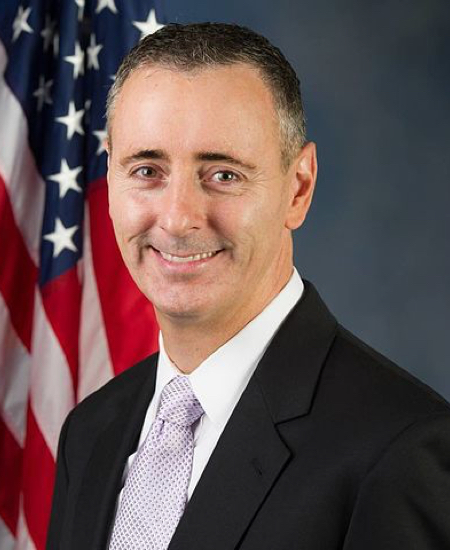
Rep. Brian K. Fitzpatrick
Sponsored bills
Maddy summaryHR 5714, the October 7 Remembrance Education Act, directs the U.S. Holocaust Memorial Museum to create a curriculum for secondary schools within 180 days of enactment. The curriculum will cover Hamas’ October 7, 2023 attacks on Israel, the history of antisemitism, the spread of anti-Israel rhetoric on campuses and social media following the attacks, and how denial or distortion of antisemitism occurs. It specifically requires schools to address the attacks' brutality, historical context of antisemitism, and contemporary manifestations of hate speech. The Museum must submit a report on the curriculum to Congress within 180 days of completion or by 3 years after the bill’s enactment. This bill affects secondary schools using the curriculum and focuses on educational content about the attacks and related antisemitism.
Maddy summaryHRES 788 is a non-binding resolution expressing congressional support for designating October 8, 2025, as "National Hydrogen and Fuel Cell Day." It does not create new laws or policies but aims to raise public awareness about hydrogen and fuel cell technologies. The resolution highlights their role in clean energy, transportation (including vehicles and backup power), and U.S. innovation, citing their use in space programs and current applications. This symbolic gesture directly affects public awareness and industry recognition, not specific individuals or regulations.
Maddy summaryThis bill requires Medicare, Medicaid, CHIP, and federal employee health plans to cover medically necessary specialized foods, vitamins, and amino acids for people with specific digestive and metabolic conditions. It defines "medically necessary food" as prescribed formulas, vitamins, and amino acids designed for conditions like inherited metabolic disorders, inflammatory bowel disease, and severe food allergies that cannot be managed through regular diet. The bill mandates coverage of these items and necessary equipment for administration (like feeding tubes), with Medicare covering 80% of costs. This would directly benefit thousands of patients who rely on these specialized treatments to avoid serious health complications like malnutrition, hospitalizations, and developmental issues.
Maddy summaryThis bill reauthorizes funding for the Healthy Start Initiative, which provides maternal and infant health services to at-risk communities. It specifies $145 million annually for fiscal years 2026 through 2030 to support existing Healthy Start programs. The bill modifies the funding language in the Public Health Service Act to continue these services without changing program requirements. It directly affects local health organizations operating under the Healthy Start Initiative.
Maddy summaryThis bill adds Medicare coverage for multi-cancer early detection screening tests (blood or biological tests analyzing cell-free DNA) starting January 1, 2028. It directly affects Medicare beneficiaries aged 68 and older (starting in 2028, with the age limit increasing by 1 year annually), requiring tests to be FDA-cleared and deemed reasonable/necessary by the Secretary for early cancer detection across multiple organ sites. Payment will initially match current stool DNA test rates before 2031, then shift to a lower rate or new payment system after 2031, with limits preventing more than one test per year. The bill explicitly states it does not alter coverage for existing cancer screenings like breast, colorectal, or prostate cancer tests.
Maddy summaryHR 744, the Disaster Management Costs Modernization Act, amends the Robert T. Stafford Disaster Relief Act to allow state and local governments receiving federal disaster funds to reuse "excess" management funds. Specifically, it permits the President to redirect unused funds - defined as the difference between authorized and actual management costs - to support future disaster preparedness, recovery, or mitigation activities. The bill also requires a GAO study within 180 days of enactment to review historical management costs for major disasters over the past five years. No new federal funding is authorized for these changes.
Maddy summaryThis bill creates a 3-year pilot program (2025-2028) using up to 10% of existing disaster relief funds to help low-income homeowners in disaster-prone areas make resilience upgrades to their homes. It funds specific retrofits like floodproofing, seismic upgrades, wildfire mitigation, and hurricane-resistant roofing to reduce damage from natural disasters. The program requires states to prioritize financially needy homeowners and mandates a detailed report by 2029 on outcomes, including homes retrofitted, costs, and avoided disaster costs. It applies only to funds appropriated after the bill's enactment.
Maddy summaryHRES 777 is a non-binding resolution commending the Council of Europe for its efforts in addressing Russia's aggression against Ukraine and promoting international justice. It specifically highlights the Council's work in documenting war crimes, supporting Ukraine's humanitarian needs, and helping establish a Special Tribunal for the Crime of Aggression against Ukraine. The resolution encourages continued U.S. collaboration with the Council to support Ukraine's sovereignty and accountability for violations of international law. As a symbolic gesture, it does not create new legal obligations but expresses U.S. support for international justice mechanisms.
Maddy summaryHRES 781 is a symbolic resolution designating October 1, 2025, as "National Animal Rescue Day" to raise public awareness about animal adoption and spaying/neutering. It does not create new laws or allocate funds but encourages nationwide events like adoption drives and educational campaigns to support shelters and reduce pet overpopulation. The resolution directly aims to benefit animal shelters, rescue organizations, and potential adopters by promoting the importance of adopting pets and responsible pet ownership. As a non-binding gesture, it focuses on awareness rather than policy change.