

Maddy summaryHR 801, the Securing the Border for Public Health Act of 2023, gives the Secretary of Health and Human Services authority to temporarily ban people and goods from specific countries. This can be done if the Secretary determines a serious risk of introducing communicable diseases or certain controlled substances (like fentanyl, narcotics, or opiates) into the U.S. The ban would apply to persons and property from designated countries for a time deemed necessary to protect public health. It directly affects travelers and importers from countries identified under this provision.
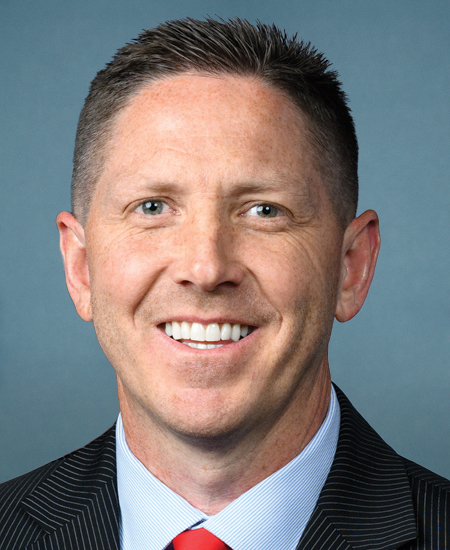
Rep. Josh Brecheen
Sponsored bills
Maddy summaryHR 3175, the Regulation Reduction Act of 2023, requires federal agencies to repeal two existing regulations before issuing a new rule, and three for "major rules" (those with significant economic impact). For major rules, the new rule's cost must not exceed the cost of the repealed rules, and the Office of Management and Budget must certify this. Agencies must also submit a 90-day review to Congress identifying costly, ineffective, duplicative, or outdated regulations. This bill directly affects federal agencies and the businesses, states, and local governments subject to federal regulations.
Maddy summaryHR 3115, the Public Service Reform Act, changes employment rules for most federal career employees (non-political appointees) by establishing at-will employment, meaning they can be fired for any reason - including no reason - without needing cause. It abolishes the Merit Systems Protection Board (MSPB), replaces its role with agency-level procedures for removals (including a 14-day response window for employees), and limits appeals to the agency head or federal courts for specific claims like whistleblower retaliation. The bill also redirects certain appeals to the Equal Employment Opportunity Commission (EEOC) for discrimination cases and modifies whistleblower protections to allow direct court appeals for retaliation claims. These changes directly affect over 1 million career federal workers across executive agencies.
Maddy summaryHR 3039, the DRIVE Act, prohibits the Federal Motor Carrier Safety Administration (FMCSA) from requiring speed limiting devices on trucks weighing over 26,000 pounds operating in interstate commerce. This directly affects commercial trucking companies and drivers transporting goods across state lines. The bill's key provision explicitly bans the FMCSA from issuing any rule mandating such devices, which are typically set to limit vehicle speed. The law applies specifically to interstate trucking operations and does not affect state-level regulations.
Maddy summaryThe Employee Rights Act (HR 2700) amends key labor laws to strengthen employee rights in collective bargaining and privacy. It requires employers to use secret ballot elections for selecting bargaining representatives and to provide labor organizations with voter lists containing employee names and one form of contact information (chosen by the employee) within two business days of an election. The bill prohibits employers from using employee personal information for non-organizing purposes and mandates written authorization for using union dues on non-bargaining activities, with authorizations expiring after one year. Additionally, it clarifies joint employment standards to prevent misclassification and adds tribal sovereignty protections to labor law definitions.
Maddy summaryHR 2928, the Responsible Borrower Protection Act of 2023, blocks the Federal Housing Finance Agency (FHFA) and mortgage enterprises (Fannie Mae and Freddie Mac) from implementing specific changes to mortgage credit fees announced in January 2023. The bill directly affects mortgage borrowers and lenders by reversing a pricing framework update that would have altered fees for single-family mortgages. It prohibits the FHFA from enforcing the January 2023 pricing changes detailed in FHFA's announcement and related lender letters. The bill clarifies that enterprises may still use risk-based pricing for mortgage fees, but the specific fee adjustments from the 2023 framework are canceled. This is a direct policy change to mortgage fee structures, not a broader reform.
Maddy summaryHR 734, the Protection of Women and Girls in Sports Act of 2023, amends Title IX to prohibit federally funded schools and athletic programs from allowing individuals assigned male at birth to participate in women's or girls' sports teams. The bill defines "sex" for this purpose as "reproductive biology and genetics at birth," making it a violation of federal law to permit such participation in designated women's or girls' programs. It allows males to train with women's teams only if no female is deprived of a roster spot, competition opportunity, scholarship, or other benefit tied to the team. This law directly affects public and private schools receiving federal financial assistance that operate athletic programs.
Eliminating the RFS and Its Destructive Outcomes Act This bill repeals the Environmental Protection Agency's Renewable Fuel Standard program, which requires transportation fuel to contain a minimum volume of renewable fuel.
Maddy summaryHR 2779 would repeal the federal corporate average fuel economy (CAFE) standards, which require automakers to meet specific fuel efficiency targets for new vehicles. This bill directly affects automobile manufacturers by removing their legal obligation to comply with these fuel efficiency regulations. The key provision eliminates Chapter 329 of Title 49, U.S. Code - the section that established the CAFE program - without creating new requirements. If enacted, it would end the current federal mandate for vehicle fuel economy, shifting regulatory oversight away from the government.
Maddy summaryHR 2712, the Work Not Woke Act, prohibits federal agencies, contractors, and grant recipients from using workplace training that promotes specific "divisive concepts," such as claiming inherent superiority of a race or sex, blaming individuals for historical actions, or suggesting meritocracy is racist. It directly affects federal contractors (requiring contract clauses banning such training), federal agencies (mandating review of diversity training), and grant recipients (requiring certification against using federal funds for prohibited training). Key mechanisms include a Department of Labor hotline for complaints, mandatory contract provisions for contractors, and a ban on using federal funds for three executive orders focused on racial equity. The law permits diversity efforts that do not promote the banned concepts and requires agencies to certify compliance with its provisions.