

Maddy summaryHRES 1425 is a non-binding resolution (not a law) passed by the House of Representatives. It states that requiring valid photo identification for voting is a "fundamental component of secure elections," citing examples where photo ID is already required for other government services (like Social Security or banking) and private activities (like buying a car or boarding a plane). The resolution does not create new voting requirements or change election laws - it only expresses the House's position. It directly affects the legislative record but has no legal impact on voter eligibility or election procedures.
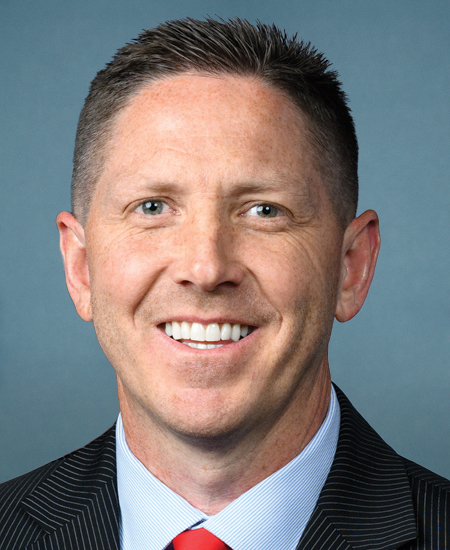
Rep. Josh Brecheen
Sponsored bills
Maddy summaryHJRES 167 cancels a U.S. Department of Agriculture rule that would have allowed electronic eartags as official identification for cattle and bison. The resolution directs that the rule published in the Federal Register on May 9, 2024 (89 Fed. Reg. 39540), has no force or effect. This directly affects ranchers and farmers who would have been required to use electronic identification systems for livestock. The bill halts the implementation of this specific regulatory change without creating new requirements.
Maddy summaryHRES 1420 is a disapproval resolution that stops a rule issued by the Department of Homeland Security regarding the "Keeping Families Together process." The resolution directs Congress to reject the rule, meaning it will have no legal effect and cannot be enforced. This resolution specifically targets a procedural rule related to immigration procedures, not new policy. It does not change immigration law or directly affect individuals but prevents the rule from being implemented. As a disapproval resolution, it is procedural and focuses solely on blocking the rule's enforcement.
Maddy summaryThis bill prohibits U.S. federal agencies from recognizing the Taliban-controlled government in Afghanistan as legitimate, calling its takeover a coup. It requires the State Department to designate Afghanistan as a "state sponsor of terrorism" and the Taliban as a "foreign terrorist organization," while banning federal funding for any policies that could imply recognition. These provisions directly affect U.S. diplomatic, aid, and defense agencies by restricting their actions toward Afghanistan and freezing related funding. The law aims to formalize the U.S. stance that the Taliban regime is illegitimate due to its ties to terrorism.
Maddy summaryThis bill gives states the option to restrict Supplemental Nutrition Assistance Program (SNAP) benefits for specific items. States may ban purchases of sugary drinks, candy, ice cream, and prepared desserts like cakes or cookies using SNAP benefits. The Secretary of Agriculture will maintain a list of these restricted items, but states can implement bans without federal approval or additional reporting. This change directly affects SNAP participants in states that choose to adopt such restrictions, altering which food items can be bought with benefits.
Maddy summaryThis resolution condemns the International Criminal Court's request for arrest warrants against Israeli Prime Minister Benjamin Netanyahu and Defense Minister Yoav Gallant. It states the U.S. and Israel are not ICC members, notes Israel's coordination of aid into Gaza (including over 828,000 tons of aid), and urges the ICC to withdraw the warrant requests. The resolution expresses support for Israel's efforts against Hamas but has no legal effect, as it is a symbolic statement by the House of Representatives.
Maddy summaryHJRES 165 is a congressional resolution seeking to block a Department of Education rule issued in April 2024 that updated protections against sex discrimination in schools receiving federal funding. The resolution aims to disapprove this specific rule (published as 89 Fed. Reg. 33474), which would have required schools to address sex-based discrimination in educational programs. If passed, the rule would no longer be in effect, meaning schools would not need to comply with its requirements. This resolution directly affects all schools and educational programs receiving federal financial assistance, as it targets the implementation of the new nondiscrimination standard.
Maddy summaryHRES 1378 is a symbolic resolution passed by the U.S. House of Representatives expressing the chamber's stance on the July 13, 2024, attempted assassination of former President Donald Trump. It condemns the attack as an "abhorrent act of cowardice" that must be universally rejected and asserts that political disputes should only be resolved through elections, not violence. The resolution does not create new laws or affect any specific group; it is a non-binding statement intended to promote civility in political discourse. It was introduced by Republican members of Congress and passed without amendment.
Maddy summaryHRES 1377 is a procedural resolution requiring the Secretary of Homeland Security to provide the House of Representatives with all relevant documents, records, and communications about the July 13, 2024, attempted assassination of Donald J. Trump within 7 days of the resolution's adoption. It specifically mandates the transfer of Secret Service protection records, DHS-SS communications, and audio/video recordings related to Trump's Butler, Pennsylvania, campaign rally on that date. The resolution does not change policy but demands transparency by directing the executive branch to disclose existing materials. It directly affects the Department of Homeland Security and its Secretary, who must comply with the 7-day deadline.
Maddy summaryThe SAVE Act (HR 8281) requires U.S. citizens to provide documentary proof of citizenship when registering to vote in federal elections. It defines acceptable proof as documents like passports, REAL ID-compliant IDs, military IDs, or birth certificates, and mandates that states verify citizenship using information from government agencies like DHS and Social Security. States must establish processes for voters without required documentation to provide an attestation under penalty of perjury. The law also requires states to remove noncitizens from voter rolls when verified evidence shows they're not citizens. This bill directly affects all applicants registering to vote in federal elections and state election officials who must implement these requirements.