

Maddy summaryThe Secret Service Readiness Act of 2024 requires the Secret Service to establish uniform fitness standards for Special Agents and Uniformed Division Officers that apply equally to all applicants, regardless of gender. These standards must be at least as rigorous as the current fitness requirements for male applicants and existing personnel. The Director of the Secret Service must implement these standards within 90 days of the bill’s enactment and submit a report on the process to Congress within 180 days. This bill directly affects Secret Service personnel by standardizing fitness requirements to ensure consistency and maintain current performance expectations.
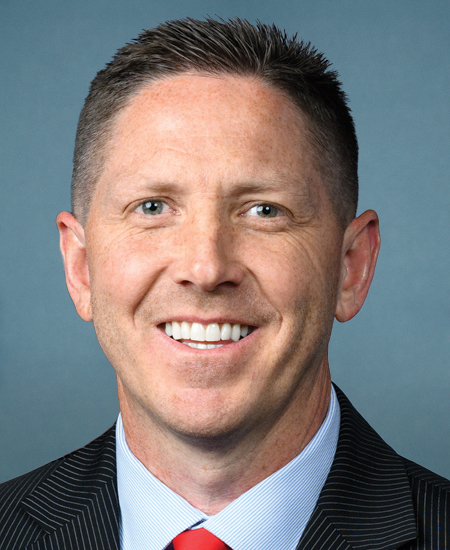
Rep. Josh Brecheen
Sponsored bills
Maddy summaryHR 9034, the Secret Service Accountability Act, would prevent federal funds from being used for the salary or expenses of Secret Service Director Kimberly Cheatle. This bill directly affects the current director by blocking all federal funding for her compensation and related costs. The key provision prohibits any federal money from covering her salary or expenses, regardless of other laws. This is a funding restriction targeting the director's position, not a change to the Secret Service's operations or public policies.
Maddy summaryHJRES 164 is a congressional resolution seeking to block a rule issued by the Department of Commerce regarding firearms license requirements. It directly targets the rule published in the Federal Register (89 Fed. Reg. 34680), which would have revised licensing procedures for firearms dealers. If passed, the resolution would prevent this rule from taking effect by invoking the congressional disapproval process under federal law. The bill does not create new regulations but aims to halt an existing rule affecting gun license applicants and dealers.
Maddy summaryHR 9017 lowers federal oil and gas royalty rates from 16.67% to 12.5% and reduces minimum lease bids from $10 to $2 per acre. It also cuts annual rental rates for leases (from $3-$15 to $1.50-$2 per acre) and eliminates a fee for expressing interest in leases. The bill creates new "noncompetitive leasing" options for existing leases producing low volumes (e.g., ≤15 barrels oil/day or ≤60,000 cubic feet gas/day), allowing leaseholders to continue operations without bidding. These changes directly affect oil and gas leaseholders on federal lands, particularly smaller producers with existing low-production leases.
Maddy summaryHR 4848, the Censorship Accountability Act, allows individuals to sue federal employees who, while acting in their official capacity, deny others their First Amendment rights (such as free speech or assembly). It directly affects federal employees (excluding the President/Vice President) who may restrict protected expression under federal law. Key provisions create a private right of action for victims to seek legal redress in court, with courts able to award attorney fees to the winning party. The bill explicitly excludes lawsuits against the federal government for employment-related conduct and clarifies that unconstitutional sections won’t invalidate the rest of the law.
Maddy summaryHR 8985, the Preventing Forced Abortions Act of 2024, prohibits federal courts from enforcing any surrogacy contract clause requiring a surrogate mother to have an abortion at the request of intended parents or their agents. The bill mandates courts to enforce payment to the surrogate for her services, regardless of any contract term tied to abortion, including clauses penalizing refusal (like reduced pay or liquidated damages). It directly affects surrogacy agreements between intended parents and surrogate mothers, ensuring surrogates cannot be forced to undergo abortions against their will while protecting their contractual compensation. The law defines "abortion" as intentionally terminating a pregnancy except in specific medical circumstances, such as after fetal viability or removing a non-viable fetus.
Maddy summaryThis bill prohibits federal funding for elementary and secondary schools that partner with Chinese government-funded programs, including Confucius Institutes, Confucius Classrooms, or other entities receiving support from China's government (e.g., through teaching materials, personnel, or funds). It directly affects schools with these specific ties to the People's Republic of China. The prohibition takes effect one year after enactment, with the Education Secretary required to notify schools and provide compliance guidance within 90 days of enactment. The policy change blocks federal education funds for schools meeting the defined criteria, without altering existing educational content or curriculum standards.
Maddy summaryHR 5567, the CLASS Act, prohibits public elementary and secondary schools receiving federal education funds from accepting money or entering contracts with the Chinese government, Chinese Communist Party, or entities acting on their behalf. Schools must disclose any foreign funding sources within 30 days, including the foreign entity’s name, country, amount received, and any terms or conditions. This applies to all schools receiving federal financial assistance under applicable programs, as defined by existing education laws. The bill aims to restrict foreign influence in U.S. school systems by requiring transparency about foreign funding. It does not alter school curricula or address content, only funding sources and disclosure requirements.
Maddy summaryHRES 1338 is a symbolic House resolution expressing support for designating the month of July as "American Patriotism Month." It recognizes historical acts of patriotism, including the Declaration of Independence (July 4, 1776), military service after Pearl Harbor and 9/11, and the role of citizens in defending U.S. values. The resolution requests the President issue an annual proclamation for this designation but has no legal effect or direct impact on citizens or policies. As a non-binding resolution, it does not create new laws or alter government operations.
Maddy summaryHR 8889, the Sunset Chevron Act, requires the Government Accountability Office (GAO) to compile a list of federal court decisions that upheld agency rules using Chevron deference (a legal doctrine where courts defer to agency interpretations of laws) and are still in effect. The GAO must organize this list by agency and assign each rule a sunset date - 30 days after the list's publication for the most recent rule, with older rules getting sunsets 30 days apart. This bill directly affects federal agencies whose rules are included in the GAO's list, as it triggers automatic expiration of those rules after specific dates. The key mechanism is the mandatory GAO review and the automatic sunset schedule, not new regulations or policy changes. The bill does not alter Chevron deference itself but creates a timeline for existing rules upheld under it to expire.