

Maddy summaryHRES 145 is a resolution by the U.S. House of Representatives to impeach Judge Paul Adam Engelmayer of the Southern District of New York for high crimes and misdemeanors. The resolution's Article I alleges Judge Engelmayer abused his judicial authority by improperly restricting President Trump and Secretary Bessent from accessing Treasury Department records containing personally identifiable and confidential financial data. This action, according to the resolution, violated his oath of impartiality and duty to the public. The resolution does not enact policy but initiates the impeachment process, which would require Senate trial for removal from office.
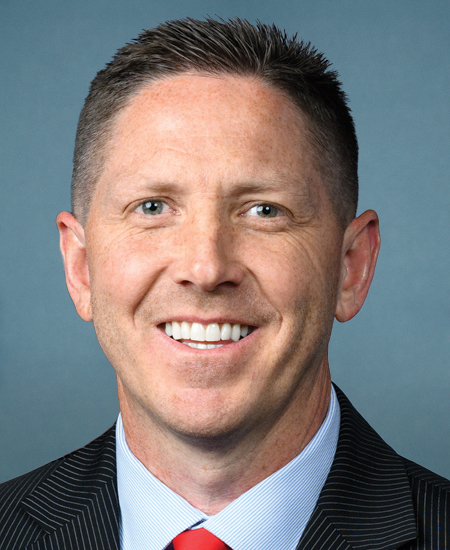
Rep. Josh Brecheen
Sponsored bills
Maddy summaryHR 1497 reorganizes three National Institutes of Health (NIH) institutes by splitting the current "National Institute of Allergy and Infectious Diseases" into three separate entities: the National Institute of Allergic Diseases, the National Institute of Infectious Diseases, and the National Institute of Immunologic Diseases. It creates new director positions for each institute with 5-year terms and updates all federal references to the old institute name. The bill affects NIH internal structure and leadership appointments but does not change research programs, funding, or public services. The transition requires NIH leadership to shift responsibilities from the old institute to the new ones until directors are appointed.
Maddy summaryThe DEFUND Act of 2025 would terminate U.S. membership in the United Nations and all its affiliated bodies, including the World Health Organization, by repealing the legal foundations for U.S. participation. It requires the closure of the U.S. Mission to the UN, withdrawal from UN headquarters agreements, and the cessation of all U.S. financial contributions to the UN (except for termination costs). The bill also mandates that UN entities vacate U.S. government properties, revokes diplomatic immunity for UN officials in the U.S., and prohibits U.S. involvement in UN peacekeeping operations. Future U.S. re-entry into the UN would require Senate approval and a reservation allowing for immediate withdrawal.
Maddy summaryHR 1488 repeals two laws that authorized U.S. military force against Iraq: the 1991 Gulf War authorization and the 2002 Iraq War authorization. This bill removes the legal basis for military operations under these specific resolutions, directly affecting how future U.S. military actions in Iraq could be justified. The key provision is the direct repeal of both resolutions from federal law, eliminating their continued legal effect. As a result, any new military action in Iraq would require fresh congressional authorization rather than relying on these repealed laws.
Maddy summaryHR 1432, the LIABLE Act, removes federal immunity for manufacturers of authorized COVID-19 vaccines regarding claims of injury or loss from vaccine administration or use. It directly affects vaccine manufacturers by allowing individuals to pursue civil lawsuits for vaccine-related harm, regardless of prior compensation through existing programs like the National Vaccine Injury Compensation Program. The bill explicitly overrides previous laws (such as sections 319F-3, 2111, and 2122 of the Public Health Service Act) that previously limited manufacturer liability. This law applies retroactively to all vaccine administration or use occurring before, during, or after the bill’s enactment.
Maddy summaryThis bill redirects unspent funds from the U.S. Agency for International Development (USAID) to the federal disaster relief fund. It requires transferring any unobligated USAID funds - those not yet committed to specific projects as of the bill's enactment - to support disaster response under the Robert T. Stafford Act. The change affects USAID's budget by shifting unused resources to immediate disaster relief efforts, rather than new spending. This is a procedural reallocation of existing funds, not new funding.
Maddy summaryHR 479, the Healthy SNAP Act of 2025, revises which foods are eligible for purchase using Supplemental Nutrition Assistance Program (SNAP) benefits. It prohibits SNAP benefits from being used for alcoholic beverages, tobacco, soft drinks, candy, ice cream, and prepared desserts like cakes or pies. The bill requires the Secretary of Agriculture to establish regulations within 180 days designating specific foods that contain nutrients lacking in U.S. diets, promote health based on nutrition science, and align with cultural eating patterns, while limiting fat, sugar, and salt. The Secretary must also review and update these designations at least every five years to reflect current science, and states may substitute culturally appropriate foods if nutritionally equivalent. This directly affects SNAP recipients and the program's food eligibility rules.
Maddy summaryThis bill amends the Food and Nutrition Act of 2008 to clarify that households must meet existing income and resource criteria to receive food assistance benefits. It directly affects households applying for or receiving SNAP (Supplemental Nutrition Assistance Program) benefits under the Food and Nutrition Act. The key provision explicitly states that eligibility requires compliance with current income and asset standards, reinforcing existing rules rather than creating new restrictions. The amendment takes effect one year after enactment, with existing benefit certifications unaffected if they began before that date.
This concurrent resolution declares that Congress should not impose any new performance fee, tax, royalty, or other charge relating to the public performance of sound recordings on a local radio station for broadcasting sound recordings over the air, or on any business for such public performance of sound recordings.
Maddy summaryHR 1345, the Gas Can Freedom Act of 2025, repeals two existing federal safety laws: the Portable Fuel Container Safety Act of 2020 and the Children’s Gasoline Burn Prevention Act. This bill removes requirements that portable gasoline containers must include flame mitigation devices or child-resistant features. As a result, the Consumer Product Safety Commission can no longer enforce these specific safety standards for fuel containers. The bill directly affects manufacturers of portable fuel containers and consumers who purchase them, eliminating these regulatory requirements.