Maddy summaryHRES 695 is a commemorative resolution honoring Charlie Kirk, a conservative speaker and Turning Point USA leader, following his assassination on September 10, 2025, in Orem, Utah. The resolution condemns the attack, offers condolences to his family, and recognizes first responders. It reaffirms the First Amendment right to peaceful assembly and emphasizes that violence cannot silence democratic participation. This non-binding resolution does not create new laws or policies but serves as a symbolic tribute to Kirk's memory and the principles of democratic engagement.
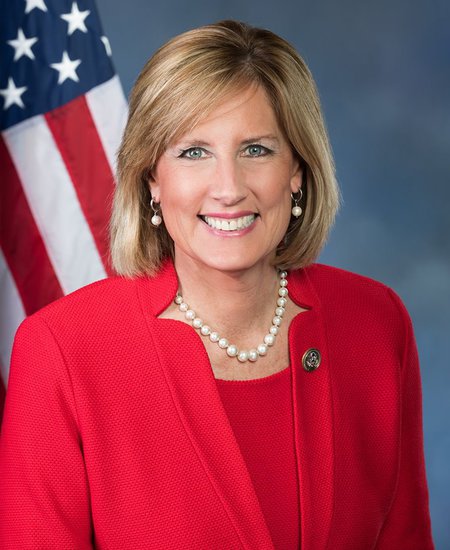
Rep. Claudia Tenney
Sponsored bills
Maddy summaryHRES 692 is a non-binding resolution urging all 50 U.S. states to incorporate the events of the September 11, 2001, terrorist attacks into K-12 school curricula. It directly addresses state education systems, calling for mandatory inclusion of this history in public school lessons to ensure future generations remember the attacks. The resolution does not create new laws or funding but expresses the House's view that this education is essential for honoring victims and first responders. It cites that only 14 states currently require such instruction and emphasizes preserving this historical context for national security awareness.
Maddy summaryThis bill amends Medicare regulations to include "blood culture contamination" as a hospital-acquired condition starting in fiscal year 2026. It directly affects Medicare-participating hospitals, requiring them to maintain blood culture contamination rates below 1% to avoid penalties. The key provision establishes a specific 1% threshold for contamination rates that hospitals must meet under Medicare's quality reporting system. This change aims to improve diagnostic accuracy by holding hospitals accountable for preventing contamination in sepsis testing.
Maddy summaryThe RESULTS Act (HR 5269) changes how Medicare calculates payment rates for clinical diagnostic laboratory tests. It requires Medicare to collect data on private payor rates for widely available non-Advanced Diagnostic Laboratory Tests (non-ADLTs) from a qualifying independent claims data entity (a national nonprofit organization meeting specific criteria) rather than relying on data reported directly by laboratories. For tests where data is unavailable, the bill establishes default payment rates based on previous years' rates adjusted for inflation. The law also requires Medicare to publicly explain payment rates with supporting data, affecting Medicare beneficiaries, clinical laboratories, and private payors that provide services covered by Medicare.
Maddy summaryThis bill ensures U.S. Border Patrol Agents and Customs and Border Protection officers who continue working during a government shutdown receive their salaries. It authorizes funding from the Treasury for fiscal year 2026 to cover their salaries and expenses during any lapse in discretionary appropriations. The measure specifically applies to employees "excepted from furlough," meaning those required to work during shutdowns. It does not change eligibility for pay but guarantees funding for these personnel during funding gaps.
Maddy summary# Summary of the Weather Act Reauthorization Act of 2025 This comprehensive legislation reauthorizes and modernizes the National Oceanic and Atmospheric Administration's (NOAA) weather and climate programs through 2030, with several key focuses: ## Core Program Reauthorizations - **Commercial Data Program** ($100M annually): Establishes a formal program to acquire weather/environmental data from private sector entities, including standards, prioritization, and data assimilation practices - **Commercial Data Pilot Program** (15% of Commercial Data Program funds): Tests and evaluates private sector data for use in NOAA operations - **Advanced Weather Interactive Processing System**: Requires transition to cloud-based operations by 2030 to enable more flexible workforce ## Hazard Communication Improvements - **Hazardous Weather Risk Communication Program**: Focuses on simplifying and improving communication of weather hazards through social, behavioral, and risk science research - **Post-Storm Surveys**: Requires systematic surveys after significant weather events, with emphasis on vulnerable populations - **NOAA Weather Radio Modernization**: Expands coverage, enhances reliability, and transitions to internet protocol-based communications ## Operational Modernization - **National Weather Service Workforce**: Includes hiring assessments, health/morale evaluations, and designation of service hydrologists - **Aviation Weather Program**: Enhances turbulence forecasting, data acquisition, and coordination with the Federal Aviation Administration - **Data Management**: Establishes consistent data standards, infrastructure, and sharing practices across NOAA ## Specialized Programs - **Atmospheric Rivers Forecast Improvement Program**: Focuses on improving forecasts of atmospheric rivers that impact the western U.S. - **Coastal Flooding and Storm Surge Program**: Improves coastal inundation forecasting and warning systems - **National Integrated Drought Information System**: Enhances drought monitoring and forecasting capabilities - **National Mesonet Program**: Expands environmental observation networks across the U.S., with 15% of funds for financial assistance to state/local entities - **National Coordinated Soil Moisture Monitoring Network**: Supports soil moisture monitoring for agricultural and drought management - **Precipitation Forecast Improvement Program**: Aims to improve precipitation forecasting across all timescales ## Funding The bill authorizes significant funding across these programs, with annual appropriations ranging from $10M to $70M depending on the program, for fiscal years 2026-2030. The legislation represents a major effort to modernize NOAA's infrastructure, improve weather communication to the public, and better integrate commercial data sources while maintaining NOAA's leadership in weather and climate science.

Maddy summaryThe FIREARM Act (HR 3770) changes how federal firearm licensees (like dealers) handle violations of firearms laws. It requires the Attorney General to give licensees 30 business days to correct minor, self-reported violations - such as clerical errors - with assistance and training, instead of automatically revoking licenses. The bill also adds a 15-day window for licensees to challenge revocations in federal court, where courts must review the case anew and only uphold revocations if the licensee willfully violated the law. Additionally, it applies retroactively to licensees whose licenses were revoked under a 2021 enforcement policy, allowing them to reapply if they meet compliance requirements.
Maddy summaryHR 3593, the Title VIII Nursing Workforce Reauthorization Act of 2025, reauthorizes and expands federal funding for nursing education programs to address workforce shortages. It directly affects nursing schools, nurse practitioner, nurse-midwifery, nurse anesthesia, and clinical nurse specialist programs by expanding grant eligibility to include these specific training pathways. Key provisions include increasing annual funding from $137 million to $184 million (2026-2030), requiring schools to use funds for simulation/technology resources and faculty/student expansion, and adding clinical partnerships with healthcare facilities. The bill also updates terminology and adds protections for survivors of domestic violence and sexual assault in nursing education settings.
Maddy summaryThis bill changes Medicaid payment rules to provide more financial support for safety-net hospitals - those serving high numbers of low-income patients. It allows states to use unspent federal funds from prior years to increase payments to these hospitals, without exceeding the overall annual funding cap. States cannot recoup payments already made to hospitals under older rules, and must report any increased payments in their annual Medicaid reports. The changes apply to payments for Medicaid plan years starting after the bill's enactment.
Maddy summaryHR 5023, the Fentanyl Kills Act, redefines "trafficked fentanyl" to broadly cover activities like producing, distributing, financing, or transporting illicit fentanyl, its precursors, or related substances - both domestically and internationally with intent to distribute in the U.S. It directly affects individuals involved in fentanyl trafficking by automatically classifying such offenses as "attempted murder" under existing federal law. The bill adds specific definitions for trafficking activities (including manufacturing, distributing, or possessing intent) and mandates that convicted traffickers face penalties under murder statutes. This changes sentencing by treating fentanyl trafficking as an attempted homicide, increasing penalties for those involved in the supply chain.