

Maddy summaryHR 5031, the *Preserving Patient Access to Long-Term Care Pharmacies Act*, requires Medicare Part D plans and Medicare Advantage plans with drug coverage (MA-PD) to pay long-term care pharmacies an additional supply fee for each specified prescription dispensed to eligible beneficiaries during 2026 ($30) and 2027 (adjusted for inflation). This fee must be paid alongside existing reimbursements for drug costs and dispensing, with a $10,000 penalty for non-payment. The bill also directs the GAO to study long-term care pharmacy payment sustainability under Medicare, analyzing historical payments for brand/generic drugs and dispensing fees. It aims to ensure uninterrupted pharmacy access for Medicare beneficiaries in long-term care settings, particularly in rural areas.
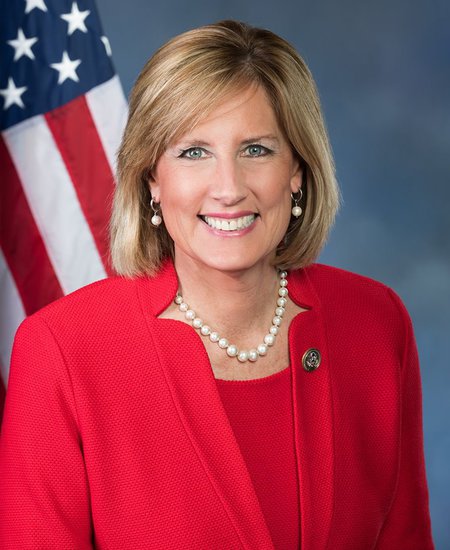
Rep. Claudia Tenney
Sponsored bills
Maddy summaryHRES 651 is a non-binding resolution supporting the commemoration of August 14, 2025, as the 90th anniversary of the Social Security Act's signing on August 14, 1935. It recognizes the Social Security Act as a landmark law establishing federal economic security for elderly Americans and acknowledges the program's role as a vital part of the nation's social safety net over 90 years. The resolution does not create new policies or affect any individuals or programs; it is purely symbolic recognition of the anniversary. It was introduced by Representatives Bresnahan, Tenney, Lawler, Nunn, Kiggans, Kean, and Fitzpatrick.
Maddy summaryHR 4974, the DETECT Act of 2025, is a procedural bill requiring the Comptroller General to submit a report within 180 days of enactment to the House Ways and Means and Senate Finance committees. The report must assess the potential of artificial intelligence to help the Internal Revenue Service detect tax fraud. This bill does not create new policy or directly affect any group; it mandates a study on AI's role in tax enforcement. The focus is solely on gathering information, not implementing new measures.
Maddy summaryHR 1569, the CATCH Fentanyl Act, establishes a 5-year pilot program to test nonintrusive inspection technologies at U.S. border ports of entry. The bill requires U.S. Customs and Border Protection (CBP) to evaluate at least five technology enhancements - including AI, machine learning, and quantum sensing - to improve detection of contraband, drugs, weapons, and threats while reducing inspection wait times. Pilot projects must prioritize cost-effective solutions that integrate with existing systems, adhere to privacy protections, and report findings on performance metrics like detection rates and throughput. The program mandates detailed reports to Congress on effectiveness, implementation plans, and privacy impacts, using existing funding without new appropriations.
Maddy summaryThis bill prohibits 501(c)(3) nonprofit organizations (like charities and educational groups) from providing any direct or indirect funding to states or local governments for election administration, such as running polls or managing voter registration. The key change amends the tax code to explicitly ban this funding, with one exception: donating physical space for polling locations. It affects all 501(c)(3) organizations, requiring them to avoid any financial support for election operations. The rule takes effect for tax years starting after December 31, 2025.
Maddy summaryHRES 636 is a symbolic House resolution condemning a July 28, 2025, shooting in New York City that killed three civilians and NYPD Officer Didarul Islam, alongside security officer Aland Etienne. It honors the victims, commends the NYPD's response, and condemns violence against law enforcement. The resolution does not create new laws or policies but formally expresses the House's stance against such violence and supports law enforcement. It was introduced by Representatives Stefanik, Tenney, and others and referred to the Oversight Committee.
Maddy summaryThe MOSSA Act (HR 4878) directs federal agencies to prioritize funding for local governments enforcing laws against public drug use, camping, and loitering, while requiring homelessness programs to link participants with mental health/substance use treatment as a condition of aid. It mandates that federal grant programs for homelessness services end support for "housing first" approaches and "harm reduction" initiatives, instead requiring evidence-based treatment programs and stricter accountability for service providers. The bill also directs agencies to address sex offenders in homeless programs by restricting their housing with children and to review funding recipients operating drug injection sites for legal violations. These provisions collectively shift federal funding toward enforcement-focused and treatment-oriented homelessness strategies, affecting state/local governments, homeless service providers, and individuals accessing federal housing assistance.
Maddy summaryHR 4873 would make Executive Order 14319 - which prohibits the use of "woke AI" in federal government operations - legally binding as a law, rather than relying on presidential directive. This requires all federal agencies using artificial intelligence systems to comply with the order's restrictions as a mandatory legal requirement. The bill directly affects federal departments and agencies that develop or deploy AI tools, ensuring they adhere to the policy without needing repeated executive action. By codifying the order, the bill provides a permanent legal basis for the policy, removing reliance on future executive decisions.
Maddy summaryHR 4822 eliminates a sunset provision for a requirement that military kitchens must purchase kitchenware made in the United States. This bill amends Section 842 of the 2025 National Defense Authorization Act by removing the expiration date, making the kitchenware sourcing rule permanent. It directly affects military installations purchasing kitchen equipment, ensuring they continue to buy domestically produced items without needing future legislative action. The bill does not create new requirements but extends an existing policy to avoid automatic termination. This is a procedural change focused on maintaining current procurement standards for military facilities.
Maddy summaryThe Promoting Free and Fair Elections Act of 2025 prevents federal agencies from using government funds for voter registration or voter mobilization activities, including through partnerships with non-profits on agency websites or properties. It requires agencies to submit detailed reports to Congress within 30 days about current voter registration efforts and plans, and delays new voter registration initiatives until these reports are filed. The bill also amends the Higher Education Act to prohibit voter registration or mobilization activities in Federal Work-Study programs on college campuses. These provisions directly affect federal agencies and campus-based student aid programs, altering how government resources can support election participation.