

Maddy summaryHRES 1073 is a non-binding resolution designating February 21-28, 2026, as "National FFA Week" to recognize the National Future Farmers of America (FFA) Organization’s role in developing agricultural education leaders and to celebrate the 50th anniversary of Alaska’s State FFA Association. It does not create new laws or affect any specific groups or policies; instead, it formally expresses the House’s support for this commemorative week. The resolution highlights FFA’s mission to prepare students for leadership and careers in agriculture, food, and natural resources. As a symbolic gesture, it has no direct legislative or financial impact on constituents.
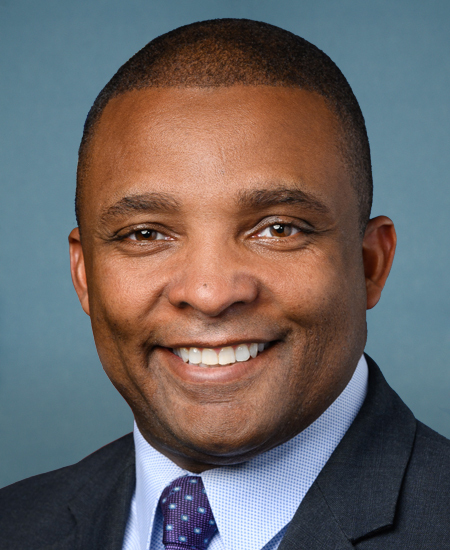
Rep. Donald G. Davis
Sponsored bills
Maddy summaryThis bill directs U.S. agencies to support Iranian people's access to uncensored information and hold Iranian officials accountable for human rights abuses. It requires the State Department and FCC to report on technologies (like satellite networks and mesh systems) that could bypass internet restrictions in Iran, and authorizes $2 million annually to develop such tools. The bill also establishes a new "Iran Kleptocracy Initiative" at FinCEN to track corruption, freeze assets of Iranian regime officials and state-owned businesses, and coordinate with international partners. These measures apply to U.S. policy toward Iran but do not alter Iran's domestic laws; they focus on U.S. sanctions, technology development, and anti-corruption efforts targeting the Iranian regime.
Maddy summaryThe Rural Development Modernization Act (HR 7609) increases the population threshold for determining "rural" status in Department of Agriculture programs from 20,000 or lower to 25,000 inhabitants. This change affects eligibility for broadband, telemedicine, housing, water, and sanitation programs serving rural communities across the country. The bill also removes military base population exclusions, clarifies definitions for U.S. territories and freely associated states, and requires the Secretary of Agriculture to annually reassess the population threshold based on census data and regional trends. These provisions aim to modernize how rural areas are defined for federal program eligibility.
Maddy summaryThis bill allows reserve service members to be reimbursed for renting a car when traveling over 150 miles for required training or duty. It expands existing travel allowances to cover actual vehicle rental costs during the full training period plus one additional travel day before or after. The policy directly affects reserve members who incur these expenses for mandatory military activities. The Department of Defense must update travel regulations within 180 days of the bill's passage to implement these changes.
Maddy summaryThis bill expands funding and capabilities for the United States-Israel Binational Agricultural Research and Development Fund, which supports collaborative agricultural research between scientists in both countries. The legislation authorizes $8 million annually from 2026 to 2030 for existing BARD Fund activities and adds $12 million annually for a new accelerator program designed to fast-track mid-stage agricultural research projects. The expanded program includes new eligibility for countries that have normalized relations with Israel under the Abraham Accords and allows the fund to provide technical assistance and management guidance to participating scientists. These changes aim to increase the number and impact of cooperative agricultural research projects that address food production challenges shared by the United States and its partner nations.
Maddy summaryThis bill delays a Medicare payment adjustment for physicians' services until 2030. It prevents the implementation of a 2025 rule that would have adjusted Medicare payment rates based on efficiency metrics for doctors' work. The delay requires the Secretary to submit a report to Congress by 2027 assessing whether a future one-time adjustment to these payment rates is necessary, with specific conditions for any future implementation. The bill does not cancel the adjustment but postpones it, while maintaining existing payment update percentages for Medicare physician services. It directly affects physicians and Medicare providers who rely on these payment structures.
Maddy summaryThis bill establishes the United States-Israel Defense Technology Cooperation Initiative to accelerate joint development and integration of defense technologies between the two countries. It directs the U.S. Secretary of Defense, with Israel’s agreement, to identify Israeli-origin technologies for rapid adoption into U.S. military systems, focusing on areas like counter-drone systems, missile defense (including "Golden Dome for America"), AI, cyber defense, and directed energy. The initiative requires annual congressional reporting on progress, partnerships with industry, and technology transitions, while authorizing $150 million annually for fiscal years 2027-2029. It aims to strengthen bilateral defense innovation and streamline the use of Israeli technologies within U.S. military programs.
Maddy summaryThe SCAM Act requires online platforms that display paid advertisements (like social media sites) to verify advertiser identities, implement scam detection systems, and remove fraudulent ads within 24 hours of confirmation. It directly affects platforms that accept payment for ads, targeting scams such as fake giveaways, romance scams, and AI impersonations that cost consumers $195 billion in 2024 (per FTC data). Key mechanisms include mandatory identity checks for advertisers, active monitoring systems, and a 72-hour investigation window for reported scams. The law aims to reduce fraud by shifting responsibility to platforms, with enforcement by the FTC and state attorneys general.
Maddy summaryHRES 1047 designates January 2026 as "National Mentoring Month" to highlight the importance of mentoring relationships for youth development. The resolution does not create new laws or allocate funding but encourages public awareness and support for existing mentoring programs that help young people build skills, confidence, and educational opportunities. It emphasizes mentoring's role in improving academic performance, career readiness, and mental health outcomes without imposing any new obligations on individuals or organizations.
Maddy summaryHR 7417 reauthorizes and expands the WISEWOMAN program to include heart health screenings and education for low-income women. The bill directs the CDC to award grants for blood pressure and cholesterol screenings, health education, and referrals for heart disease prevention, building on existing breast and cervical cancer services. It specifically targets low-income women who are already served by the WISEWOMAN program or meet new eligibility criteria set by the Secretary. The expansion is funded with $250 million over five fiscal years (2027-2031), with services to be provided by current WISEWOMAN grantees or approved alternative providers.