

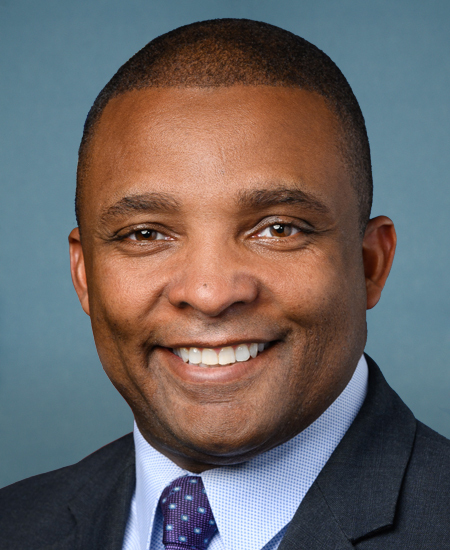
Photo of Donald G. Davis
D United States House · District 1 · North Carolina On the 2026 ballot

Rep. Donald G. Davis

Compare
Total votes
1,879
all sessions
Attendance
97%
53 missed
Near the chamber average
With party
82%
of cast votes
Among the lowest in the chamber
Bipartisan score
9%
crosses aisle rarely
Higher than 98% of chamber peers
Sponsored
1,618
bills & resolutions
Higher than 96% of chamber peers
Committees
7
assignments
1,618 bills and resolutions

Sponsored bills

Total
1,618
Primary
56
Co-sponsor
1,562
This page
1,618
matching current filters
Co-sponsor HR 7932
In committee · Indiana House · Co-sponsor
HONOR Gold Star Families Act

Maddy summaryHR 7932, the HONOR Gold Star Families Act, increases the death gratuity paid to families of service members who died in the line of duty. It raises the current $100,000 payment to $200,000 for deaths occurring on or after January 1, 2026. The bill also adds an annual cost-of-living adjustment to this amount, increasing it each January 1 based on the previous year’s inflation rate as measured by the Consumer Price Index. This directly affects Gold Star Families - those who have lost a service member in military service - by providing a larger initial payment and ensuring future payments keep pace with inflation.

In committee Mar 12, 2026 1 co-sponsor
Co-sponsor HRES 1110
In committee · Indiana House · Co-sponsor
Expressing the disapproval of the House of Representatives regarding the slaughter of dogs and cats for human consumption and encouraging Japan to enact a nationwide ban on such practices.

Maddy summaryHRES 1110 is a non-binding House resolution expressing the U.S. House of Representatives' disapproval of the slaughter of dogs and cats for human consumption and urging Japan to enact a nationwide ban. It references the U.S. 2018 ban on this practice (under the Agriculture Improvement Act) and notes similar bans in South Korea, Taiwan, and cities like Shenzhen and Jakarta. The resolution affirms shared U.S.-Japan values on animal welfare, encourages bilateral cooperation on animal rights, and clarifies it does not interfere with protected cultural or religious practices. As a symbolic diplomatic statement, it has no legal force but aims to influence Japan’s policies on animal welfare.

In committee Mar 9, 2026 1 co-sponsor
Co-sponsor HR 7871
In committee · Indiana House · Co-sponsor
MVP Act

Maddy summaryHR 7871 (MVP Act) updates Medicaid drug rebate rules to allow manufacturers to report multiple "best price points" for drugs sold under outcome-based payment arrangements, requiring these arrangements to be offered to all states. It clarifies how average manufacturer price is calculated for such drugs and exempts certain outcome-linked payments from anti-kickback laws. The bill also mandates a GAO study to assess whether these arrangements improve patient access, lower costs, and reduce disparities in drug coverage. This affects Medicaid programs nationwide, drug manufacturers, and patients receiving covered outpatient drugs under Medicaid.

In committee Mar 9, 2026 1 co-sponsor
Co-sponsor HRES 1107
In committee · Indiana House · Co-sponsor
Memorializing Rev. Jesse Jackson by flying the flag of the United States at halfstaff.

Maddy summaryHRES 1107 is a House resolution urging the President to issue a proclamation flying the U.S. flag at half-staff to honor Rev. Jesse Jackson. The resolution recognizes his civil rights leadership, including founding the Rainbow PUSH Coalition and his presidential campaigns in 1984 and 1988, which advanced racial equality and economic justice. This symbolic gesture directly affects the President (as the one who would issue the proclamation) and the public, who would observe the flag at half-staff.

In committee Mar 5, 2026 1 co-sponsor
Co-sponsor HR 7832
In committee · Indiana House · Co-sponsor
America’s Living Library Act

Maddy summaryThe America's Living Library Act establishes a 10-year pilot program within the Department of the Interior to collect and sequence the whole genomes of plants, animals, fungi, and microbes found in up to 25 National Park System units. This program aims to create a publicly available genomic database for scientific research and to store physical samples long-term at the Smithsonian Institution and Department of Agriculture. The bill mandates interagency coordination, Tribal consultation, and includes provisions for expedited data access for U.S.-based artificial intelligence development, while strictly prohibiting the transfer or export of physical samples outside the United States. Significant funding is authorized for these activities from fiscal years 2027 to 2031, directly affecting federal agencies involved in conservation, research, and data management.

In committee Mar 5, 2026 1 co-sponsor
Co-sponsor HR 7856
In committee · Indiana House · Co-sponsor
Fair Housing for Survivors Act of 2026

Maddy summaryHR 7856, the Fair Housing for Survivors Act of 2026, amends the Fair Housing Act to explicitly prohibit housing discrimination based on being a survivor of domestic violence, sexual assault, or severe trafficking in persons. It adds "survivor of domestic violence, sexual assault, or severe trafficking" as a protected class in the law, alongside existing categories like race or national origin. This means landlords, housing providers, and programs cannot deny housing, evict, or otherwise discriminate against individuals due to their status as a survivor. The bill directly affects survivors who face housing barriers, including those with protective orders, shelter histories, or past evictions linked to abuse.

In committee Mar 5, 2026 1 co-sponsor
Co-sponsor HR 7802
In committee · Indiana House · Co-sponsor
DISCLOSE Act of 2026

Maddy summaryThe DISCLOSE Act of 2026 aims to increase transparency in election spending and prevent foreign influence. It expands the ban on foreign money to cover federal, state, and local elections, including ballot initiatives and judicial nominations, and criminalizes using corporations to conceal these funds. The bill mandates that organizations spending over $10,000 on campaign-related activities, such as independent expenditures or judicial nomination advocacy, disclose their beneficial owners and top donors. Additionally, it establishes new "Stand By Every Ad" disclaimers for political communications, requiring the highest-ranking official to approve the message and, for certain ads, list their top funders. These provisions directly affect non-candidate organizations, individuals involved in political and judicial nomination spending, and foreign nationals.

In committee Mar 4, 2026 1 co-sponsor
Co-sponsor HR 7808
In committee · Indiana House · Co-sponsor
Debt-to-GDP Transparency and Stabilization Act

Debt-to-GDP Transparency and Stabilization Act This bill requires the President's annual budget and congressional budget resolutions to include (1) the ratio of the public debt to the estimated gross domestic product (GDP), and (2) the ratio of the surplus or deficit to the estimated GDP.

In committee Mar 4, 2026 1 co-sponsor
Co-sponsor HR 7710
In committee · Indiana House · Co-sponsor
Defense Community Infrastructure Program Tribal Eligibility Act of 2026

Maddy summaryThis bill would allow Indian tribes to access the Defense Community Infrastructure Program, which currently provides funding for infrastructure improvements near military installations. By amending Title 10 of the U.S. Code, the legislation adds "Indian tribes" as eligible recipients alongside local governments and other entities. The bill defines "Indian tribe" using the existing legal definition from the Indian Self-Determination and Education Assistance Act. This change expands the pool of organizations that can apply for infrastructure support related to defense facilities.

In committee Feb 25, 2026 1 co-sponsor
Co-sponsor HR 2189
Passed · Indiana House · Co-sponsor
To modernize Federal firearms laws to account for advancements in technology and less-than-lethal weapons, and for other purposes.

Law-Enforcement Innovate to De-Escalate Act This bill removes less-than-lethal projectile devices (e.g., certain TASERs) from regulation under the Gun Control Act. The term less-than-lethal projectile device means a device that (1) is not designed or intended to expel (and may not be readily converted to discharge) commonly used ammunition or projectiles exceeding a velocity of 500 feet per second; (2) is designed and intended to be used in a manner not likely to cause death or serious bodily injury; and (3) does not accept (and cannot be readily modified to accept) an ammunition feeding device. The bill also requires the Bureau of Alcohol, Tobacco, Firearms and Explosives to determine whether a device satisfies the definition of a less-than-lethal projectile device within 90 days of a request.

Passed Feb 24, 2026 1 co-sponsor
Showing 141 to 150 of 1,618 bills
Previous 1 … 14 15 16 … 162 Next