

Maddy summaryHRES 64 is a non-binding House resolution affirming the U.S.-South Korea alliance. It highlights historical ties (dating to 1882), economic partnerships (including 2023 trade data), and security cooperation (like the 1953 Mutual Defense Treaty), while celebrating Korean American contributions to U.S. society. The resolution formally supports strengthening security, economic, and cultural ties between the two nations and notes the 2025 anniversary of Korean liberation. It does not create new laws or funding, but serves as a symbolic statement of congressional support for the alliance.
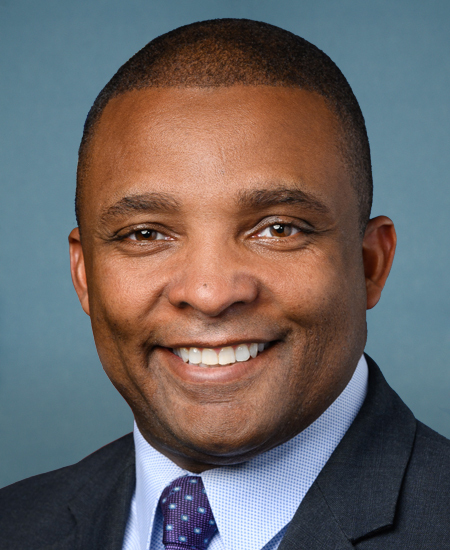
Rep. Donald G. Davis
Sponsored bills
Maddy summaryThis bill would amend federal law to strengthen penalties for organized retail crime by expanding definitions of theft to include digital goods, gift cards, and setting a $5,000 aggregate value threshold for charges over a 12-month period. It would establish a new "Organized Retail and Supply Chain Crime Coordination Center" under Homeland Security to coordinate Federal, State, local, and Tribal law enforcement efforts against cross-jurisdictional theft groups. The Center would share information with retailers, transportation companies, and law enforcement agencies, track crime trends, and produce annual reports on organized retail crime. This legislation directly affects retailers, supply chain businesses, and law enforcement agencies, while targeting organized crime groups responsible for a 93% increase in larceny incidents and rising safety concerns for retail employees. The bill aims to address significant financial losses and supply chain disruptions noted in the National Retail Federation's 2023 data.
Save Our Shrimpers Act This bill prohibits federal funds from being made available to international financial institutions (e.g., the International Monetary Fund) for financing activities related to foreign shrimp farms. The bill also requires an annual report on compliance by U.S. leadership of international financial institutions with policies to oppose financing for certain commodities or minerals. Specifically, the bill requires the Department of the Treasury to condition any provision of federal funds to an international financial institution on the requirement that the funds not be used to finance any activity related to shrimp farming, shrimp processing, or the export of shrimp in any foreign country. Under current law, Treasury must instruct U.S. leadership of international financial institutions to oppose providing financial assistance for the production or extraction of any commodity or mineral for export if (1) the commodity or mineral is in surplus on world markets, and (2) the export of such commodity or mineral will cause substantial injury to U.S. producers of a competing commodity or mineral (or of the same or a similar commodity or mineral). This bill requires the Government Accountability Office to investigate and annually report to Congress on the extent to which U.S. leadership at these institutions have carried out Treasury's instructions.
Maddy summaryThe Diesel Prices Relief Act of 2026 eliminates the federal excise tax on diesel fuel for a period ending on January 1, 2027, directly affecting drivers and businesses that use diesel. To offset the lost revenue, the bill requires the Treasury Secretary to transfer money from the general fund to the Highway Trust Fund and the Leaking Underground Storage Tank Trust Fund. The legislation also mandates that fuel producers and dealers pass these savings immediately to consumers and gives the Treasury authority to enforce this requirement.
Maddy summaryThe Connected Vehicle Security Act of 2026 restricts the importation, sale, and manufacture of vehicles and related technology from specific countries, including China, Russia, Iran, and North Korea, to address national security concerns. The law defines prohibited items as connected vehicles, their software, and hardware components and sets different effective dates, with vehicle bans starting in 2027 and hardware restrictions beginning in 2030. A government official can grant exceptions for specific items after reviewing security risks and notifying Congress, while the agency must publish annual reports on enforcement actions and compliance.
Maddy summaryThis resolution expresses support for designating July 15, 2026, as Glioblastoma Awareness Day to raise public awareness about this aggressive and deadly form of brain cancer. The bill honors patients and caregivers while encouraging greater understanding of the urgent medical needs associated with the disease, which currently has a low survival rate and limited treatment options. It also calls for increased collaboration among government, private, and nonprofit organizations to advance research and develop better therapies for those affected.
Maddy summaryThis bill is a non-binding resolution that expresses the House of Representatives' sentiment to honor public servants for their dedication to the United States. It specifically acknowledges the work of federal, state, and local government employees, as well as uniformed service members, who deliver essential services and support the economy. The resolution calls on the American public to observe Public Service Recognition Week with ceremonies and activities that recognize these contributions. Because it is a symbolic expression of the House's feelings rather than a law with enforceable rules, it does not create new policies or mandate specific actions.
Maddy summaryThis bill requires the National Institute of Justice to disclose the specific countries where ballistic-resistant body armor and its fibers are made when listing certified products. It prohibits any such product from being labeled "Made in America" if its fibers were produced outside the United States. Additionally, the Department of Justice is barred from using federal funds to purchase this armor unless it is manufactured domestically, with exceptions only if domestic options are unavailable or fail to meet existing quality standards. The legislation also mandates training for government entities receiving grants to help them understand these new sourcing and labeling rules.
Maddy summaryThis resolution expresses the sense of the House of Representatives that antisemitic rhetoric from specific online personalities, including Hasan Piker and Candace Owens, is dangerous and contributes to hatred. It urges social media platforms to enforce their policies against hate speech and calls on public officials to condemn such conduct without exception. The bill does not impose new laws or penalties but instead highlights specific instances of alleged hate speech to emphasize the need for responsibility among influencers and technology companies.
Maddy summaryHR 2424, the Modern, Clean, and Safe Trucks Act of 2025, repeals a 12% federal excise tax on new heavy trucks, tractors, and trailers. This tax currently adds significant costs - $7,000+ for trailers, $20,000+ for clean diesel trucks, and up to $50,000 for advanced technology trucks - discouraging replacement of older, less efficient vehicles. The bill directly affects truck manufacturers, dealers, and fleet operators by removing this cost barrier, making newer, cleaner models more affordable. It aims to accelerate the adoption of modern trucks with improved safety and environmental features, particularly benefiting electric and alternative-fuel vehicles that face higher upfront costs.