

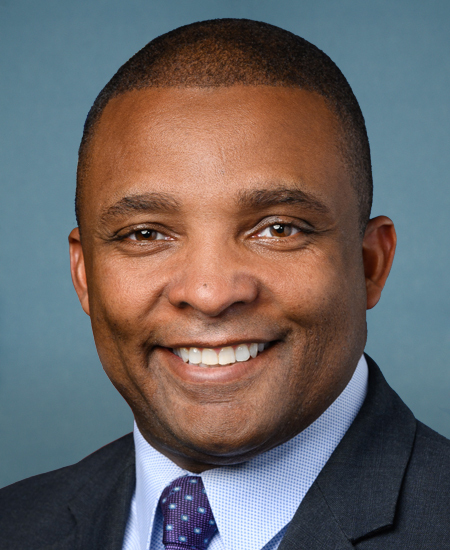
Photo of Donald G. Davis
D United States House · District 1 · North Carolina On the 2026 ballot

Rep. Donald G. Davis

Compare
Total votes
1,879
all sessions
Attendance
97%
53 missed
Near the chamber average
With party
82%
of cast votes
Among the lowest in the chamber
Bipartisan score
9%
crosses aisle rarely
Higher than 98% of chamber peers
Sponsored
1,618
bills & resolutions
Higher than 96% of chamber peers
Committees
7
assignments
1,618 bills and resolutions

Sponsored bills

Total
1,618
Primary
56
Co-sponsor
1,562
This page
1,618
matching current filters
Co-sponsor HRES 1301
In committee · Indiana House · Co-sponsor
Supporting the designation of May 29, 2026, as "Mental Health Awareness in Agriculture Day" to raise awareness around mental health in the agricultural industry and workforce and to continue to reduce stigma associated with mental illness.

Maddy summaryThis resolution designates May 29, 2026, as "Mental Health Awareness in Agriculture Day" to highlight mental health issues within the farming and agricultural workforce. It aims to reduce the stigma surrounding mental illness by acknowledging the unique stressors faced by producers and workers, such as unpredictable weather, labor shortages, and market fluctuations. The bill also draws attention to available support resources, specifically the Farm and Ranch Stress Assistance Network, and encourages the public to observe the day as a way to promote well-being in the industry.

In committee May 19, 2026 1 co-sponsor
Co-sponsor HR 8891
In committee · Indiana House · Co-sponsor
Rural MOMS Act of 2026

Maddy summaryThe Rural MOMS Act of 2026 modifies how Medicare counts hospital beds, specifically excluding labor and delivery rooms from the total number of acute care inpatient beds used to determine if a facility qualifies as a Critical Access Hospital. This change directly affects rural hospitals that provide maternity services by altering the financial thresholds required to maintain their special status under the Medicare program. By removing delivery rooms from the bed count calculation, the bill aims to prevent these facilities from losing their designation solely because they offer childbirth care. The legislation does not change how these hospitals are funded or operated, but rather adjusts the metric used to evaluate their eligibility for critical access benefits.

In committee May 19, 2026 1 co-sponsor
Co-sponsor HR 2066
Signed into law · Indiana House · Co-sponsor
Investing in All of America Act of 2025

Maddy summaryThe Investing in All of America Act of 2025 amends the Small Business Investment Act of 1958 to adjust leverage rules for Small Business Investment Companies (SBICs), which provide capital to small businesses. It lowers the maximum allowable leverage ratio from 300% to 200% and expands eligible investments to include companies in rural areas, critical technology sectors, and small manufacturers. The bill caps excluded leverage at $125 million or 50% of a company’s private capital, whichever is lower, and requires annual inflation adjustments to these dollar amounts. These changes directly affect SBICs, private investment firms that support small business growth nationwide.

Signed into law May 19, 2026 1 co-sponsor
Primary HRES 1293
In committee · Indiana House · Lead sponsor
Recognizing and celebrating "National Salvation Army Week" on May 11 through May 17, 2026.

Maddy summaryThis resolution formally designates the week of May 11 through May 17, 2026, as National Salvation Army Week to honor the organization's long history of providing social services. It acknowledges the Salvation Army's work in areas such as disaster relief, food assistance, and shelter for vulnerable populations like veterans and those experiencing homelessness. The measure encourages Americans to participate in acts of service and generosity during this designated week, while also recognizing the group's annual fundraising efforts.

In committee May 15, 2026 0 co-sponsors
Co-sponsor HR 8857
In committee · Indiana House · Co-sponsor
Next GEN Act of 2026

Maddy summaryThe Next GEN Act of 2026 modifies the Drug Price Negotiation Program to include a specific category of medications called engineered cyclic peptides. This change extends the time before these drugs can be negotiated for lower prices from seven years to eleven years. The bill defines these peptides as synthetic, amino acid-based drugs that are self-administered and created using genetic library screening methods. By adjusting the timeline, the legislation directly affects pharmaceutical companies and the government agencies responsible for setting drug prices under the program.

In committee May 15, 2026 1 co-sponsor
Co-sponsor HR 6993
In committee · Indiana House · Co-sponsor
BEACON Act of 2026

Maddy summaryThe BEACON Act of 2026 establishes two grant programs to improve treatment for veterans with chronic mild traumatic brain injury (mTBI). It authorizes $30 million over three years for grants to nonprofits, academic institutions, and health providers to develop and test non-drug neurorehabilitation approaches, focusing on mental health outcomes, suicide risk reduction, and long-term recovery. The bill requires grantees to prioritize patient-centered care, conduct clinical studies, and partner with VA facilities, with each grant capped at $5 million annually. A separate $10 million annual program funds independent research on TBI treatments, requiring third-party analysis and annual reports to Congress. The pilot programs expire after three years, with evaluations to determine future expansion.

In committee May 14, 2026 1 co-sponsor
Co-sponsor HR 3159
In committee · Indiana House · Co-sponsor
Improving SCRA Benefit Utilization Act

Improving SCRA Benefit Utilization Act This bill expands interest rate protections under the Servicemembers Civil Relief Act (SCRA) and requires expanded training for and outreach to servicemembers regarding financial literacy and SCRA protections. The SCRA caps the maximum interest charged on any debt incurred by a servicemember prior to entering active duty at 6% annually if the servicemember's ability to pay is materially affected by active-duty status; servicemembers must provide notice and other documentation to creditors to receive this cap. The bill requires creditors to apply this cap to all of a servicemember’s obligations or liabilities with that creditor, regardless of whether a certain obligation or liability was specifically mentioned in the required notice provided by the member to invoke SCRA rights. Further, the bill requires creditors to provide all necessary mechanisms to ensure a servicemember is able to submit any required documentation. The bill also requires that the financial literacy training program provided to servicemembers include information about consumer financial protections afforded to such members and their dependents, including protections regarding interest rate limits under the SCRA. Additionally, the bill requires the military department concerned to provide written notice of benefits under the SCRA to servicemembers at the time they first enter military service and, for members of the reserve components, at the time they first enter service in the reserves and at any time when they are mobilized or ordered to active duty for more than 30 days.

In committee May 14, 2026 1 co-sponsor
Co-sponsor HR 1346
Passed · Indiana House · Co-sponsor
To amend the Clean Air Act with respect to the ethanol waiver for Reid Vapor Pressure under that Act, and for other purposes.

Nationwide Consumer and Fuel Retailer Choice Act of 2025 This bill amends the Clean Air Act to address the limitations on Reid Vapor Pressure (a measure of gasoline's volatility) that are placed on gasoline during the summer ozone season. Specifically, the bill applies the waiver for Reid Vapor Pressure requirements that is applicable to gasoline blended with 10% ethanol (E10) to gasoline blended with up to 15% ethanol (E15). This change allows gasoline that is blended with 10% to 15% ethanol to be sold year-round. Currently, states may be excluded from the waiver for Reid Vapor Pressure requirements by submitting documentation supporting that the waiver would increase air pollution. The bill nullifies existing state exclusions, but states may submit documentation after enactment of the bill to be excluded going forward. The bill also modifies the Renewable Fuel Standard Program, which requires transportation fuel sold or introduced into commerce in the United States to contain minimum volumes of renewable fuel. Under the existing program, obligated parties, such as small refineries, must satisfy the volume obligations by either blending renewable fuels into their gasoline or diesel fuel products or by acquiring credits that represent the required renewable fuel volume. The bill directs the Environmental Protection Agency to return compliance credits to small refineries under certain circumstances.

Passed May 14, 2026 1 co-sponsor
Co-sponsor HR 8791
In committee · Indiana House · Co-sponsor
IGNITE HBCU Excellence Act

Maddy summaryThe IGNITE HBCU Excellence Act authorizes federal grants to Historically Black Colleges and Universities (HBCUs) to fund long-term improvements to their campus facilities and infrastructure. These grants are awarded competitively to eligible HBCUs based on criteria such as the age of their facilities, deferred maintenance needs, financial capacity, and student enrollment levels. Recipients may use the funds to construct or renovate buildings, upgrade technology and broadband systems, improve safety measures, and develop workforce training hubs, while being prohibited from using the money for routine maintenance or athletic facilities. The legislation also includes provisions for reporting on project outcomes and requires institutions to create comprehensive master plans that involve consultation with diverse campus and community stakeholders.

In committee May 13, 2026 1 co-sponsor
Co-sponsor HRES 1252
Passed · Indiana House · Co-sponsor
Resolution memorializing law enforcement officers killed in the line of duty.

This resolution expresses support for police officers and other law enforcement personnel. The resolution further recognizes law enforcement officers across the United States in the pursuit of preserving safe and secure communities; the need to ensure that such officers have the equipment, training, and resources necessary to protect their health and safety while they are protecting the public; and the law enforcement community for acts of sacrifice and heroism. The resolution expresses condolences and appreciation to the loved ones of each law enforcement officer who has made the ultimate sacrifice in the line of duty.

Passed May 13, 2026 1 co-sponsor
Showing 91 to 100 of 1,618 bills
Previous 1 … 9 10 11 … 162 Next