Maddy summaryHR 2451 designates the entire Deerfield River (including its branches and major tributaries like the Green River and North River) in Massachusetts and Vermont for a study under the Wild and Scenic Rivers Act. The bill requires the Secretary of the Interior to complete this study within three years of funding and submit a report to Congress detailing the findings. This study will assess the river's eligibility for potential wild and scenic designation, which could lead to protections for its natural, recreational, and cultural values. The bill does not immediately protect the river but sets a process to evaluate it. The study area directly encompasses the river system and its watershed across both states.
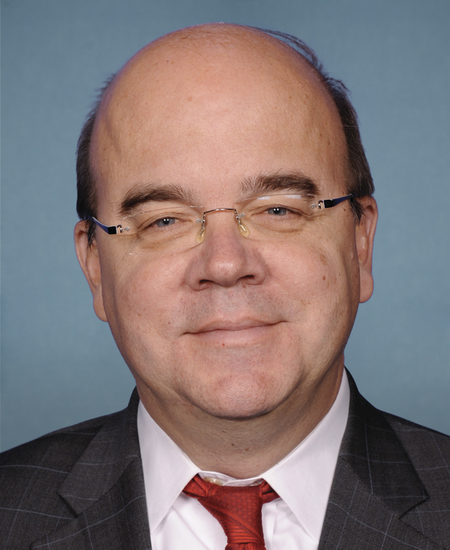
Rep. James P. McGovern
Sponsored bills
Maddy summaryThe Indigenous Diplomacy and Engagement Act (HR 2412) establishes a new Office for Indigenous Affairs within the State Department, led by a Presidentially appointed Coordinator who reports to the Secretary of State. It mandates a 5-year strategy for U.S. diplomatic engagement with Indigenous peoples globally, requiring the identification of 10-20 diverse countries with significant Indigenous populations and outlining specific programs, resource needs, and agency coordination. The bill also creates an Advisory Commission with tribal leaders and experts to advise on best practices, and requires annual reports tracking U.S. efforts, funding, and outcomes related to international Indigenous engagement. This legislation directly affects U.S. foreign policy agencies, domestic Indigenous groups (like Native American tribes and Alaska Natives), and international Indigenous communities through structured diplomatic engagement.
Maddy summaryHR 2467, America's Red Rock Wilderness Act, would designate approximately 1.3 million acres of public land across Utah as wilderness areas, protecting them from development and managing them for conservation. The bill specifically designates 77 wilderness areas in the Great Basin and Colorado Plateau regions, including lands within existing national monuments like Grand Staircase-Escalante and Bears Ears. It includes provisions for water rights protection, allows continued livestock grazing under certain conditions, and withdraws the designated lands from mining and mineral leasing. The bill also ensures Tribal rights are protected and requires the Secretary of the Interior to administer these areas according to wilderness management standards.
Maddy summaryThis bill, HR 2411, directs the U.S. government to immediately resume funding for the United Nations Relief and Works Agency for Palestine Refugees (UNRWA) by repealing two prior funding restrictions. It requires the State Department to restart payments to UNRWA under existing authorities and mandates the President to rescind a 2025 executive order ending UNRWA support. The bill affects Palestinian refugees in Gaza, Jordan, Lebanon, Syria, and the West Bank who rely on UNRWA for humanitarian aid, as well as U.S. funding mechanisms. It also requires quarterly reports through 2028 on UNRWA’s progress implementing accountability reforms from an independent review led by Catherine Colonna.
Maddy summary# Summary of the American Housing and Economic Mobility Act of 2025 This comprehensive legislation addresses housing affordability, civil rights, financial inclusion, and tax policy through multiple titles: **Fair Housing Expansion (Title I):** - Expands protections under the Fair Housing Act to include gender identity, sexual orientation, marital status, source of income, and veteran status - Requires housing providers receiving federal assistance to comply with enhanced accessibility standards (twice as many units must be accessible) **Community Reinvestment Act Strengthening (Title II):** - Requires banks to form diverse Community Advisory Committees in each metropolitan area - Mandates regular biannual consultations between bank executives and community advisory groups - Requires detailed data collection on lending practices by demographic factors (including race, ethnicity, and disability status) - Establishes new requirements for banks to analyze and report on disparities in access to credit **Veterans' Housing Access (Title III):** - Expands eligibility for VA home loans to include direct descendants of veterans who served between June 22, 1944, and April 11, 1968, who are first-time, first-generation homebuyers **Public Housing Improvements (Title IV):** - Requires public housing agencies to analyze where participants live and develop strategies to increase access to higher-opportunity neighborhoods - Mandates regional collaboration among housing agencies to reduce disparities in access - Requires HUD to develop mapping tools to help agencies analyze neighborhood access **Estate Tax Reforms (Title V):** - Increases estate tax rates for large estates (over $13 million) - Reduces the basic exclusion amount from $13 million to $3.5 million - Imposes a 10% surtax on estates exceeding $1 billion - Increases the exclusion limit for farm real property from $750,000 to $3 million - Increases the exclusion for land subject to conservation easements from $500,000 to $2 million - Creates a new 5-8% surcharge on high-income estates and trusts **Additional Provisions:** - Strengthens credit union service to underserved areas - Raises public welfare caps for banks to increase investments in low-income communities - Requires new data collection and reporting requirements for financial institutions This legislation represents a significant expansion of housing rights, financial inclusion, and tax policy reforms aimed at reducing disparities in access to housing and financial services while reforming the estate tax system.

Maddy summaryThis bill provides housing loans and education assistance to Black World War II veterans who were denied GI Bill benefits due to racial discrimination, or to their surviving spouses, children, or direct descendants. To qualify, applicants must certify they were denied benefits on racial grounds under the original 1944 GI Bill and apply within five years of the law's enactment. The Department of Veterans Affairs must implement these provisions within 90 days and report to Congress on participation and program costs. It specifically addresses documented historical discrimination where Black veterans were steered toward vocational training instead of college, with only 6% earning degrees compared to 19% of White veterans.
Maddy summaryThis bill, titled "Abolish Super PACs Act" but actually regulating them, would impose contribution limits on super PACs by redefining them as "independent expenditure committees" under federal election law. It sets a $5,000 annual threshold for activities qualifying a committee as a super PAC, capping individual contributions to these entities to reduce corruption risks from unlimited donations. The legislation targets the top contributors who gave over 96% of super PAC funds in 2024, aiming to limit the appearance of quid pro quo arrangements. It would apply to all qualifying committees starting in the first full calendar year after enactment.
Maddy summaryThis bill would require federal firearms licensees to prohibit sales of specific high-capacity rifles and shotguns to people under 21. It targets semiautomatic centerfire rifles and shotguns capable of holding more than 5 rounds in their magazines, raising the age limit from 18 to 21 for these weapons. Exceptions apply for active military members and certain government employees authorized to carry firearms. The law directly affects gun retailers and individuals under 21 seeking to purchase these specific firearms. It modifies existing federal gun sale rules without changing age requirements for other firearms.
Maddy summaryHCONRES 21 is a symbolic House resolution recognizing the persistent gender wage gap in the U.S., where women earn significantly less than men for comparable work. It cites specific data showing women overall earn 75 cents and women of color earn even less (e.g., 58 cents for Latinas) per dollar earned by White, non-Hispanic men. The resolution does not create new laws or policies but formally acknowledges the economic impact of this disparity, including annual lost wages exceeding $994 million for full-time women workers. It also highlights designated Equal Pay Days for different demographic groups to underscore the varying timelines to close the gap.
Maddy summaryThe Paycheck Fairness Act strengthens equal pay protections by expanding the definition of "sex" to include pregnancy, childbirth, sexual orientation, gender identity, and sex characteristics. It modifies employer defenses for pay disparities to require proof that any pay difference is job-related, not based on sex, and accounts for the entire pay gap. The bill prohibits employers from asking about salary history, enhances penalties for violations, and requires employers with 100+ employees to collect and report detailed pay data by race, sex, and job category. It also establishes training programs for employers on eliminating pay bias and creates a National Equal Pay Enforcement Task Force to coordinate enforcement efforts. This legislation directly affects employers, particularly those with 100+ employees, and aims to address pay disparities impacting women, people of color, and other underrepresented groups.