Maddy summaryH.J. Res. 80 would declare the Equal Rights Amendment (ERA) part of the U.S. Constitution, asserting it has been ratified by 38 states (three-fourths of the states) despite the original 1972 deadline. If passed, this resolution would formally establish the ERA as a constitutional amendment, requiring all federal and state laws to align with its gender equality protections. The bill does not create new laws but confirms the ERA's status as part of the Constitution, affecting how laws are interpreted and enforced. It is a procedural step to resolve the legal dispute over the ERA's validity after decades of debate.
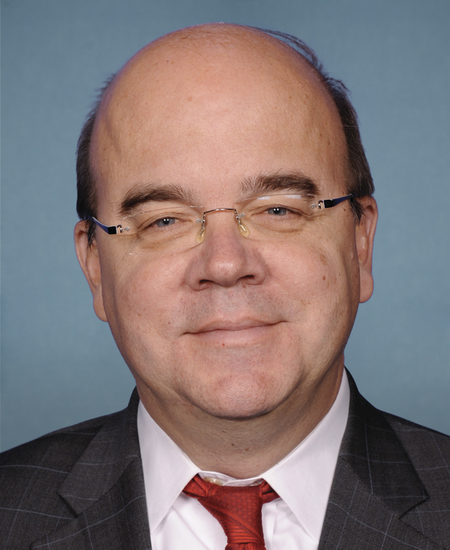
Rep. James P. McGovern
Sponsored bills
Maddy summaryHR 2311, the Pakistan Democracy Act, imposes U.S. sanctions on Pakistani military and government officials who undermine democracy or wrongfully detain political figures. Specifically, it requires sanctions within 180 days on General Asim Munir (Pakistan’s Army Chief) and identifies individuals involved in the persecution of Imran Khan or other political detainees, barring them from U.S. entry via visa inadmissibility. The bill mandates the President to certify to Congress for waivers, requiring proof that military rule has ended and political detainees are freed. It defines key terms like "knowingly" and "foreign person" to clarify eligibility for sanctions. The law directly affects targeted Pakistani officials and their immediate family members, with no mention of broader economic or diplomatic measures.
Maddy summaryHRES 238 is a non-binding House resolution expressing the House's position that every person has the basic right to emergency health care, including abortion care during medical emergencies. It does not create new laws or alter existing regulations but formally states the House's view that abortion restrictions in emergencies endanger patients' health and lives. The resolution specifically highlights how current abortion bans put pregnant people at risk during life-threatening conditions like hemorrhage or infection, disproportionately impacting Black, Indigenous, people of color, immigrants, and low-income individuals. It serves as a symbolic statement opposing policies that restrict emergency reproductive care access.
Maddy summaryThis bill (HR 2199) prevents private health insurance plans from discriminating against patients with end-stage kidney disease (ESRD) who require dialysis. It amends the Social Security Act to prohibit plans from treating dialysis coverage differently than other medical services or applying network restrictions that disproportionately harm ESRD patients. The law clarifies that plans cannot deny or limit benefits for dialysis based on a patient’s diagnosis, while preserving a plan’s right to choose which dialysis providers are in their network. It directly affects ESRD patients and their private health insurance coverage, ensuring dialysis is treated equally with other covered medical services. The bill does not require plans to include specific dialysis providers but stops them from unfairly restricting access to necessary care.
Maddy summaryHR 2121 establishes a 23-member commission to study the feasibility of creating a National Museum of Irish American History in Washington, D.C. The commission, appointed by the President and congressional leaders, will examine key issues like funding sources (without relying on federal appropriations), potential locations, whether to partner with the Smithsonian, and community engagement strategies. It must submit detailed reports within 24 months, including a fundraising plan and recommendations for potential legislation, but does not authorize the museum's construction or funding. The bill focuses solely on gathering data and recommendations to inform future decisions, with the commission terminating 30 days after final reports are submitted.
Maddy summaryHR 2129, the "No Round Up Act," repeals outdated provisions from the 1940 Alien Registration Act within U.S. immigration law. It specifically removes requirements for aliens to register, provide fingerprints, and submit forms under sections 261-266 of the Immigration and Nationality Act. This directly affects immigrants who would have been subject to these mandatory registration procedures under the repealed law. The bill eliminates these specific administrative mandates without creating new requirements or altering broader immigration enforcement mechanisms.
Maddy summary# Summary of Legislative Document This document is a comprehensive legislative act containing numerous provisions across a wide range of policy areas. Key sections include: 1. **Retirement and Pension Reforms (Sections 401-450)**: Major changes to retirement plans including: - Roth IRA modifications - Hardship withdrawal rules for 403(b) plans - Limiting elective deferrals to regular contribution limits - Optional treatment of employer matching contributions as Roth contributions - Penalty-free withdrawals for domestic abuse victims - Enhanced rules for qualified birth or adoption distributions 2. **Military and Veteran Programs (Section 501)**: Establishment of the "Boots to Business Program" to provide entrepreneurship training to military personnel, veterans, and their families. 3. **Criminal Justice Provisions (Sections 601-602)**: Increased punishment for human trafficking and coercion/enticement in school zones, with specific definitions of "school zone" and "school-sponsored activity." 4. **Cultural Institutions (Sections 701-703)**: Establishment of a Commission to study the feasibility of creating a National Museum of Asian Pacific American History and Culture in Washington, DC. 5. **Semiconductor Supply Chain (Sections 801-804)**: Directing the SelectUSA program to coordinate with state economic development organizations to increase foreign direct investment in semiconductor manufacturing. 6. **Government Operations (Sections 901-1002)**: - Equipment approval process for homeland security - NASA's enhanced use leasing authority - Requirements for committee hearings on implementation - Code of conduct for House members - Study on foreign ownership of US ports - Budgetary effects determination - Changes to Federal credit union board meeting frequency 7. **Appropriations (Section 1601)**: Additional funding allocations for various departments including Health and Human Services, Agriculture, State, Defense, Homeland Security, and Energy. The document represents a broad legislative package addressing retirement security, military/veteran benefits, cultural preservation, economic security, and government operations.

Maddy summaryHRES 216 is a resolution condemning the leadership of the House Republican Conference for allowing a social media post that falsely questioned the immigration status and patriotism of Congressman Adriano Espaillat (Chairman of the Congressional Hispanic Caucus). The resolution specifically names House Speaker Mike Johnson, Majority Leader Steve Scalise, Majority Whip Tom Emmer, and other top Republican leaders as responsible for the post. It characterizes the post as xenophobic and inappropriate, stating such rhetoric violates the standards of conduct expected of members of Congress.
Maddy summaryHRES 219 is a resolution recognizing four fellowship programs that support diversity in U.S. foreign affairs careers. These programs - the Charles B. Rangel Graduate Fellowship, Thomas R. Pickering Foreign Affairs Graduate Fellowship, William D. Clarke, Sr. Diplomatic Security Fellowship, and Donald M. Payne International Development Graduate Fellowship - help recruit underrepresented groups, including minority and economically disadvantaged students, for roles in diplomacy and development. The resolution emphasizes that these statutorily mandated programs strengthen national security and foreign policy by building a more diverse workforce for agencies like the State Department and USAID. It also notes these programs have historically drawn from over 500 colleges and all 50 states.
Metastatic Breast Cancer Access to Care Act This bill expedites payment of Social Security Disability Insurance (SSDI) benefits and eligibility for Medicare coverage for those with metastatic breast cancer (i.e., breast cancer that has spread to other sites in the body). Specifically, the bill eliminates the 5-month waiting period for SSDI benefits and the subsequent 24-month waiting period for Medicare coverage for individuals with metastatic breast cancer. Under current law, individuals generally must wait 5 months after the onset of disability to begin receiving SSDI benefits and an additional 24 months to become eligible for Medicare.